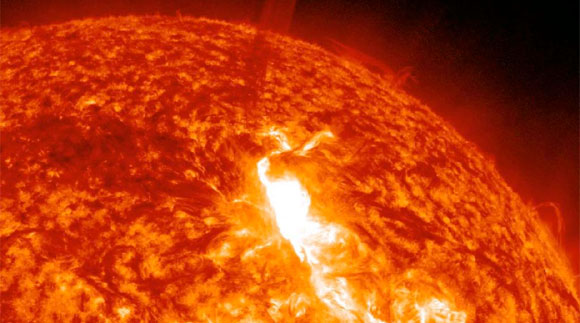
On the morning of September 1, 1859, amateur astronomer Richard Carrington ascended into the private observatory attached to his country estate outside of London. After cranking open the dome’s shutter to reveal the clear blue sky, he pointed his brass telescope toward the sun and began to sketch a cluster of enormous dark spots that freckled its surface. Suddenly, Carrington spotted what he described as “two patches of intensely bright and white light” erupting from the sunspots. Five minutes later the fireballs vanished, but within hours their impact would be felt across the globe.
read more A Perfect Solar Superstorm: The 1859 Carrington Event — History in the Headlines.