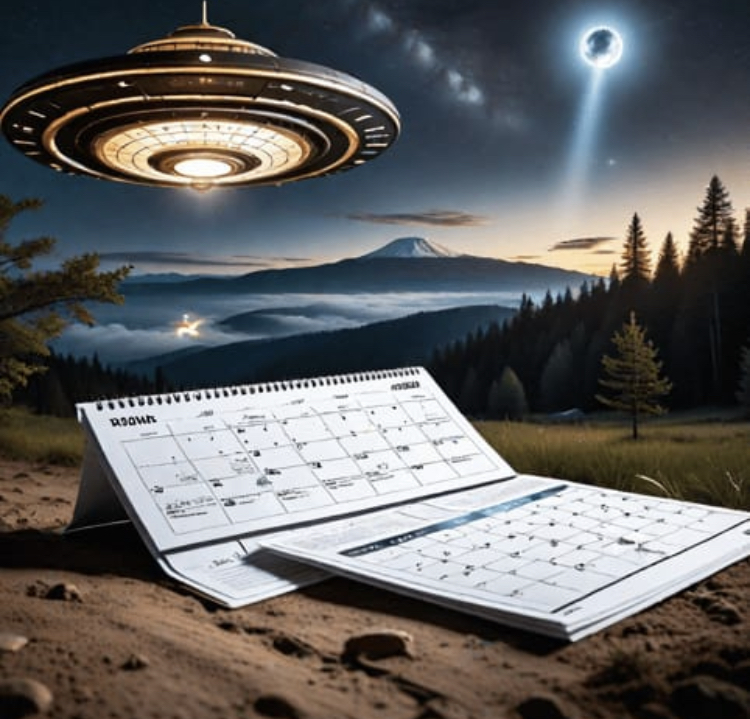
Challenge – to interpret a classic poem into a report that sees the protagonist as an extraterrestrial.
Here’s mine – Enjoy!
Edgar Allan Poe’s “The Raven” is a masterpiece of Gothic literature, renowned for its haunting atmosphere, poetic language, and exploration of themes such as grief, loss, and the mysteries of existence.
While traditionally interpreted as a tale of psychological horror, viewing the raven in the poem as an extraterrestrial introduces a new layer of complexity and intrigue to Poe’s work.
In this version, the raven becomes a symbol of forces beyond human comprehension, ushering the narrator into a realm of dread and questioning.
Through this lens, “The Raven” transforms into a cosmic allegory that explores humanity’s place in the universe and the eternal quest for meaning amidst the vastness of space.
The poem opens with the narrator, a weary traveller, seeking solace from his sorrow in the sanctuary of his chamber.
In this interpretation, the narrator’s chamber becomes a metaphorical spacecraft adrift in the infinite expanse of the galaxy. The “midnight dreary” takes on new meaning as the desolate void of interstellar space, with the narrator’s chamber serving as a lone outpost in the darkness of the universe.
As the narrator reflects on his lost love, the tapping at his chamber door becomes a mysterious signal from beyond the stars. The sudden appearance of the raven, with its dark plumage and piercing eyes, marks the arrival of an otherworldly visitor, an extraterrestrial intelligence drawn to the narrator’s solitude and despair.
As the narrator engages in dialogue with the raven, their exchange takes on a cryptic and enigmatic quality, laden with cosmic significance.
The raven’s repeated refrain of “Nevermore” becomes a mantra, echoing through the void of space like a signal from a far-off galaxy.
Each utterance of “Nevermore” carries with it the weight of eternity, a reminder of the immutable laws of the universe and the inevitability of cosmic entropy.
The narrator’s questions to the raven take on new meaning in this iteration, reflecting humanity’s age-old quest for understanding in the face of the unknown.
As he implores the raven for answers, he is met only with silence, a reflection of the inscrutable nature of the void and the limitations of human comprehension.
At its core, “The Raven” is a tale of isolation and existential angst, themes that take on cosmic dimensions in this interpretation.
The narrator’s descent into madness becomes a journey into the depths of the human psyche, haunted by the spectre of his own mortality and the vastness of the universe.
As the raven perches ominously above the chamber door, its presence serves as a reminder of humanity’s insignificance in the grand scheme of things.
The narrator’s futile attempts to find solace in the raven’s cryptic messages only deepen his sense of dread, driving him to the brink of madness as he grapples with the unfathomable mysteries of existence.
In the final stanzas of the poem, the narrator’s cries of despair echo through the empty chamber, reverberating into the void of space like a distant lamentation.
As he resigns himself to his fate, embracing the darkness that surrounds him, the raven watches silently from its perch, a silent sentinel of the cosmos.
In my version, “The Raven” becomes more than a tale of psychological horror—it becomes a cosmic allegory that speaks to the eternal questions of humanity’s place in the universe.
Through the lens of the raven as an extraterrestrial, Edgar Allan Poe invites readers to ponder the mysteries of existence and the existential dilemmas that lie at the heart of the human experience.
In the end, “The Raven” leaves us haunted by the echoes of “Nevermore,” lingering in the darkness of space like distant stars flickering in the night sky.
This interpretation of “The Raven” offers a new perspective on Poe’s timeless poem, inviting readers to explore its themes and imagery through science fiction.
By viewing the raven as a non-human intelligence, we dive into the depths of the human psyche and the mysteries of the universe, confronting the existential questions that have plagued humanity since the dawn of time.
And yet, through its haunting language and evocative imagery, “The Raven” continues to captivate and intrigue readers, inviting them to peer into the abyss of the unknown and confront the darkness that lies within us all.
Over to you 🙂