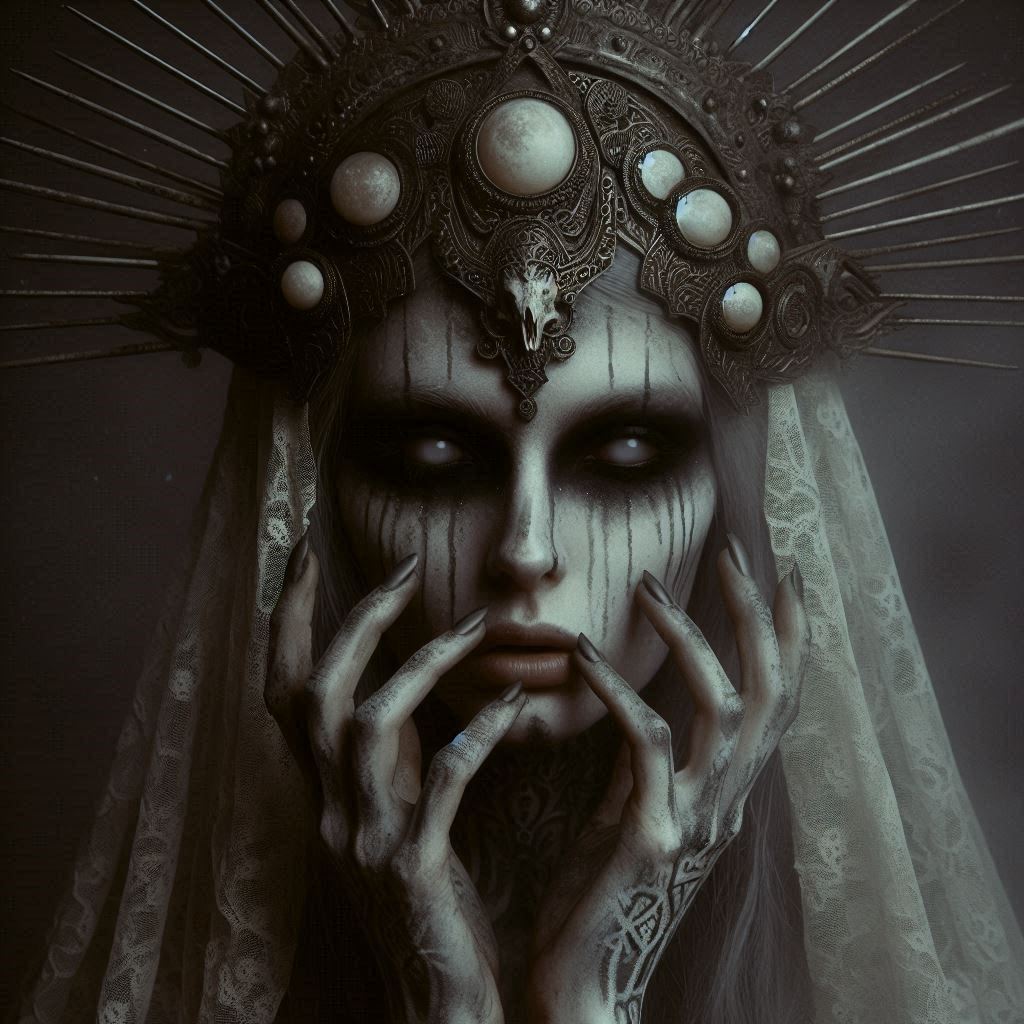
Mona is a lesser-known figure among the deities and spirits that populated early Saxon spirituality, a Germanic tradition that flourished before the full Christianization of England and northern Europe. The historical record around her is fragmentary, but she has captured the interest of historians and those drawn to pagan Europe due to her possible ties to the sea, the moon, and fertility – common themes in Germanic and broader European mythology.
The Anglo-Saxon and Germanic people revered many gods and goddesses, each representing vital aspects of life, nature, and existence. Gods associated with war, agriculture, the seasons, and celestial bodies were prevalent, each believed to influence the lives of mortals in ways both grand and intimate. Mona appears to have been worshiped primarily among Saxon tribes, likely in connection with the moon, and the recurring cycles of life, especially those related to feminine forces of fertility and growth.
To understand Mona, it’s important to explore how Anglo-Saxon paganism functioned. Unlike the centralized religions of the classical world, Germanic paganism was tribal, localized, and rooted deeply in the natural world. Saxon tribes had a vast array of fascinating gods and spirits whose significance could vary depending on the region and the specific needs of a community. Because these tribes lived in a challenging environment, much of their religious life focused on ensuring successful harvests, maintaining the health of livestock, and living harmoniously with the seasonal cycles. With this in mind, we may assume Mona might have played a role in marking the phases of the moon, which governed both time and nature’s cycles.
Mona’s name is derived from an Old English root that connects her to the moon. The moon’s influence on Saxon life was profound, as lunar cycles were essential for timekeeping and agricultural practices. For many early Germanic peoples, including the Saxons, the lunar calendar helped guide planting, harvesting, and hunting. They believed that the moon’s phases impacted earthly events, with the full moon often associated with growth and fertility, while the new moon symbolized rest and contemplation.
The moon’s cycles were especially significant in relation to women, whose own rhythms aligned with the lunar month. In this way, the moon – and possibly Mona as well – represented the life-giving and cyclical forces governing human and natural life. This connection might explain why Mona would be associated with fertility and womanhood.
Across many cultures, lunar deities are tied to the rhythms of nature and femininity, and Saxons likely saw the moon as a guiding presence in the lives of women, offering them protection and blessings.The Germanic tribes, including the Anglo-Saxons, often personified natural forces as deities to make the world around them more relatable.
For a Saxon farmer or hunter, the moon in the sky could serve as a reminder of Mona’s watchful, cyclical, and protective influence. The moon’s phases were markers of time and nature’s influence over all life – crops, animals, and people alike.
Though little is known about the specific worship practices related to Mona, rituals likely took place at night, beneath the moon. This inference is drawn from similar practices for other moon-centered deities, as well as from the Saxons’ tendency to align their rituals with natural settings and cycles. Full moon celebrations may have been seen as times to bless livestock, crops, and community members with health and fertility. Women, in particular, may have invoked Mona’s favor for blessings in childbirth or family well-being. These rites would not have involved elaborate temples but likely took place in groves or fields where the moon was visible.
The moon’s phases symbolized rebirth and renewal, making it a powerful image of endurance and continuity. Mona’s association with this cycle may have given her a particular place in the lives of the Saxons, reminding them that life, like the moon, has phases but ultimately endures.
In a world where life could be unpredictable and harsh, the moon’s constancy would have offered comfort. Mona, perhaps, was a quiet yet enduring figure, embodying a natural wisdom and the assurance of cycles that supported life.
Our understanding of Mona is limited because Saxon religion was transmitted orally. Still her name endures, which lends weight to her cultural importance. In Old English, the word for the moon is “mona,” and the naming of Monday as “Moon’s Day,” along with similar names across Germanic languages, suggests a longstanding cultural reverence. Linguists and historians see this as evidence that the Saxons and other Germanic tribes may have venerated the moon, if not worshiping it in an organized way.
Some scholars suggest that Mona may not have been a separate goddess but rather an aspect or manifestation of another deity. Germanic religion often allowed deities to take on multiple forms, aspects, or names depending on the season, place, or ritual purpose. For instance, the Norse god Thor had numerous epithets and variations, and it is possible that Mona was a particular form or name of a more prominent deity associated with nature and fertility.
Alternatively, Mona’s presence in the Saxon belief system may have been more of a folk practice rather than part of a formal pantheon. Saxon folk religion likely included a variety of spirits and lesser-known gods invoked for specific purposes or during certain times of the year. People may have prayed to Mona for favourable weather, for safe childbirth, or for the health of their livestock. These kinds of practices wouldn’t have left much trace in the historical record, as they were localized, pragmatic, and more informal.
As Christianity spread through Saxon territories, many of these older traditions either faded or blended into Christian practices. In some cases, pagan figures like Mona became reinterpreted within Christian frameworks, while in other cases, saints took on roles once occupied by pagan gods. Early Christian missionaries often incorporated or repurposed local beliefs to ease conversion. Thus, figures like Mona might have gradually disappeared or been absorbed into Christian ideas about saints or the Virgin Mary, particularly those associated with protection, fertility, or nature.
Though Mona is not as widely remembered as gods like Odin, Thor, or Freya, she represents an essential part of the Anglo-Saxon view of the world. She embodies the Saxons’ connection to nature, their dependence on lunar cycles, and their respect for forces that sustained life. Her probable role as a lunar deity underscores how deeply the rhythms of the moon influenced their lives, particularly for women, who might have seen their own lives reflected in its cycles.
Although much about Mona remains unknown, she remains as a symbol of a time when people lived closely with nature’s rhythms. Her legacy persists in the names we still use for the days of the week, as well as in humanity’s enduring fascination with the moon as a symbol of change, mystery, and quiet strength.



Leave a Reply