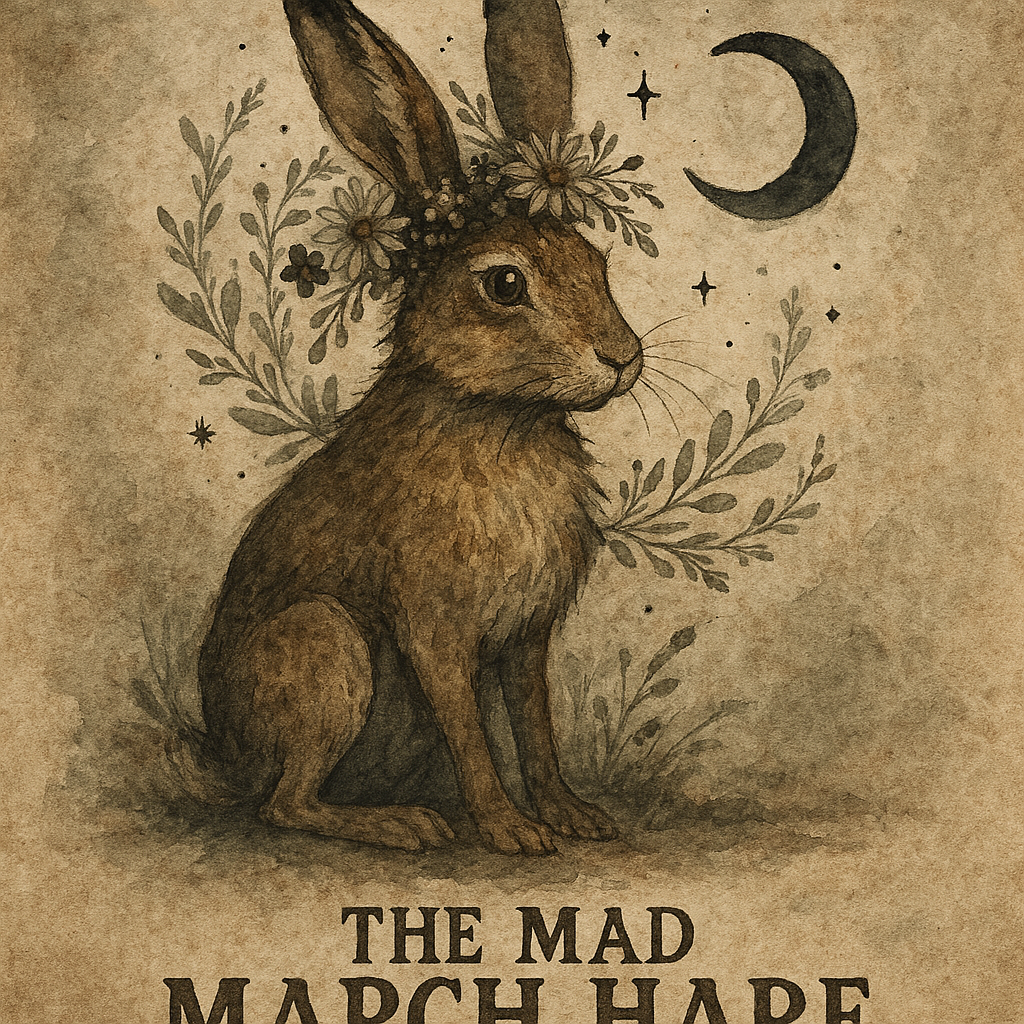
The hare, with its long ears and swift movements, has fascinated humanity for centuries. Across cultures, this creature has been enshrouded in superstitions, folklore, and symbolism.
From being associated with fertility and rebirth to being seen as omens of both good and bad fortune, the hare’s presence in human consciousness is profound.
So let’s ‘hop in’ and have a look at a few superstitions and folklore surrounding the hare, including the intriguing phenomenon of the Mad March Hare.
The hare’s symbolism varies widely across different cultures and historical periods.
In many ancient societies, including those of the Celts and Egyptians, the hare was revered as a symbol of fertility and abundance. Its prolific breeding habits, characterized by rapid reproduction, led to its association with fertility deities and springtime rituals.
In addition to its symbolic significance, the hare has been the subject of numerous superstitions and omens. In some cultures, encountering a hare crossing one’s path was believed to bring good luck, signalling prosperity and success in endeavours. Conversely, in other traditions, such an encounter was seen as a harbinger of misfortune or death, especially if the hare exhibited unusual behaviour or crossed from left to right.
The hare’s nocturnal behaviour and ability to navigate the darkness imbued it with mystical qualities. In European folklore, it was often linked with the moon, with some cultures believing that hares could communicate with lunar deities or even transform into the moon itself.
Furthermore, the hare’s association with witches and the supernatural led to fears of malevolent magic. In European folklore, it was believed that witches could shapeshift into hares to evade detection or cast spells on unsuspecting victims. As a result, harming or killing a hare was often considered taboo, as it was believed to bring about the wrath of witches or invite curses upon oneself.
One of the most intriguing aspects of hare folklore is the phenomenon known as the Mad March Hare. This curious behaviour, observed primarily in European brown hares (Lepus europaeus), occurs during the breeding season in March. Male hares engage in frenetic chases and boxing matches, often with other males or even with females. The origins of this behaviour are not entirely understood, but it is believed to be linked to mating rituals and competition for mates.
The phrase “mad as a March hare” has entered popular culture to describe someone behaving erratically or unpredictably, a testament to the enduring fascination with this behaviour.
The hare’s mystique is also reflected in mythology and literature, where it often serves as a symbol of agility, cunning, and transformation.
In Aesop’s fables, the hare is depicted as a clever and resourceful character, outwitting its adversaries through wit and cunning. Similarly, in Native American folklore, the hare is portrayed as a trickster figure, navigating the world with cunning and guile.
In East Asian cultures, such as Chinese and Japanese folklore, the hare is associated with the moon and is said to inhabit the lunar realm. Legends abound of a rabbit or hare living on the moon, pounding rice cakes or elixirs of immortality in preparation for a celestial festival.
Despite its cultural significance, the hare faces numerous threats to their survival, including habitat loss, hunting, and climate change.
In many regions, efforts are underway to protect hare populations and preserve their cultural legacy. Conservation initiatives seek to safeguard habitats, mitigate human-wildlife conflicts, and raise awareness about the importance of hares in folklore and mythology.
Initiatives to document and preserve traditional knowledge about hares and their significance in local cultures are essential for safeguarding intangible cultural heritage. By documenting superstitions, rituals, and folktales surrounding the hare, researchers and communities can ensure that this rich cultural heritage is passed down to future generations.
The hare’s presence in human culture is as diverse and enigmatic as the creature itself. From ancient fertility rituals to modern conservation efforts, the hare continues to captivate our imagination and inspire awe.



Leave a Reply