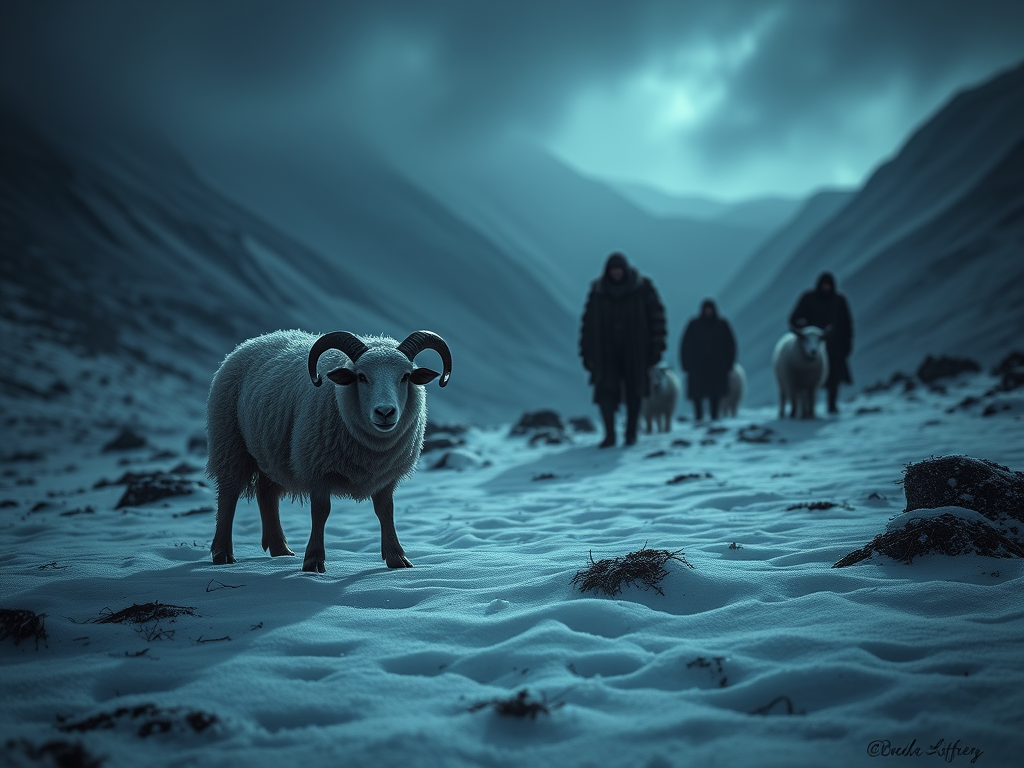
Good Morning from sunny Derbyshire!
We’re a bit busy prepping for a roadtrip at the moment but I’ve got a spare minute between trying to find a pen to finish writing the Christmas cards and making Yorkshire puddings for my daughter to freeze for their family festive family lunch – I’m sure you’re all busy prepping too.
Anyhoo. Shall we take a minute for ourselves? Seems like a good time to pull up a reindeer, pour something warming, and settle in and I’ll tell you a tale about ‘The Yule Lads’…
The Yule lads do not burst through the door offering you a Bailey’s and shouting ‘Merry Christmas’. That would be far too organised.
They arrive slowly.
One per night.
A bit like forgotten chores…
(that reminds me – must remember to put the bins out..)
Thirteen strange, irritating, oddly familiar figures creeping out of the Icelandic mountains as the year tips toward its darkest point. No fanfare, no neat moral lesson – just disruption, hunger, noise, watching eyes, and the uncomfortable sense that winter has opinions about how you run your household.
Before they were softened into seasonal mascots, the Yule Lads (Jólasveinar) were survival folklore. Not entertainment. Not tradition for tradition’s sake. They were explanations for why food vanished, why doors banged, why sleep was broken, why winter felt like something you had to ‘manage’ rather than endure passively.
And if you think that sounds familiar… well…
You’re not wrong.
In a pre-electric, pre-central-heating Iceland, winter wasn’t cosy. It was long, isolating, and unforgiving. A single mistake – an unsecured door, a forgotten pot, unfinished clothing – could ripple into real danger.
The Yule Lads gave those dangers names. Faces. Personalities. And once something has a name, you can talk about it, laugh at it, and crucially, do something about it.
So let’s open the door (briefly — Hurðaskellir is listening) and meet them properly.
They begin arriving thirteen nights before Christmas, one by one, staying for thirteen days each and leaving in the same order they came. Think of it less as a countdown and more as a slow invasion.
Stekkjastaur the Sheep-Cote Clod arrives first on 12th December. He’s stiff-legged and awkward, harassing sheep and attempting to steal their milk with very little grace. He is clumsy, irritating, and oddly pitiable.
His presence reflects a time when livestock meant survival. Milk was life. The ritual response wasn’t prayer, it was vigilance. Sheep were checked more carefully, pens secured, routines tightened. Stekkjastaur reminds us that winter exposes weak systems. The modern ritual? Checking in on what actually sustains you – finances, health, energy – before it becomes urgent.
On December 13 Giljagaur the Gully Gawk arrives. Giljagaur lurks in gullies and waits for the chance to sneak into cowsheds and steal milk. He is quiet, patient, and opportunistic.
He represents slow loss, resources that vanish not through disaster but neglect. The old ritual was maintenance – checking stores, sealing gaps. The modern equivalent is boring but powerful – tidying digital clutter, managing time leaks, noticing where energy quietly drains away.
December 14 brings Stúfur – or ‘Stubby’ to his mates. Small, hungry, relentless. Stúfur steals burnt scraps from pans and eats whatever others overlook.
He embodies scarcity thinking. Nothing wasted. Nothing assumed. The ritual response was scraping pots clean before bed, a simple act that became habit.
Today, Stúfur invites us to acknowledge exhaustion without shame. Eat properly. Rest properly. Stop pretending scraps are enough when winter demands more.
December 15 brings Þvörusleikir. AKA ‘Spoon-Licker’ Tall, thin, unsettlingly focused on licking wooden spoons… A bit weird… This one is less about food and more about boundaries. Utensils left unattended didn’t stay yours – He’s probably the reason you can’t find your turkey baster.
The ritual was putting things away deliberately. Modern translation – close the laptop. Put the phone down. Mark the end of the day properly. Winter doesn’t respect blurred edges.
On December 16, Pottaskefill (Pot-Scraper) arrives. If there’s a pot, he will find it. Pottaskefill is hunger personified, but also consequence.
The ritual response was care and closure – nothing left half-done. Today, he reminds us how unfinished business rattles around in our minds at 2am – yes, it’s his fault. So try to finish small things. It matters more than we admit.
December 17 brings Askasleikir (Bowl-Licker, hiding beneath beds, waiting patiently for bowls to be set down.
This is about vulnerability. Food placed low was easily taken. The ritual response was awareness, knowing where you leave things, physically and emotionally. Modern Askasleikir lives under the bed of burnout. The ritual is checking in before collapse forces your hand.
On December 18, our old friend Hurðaskellir (Door-Slammer) arrives. Ah yes. The sleep destroyer. Hurðaskellir doesn’t steal food. He steals rest. Slamming doors in the night, waking households, rattling nerves.
In turf houses, a door flung open meant cold, snow, dying embers.The ritual response was communal reassurance, checking doors together, speaking softly, restoring order. Modern Hurðaskellir is notifications, doomscrolling, anxiety at 3am. The ritual is gentle containment. One last check. Then rest.
Today’s (19 December)invader – sorry, visitor – is Skyrgámur (Skyr-Gobbler). Obsessed with skyr, Iceland’s comfort food, he reminds us that even pleasure wasn’t guaranteed. Comfort had to be protected.
The ritual response was moderation and appreciation. Today? Let yourself have the nice thing. Have a break, a walk, a yoghurt – whatever tickles your tinsel. Just don’t let it disappear without noticing.
December 20? – Bjúgnakrækir. His pals know him as ‘Sausage-Swiper’. He hides in rafters, stealing smoked sausages. How rude.
Preserved meat meant future survival. The ritual was hanging food high, checking stores daily. Modern translation – protect future-you. Boundaries, savings, energy reserves. Winter is not the time to live entirely in the now.
December 21 brings my least favourite of the Yule Lads.
Gluggagægir.
‘Window-Peeper’.
The watcher. Looking in, searching, unsettling.
This one is pure psychological folklore. Being watched in winter darkness was, and is, terrifying. The ritual response was curtains drawn, fire tended, light held close.
Today, Gluggagægir is comparison culture. The ritual? Turn inward. Protect your inner space.
December 22 is Gáttaþefur (Doorway-Sniffer)’s turn. With an enormous nose, he follows scent to find Christmas bread. He represents instinct – the things that find us whether we’re ready or not. The ritual response was preparation. Smells meant food was ready.
Today, Gáttaþefur reminds us to prepare for joy as deliberately as we prepare for stress.
On December 23, expect Ketkrókur (Meat-Hook)to turn up, using his hook to steal meat through chimneys and windows. Resourceful and a little bit unsettling. Nothing left exposed was safe. The ritual response was sealing the house properly.
Modern meaning? Protect what matters. Emotional, creative, physical. Not everything needs to be accessible.
Last but not least, on December 24, up rocks Kertasníkir (Candle-Stealer), stealing candles – light itself. Candles were made of tallow. They were warmth, food, hope. Lighting one deliberately on this night was a ritual of endurance. We made it this far.
Over time, the Yule Lads were softened. Authorities discouraged the scarier tales. Gifts replaced threats. Shoes on windowsills became playful rather than appeasing. But the structure remained because the ‘need’ remained.
Folklore like this isn’t about belief. It’s about rhythm.We may not starve now, but we do get overwhelmed. We don’t fear losing our last sausage, but we do fear losing rest, stability, meaning. The rituals still work because they’re small, human, repeatable.
Tidy the kitchen.
Check the door.
Light a candle on purpose.
Put something meaningful on the windowsill.
Laugh at winter when it rattles the house.
The Yule Lads remind us that winter has always been a negotiation. And sometimes the best way to survive the dark is to give it a name, a story, and a slightly ridiculous personality.


Leave a Reply