Todays story, rooted in the late 17th century, transcends its historical context and resonates with broader themes of human fascination with the mysterious and unexplained.
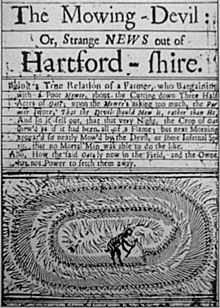
‘The Mowing-Devil: or, Strange News out of Hartford-shire’ is the title of a pamphlet published in England 1678. The pamphlet tells of a farmer in Hertfordshire who, refusing to pay the price demanded by a labourer to mow his field, swore he would rather the Devil mowed it instead.
The Mowing-Devil: Or, Strange NEWS out of Hartford-ſhire. Being a True Relation of a Farmer, who Bargaining with a poor Mower, about the Cutting down Three Half Acres of Oats upon the Mower’s asking too much, the Farmer ſwore, ‘That the Devil ſhould Mow it, rather than He.’ And lo it fell out, that that very Night, the Crop of Oats ſhew’d as if it had been all of a Flame, but next Morning appear’d ſo neatly Mow’d by the Devil, or ſome Infernal Spirit, that no Mortal Man was able to do the like. Alſo, How the ſaid Oats ly now in the Field, and the Owner has not Power to fetch them away.
The similarities between the description above and some more recent crop circle reports, where strange lights and even UFO’s have been reported in areas where crop formations have later been discovered is quite intriguing, as is the quote “that no mortal man was able to do the like”, which suggests that the formation was of a design perhaps created by some otherworldly being.
In fact this story is widely recognised and cited by some crop circle researchers as one of the first documented crop circles. Although normal environmental causes like whirlwinds or atmospheric conditions may explain some crop formations, the precision and complexity of other designs suggest a deliberate effort. More complex designs pose questions about the origin, from human artistic expression, messages from intergalactic travellers and even ancient occult rituals. However, Crop Circle researcher Jim Schnabel disagrees with these theories because the stalks of the oats are described as being cut, while modern crop circles involve the wheat, barley or, less commonly, other plants being bent and often alleged to have been subjected to extreme heat or radiation.
The social and economic backdrop of 17th-century England adds another layer to the Mowing Devil story. The agricultural landscape was undergoing significant changes, with the enclosures movement reshaping land ownership and cultivation practices.
The idea that the crop circle was a form of protest or expression of discontent over mowing fees reflects the tensions and challenges faced by rural communities during this period of agricultural transition.
Moreover, the dissemination of the Mowing Devil incident through pamphlets and broadsheets underscores its impact on popular culture. In an era without instant communication, the spread of such stories relied on printed materials, shaping public perceptions and contributing to the creation of folklore surrounding the event.
In exploring the Mowing Devil story, it becomes a microcosm of the human experience—a convergence of natural wonders, cultural symbolism, economic dynamics, and the power of storytelling, and its legacy endures in our ongoing fascination with crop circles and unexplained phenomena.





Leave a Reply