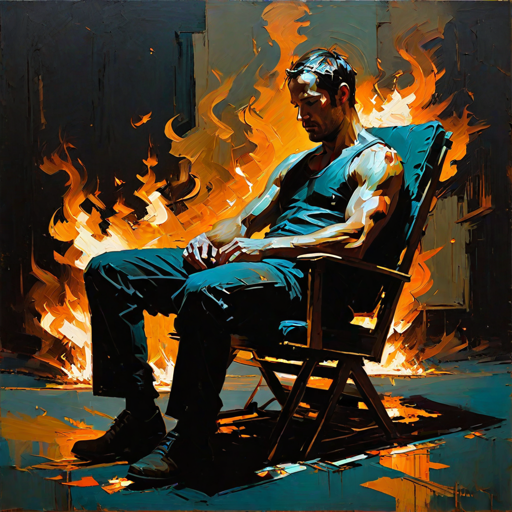
Spontaneous Human Combustion (SHC) stands as one of the most perplexing and controversial mysteries in the realm of the unexplained.
Described as the sudden and inexplicable ignition of a human body without an external heat source, SHC has confounded scientists, intrigued paranormal enthusiasts, and fuelled speculation for centuries. Despite efforts to demystify this phenomenon, SHC remains a subject of fascination and debate, with numerous theories attempting to explain its occurrence.
The concept of Spontaneous Human Combustion dates back centuries, with historical accounts documenting cases that defy conventional explanation.
Reports typically describe the discovery of a burned body, often with little damage to surrounding objects, suggesting that the combustion originated internally. Victims of SHC are often found in a state of near-total incineration, with only fragments of bone and ash remaining.
One of the defining characteristics of SHC is the absence of an external heat source capable of causing such extensive damage. In many cases, nearby objects show minimal or no signs of fire damage, leading investigators to question how a human body could ignite and burn so intensely without igniting its surroundings.
While sceptics argue that SHC is nothing more than myth and conjecture, proponents point to a number of well-documented cases that defy rational explanation.
Among the most famous is the case of Mary Reeser, whose death in 1951 sparked renewed interest in the phenomenon.
Mary Reeser, an elderly woman living in St. Petersburg, Florida, was discovered by her landlady one July morning in a state of complete incineration. Despite the intense heat required to reduce a human body to ash, the apartment showed minimal signs of fire damage, leading investigators to speculate about the cause of Reeser’s death. Forensic analysis failed to provide a definitive explanation, leaving the case of Mary Reeser’s death shrouded in mystery.
Another notable case is that of Henry Thomas, an Irishman who reportedly burst into flames while sitting by the fireplace in his home in 1980. Thomas’s death, like many others attributed to SHC, raised questions about the plausibility of spontaneous combustion and ignited debate among experts seeking to unravel its secrets.
These case studies, among others, highlight the mysterious nature of SHC and the challenges inherent in explaining such phenomena through conventional means. Despite advances in forensic science and investigative techniques, the mystery of spontaneous human combustion endures, leaving researchers grappling with more questions than answers.
Numerous theories have been proposed to explain the phenomenon of SHC, ranging from natural processes to supernatural forces. One prominent theory suggests that a buildup of flammable gases within the body, such as methane or hydrogen, could ignite under certain conditions, leading to spontaneous combustion. However, critics argue that such gases would require an external ignition source, casting doubt on the plausibility of this explanation.
Others have proposed that a phenomenon known as the “wick effect” may play a role in SHC cases. According to this theory, a small external flame, such as a cigarette or ember, ignites a person’s clothing or hair, acting as a wick to facilitate the slow and steady combustion of fat tissue. While the wick effect offers a plausible explanation for some aspects of SHC, it fails to account for cases where no external ignition source is present.
From the realm of the paranormal, theories abound regarding the involvement of supernatural or metaphysical forces in cases of SHC. Some speculate that individuals with heightened psychic abilities or spiritual sensitivities may be more prone to spontaneous combustion, while others attribute the phenomenon to divine intervention or otherworldly entities.
Spontaneous Human Combustion remains an enduring mystery that defies easy explanation. Despite centuries of speculation and investigation, the true cause of this mysterious phenomenon eludes scientists and researchers. While sceptics dismiss SHC as nothing more than folklore and superstition, proponents point to compelling case studies and unexplained phenomena that challenge conventional understanding.
As technology advances and our understanding of the human body deepens, perhaps one day we will unravel the secrets of spontaneous human combustion.
Whether the truth behind SHC lies in natural processes, supernatural forces, or some as yet undiscovered phenomenon, one thing remains certain – the mystery of spontaneous human combustion continues to captivate and confound those who dare to explore its depths.




Leave a Reply