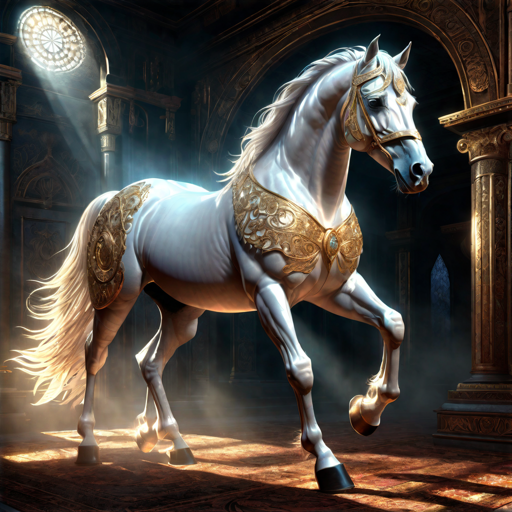
Horses have been an integral part of human civilization for thousands of years, serving as trusted companions, loyal workers, and symbols of power and freedom, but beyond their practical roles, horses have also been the subjects of myths, superstitions, traditions, omens, and folklore across cultures worldwide.
Myths and Legends:
Horses have inspired countless myths and legends, often embodying qualities such as strength, speed, and nobility. In addition to the well-known tales of Pegasus and Sleipnir, cultures around the world have their own mythological stories featuring horses. In Hindu mythology, the Ashvins are twin horse-headed gods associated with healing and dawn, while in Chinese mythology, the Dragon Horse is a symbol of power and prosperity.
Superstitions: Superstitions surrounding horses have persisted throughout history, shaping equestrian practices and everyday life. Some superstitions relate to the physical characteristics of horses, such as the belief that a horse with a star-shaped marking on its forehead brings good luck. Others pertain to behavior, with actions like a horse kicking up its heels seen as signs of impending rain or good fortune.
Traditions: Equestrian traditions vary widely across cultures and have evolved over centuries, reflecting the unique relationships between societies and horses. In Japan, the art of horseback archery, known as yabusame, has been practiced for over a thousand years and is still performed in traditional ceremonies and festivals. Similarly, in the United States, events like the Kentucky Derby and rodeos uphold longstanding traditions that celebrate horsemanship and heritage.
Omens: Throughout history, people have looked to horses for signs and omens, believing that their behavior or appearance could foretell future events. In Celtic folklore, for example, the sighting of a white horse was considered a portent of good fortune, while a black horse was seen as a harbinger of death or misfortune. Such beliefs influenced decision-making and rituals, with individuals seeking guidance from the behavior of horses in various situations.
Folklore: Horse folklore encompasses a diverse range of beliefs and customs passed down through generations. In Norse mythology, the mythical horse Svaðilfari plays a crucial role in the construction of Asgard’s walls, showcasing the significance of horses in shaping cultural narratives. In Native American folklore, horses are revered as sacred beings, embodying spiritual qualities and serving as guides and protectors for humans.
The myths, superstitions, traditions, omens, and folklore surrounding horses offer an insight into cultural heritage and human imagination. As we continue to cherish and interact with these magnificent creatures, it is essential to recognize and honor the deep-seated beliefs and traditions that have shaped our relationship with them, and by exploring these stories and customs, we gain a deeper appreciation for the enduring bond between humans and horses, rooted in centuries of shared history and mutual respect.




Leave a Reply