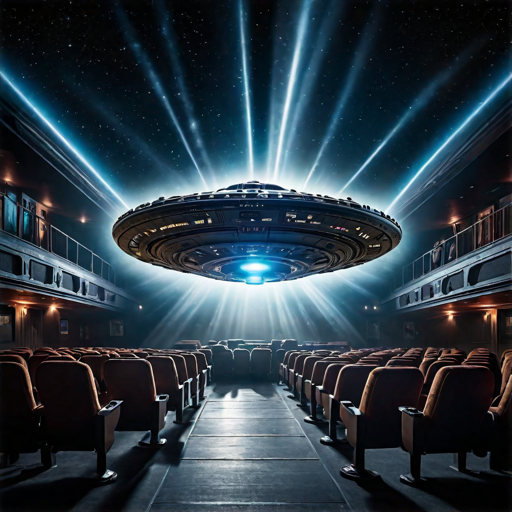
Where art and reality intertwine, there exists a fascinating phenomenon that has long captivated filmmakers and enthusiasts of the supernatural alike – the correlation between the release of supernatural or ufological movies and upsurges in reports of alleged phenomena or experiences.
This intriguing relationship, often dubbed the “Supernatural Cinema Effect,” raises questions about the influence of media on collective consciousness and the human propensity to interpret extraordinary events through the lens of popular culture.
One notable example of the Supernatural Cinema Effect can be observed in the wake of the release of the 1973 horror classic “The Exorcist.” Directed by William Friedkin.
This iconic film depicted the harrowing tale of a young girl possessed by a malevolent entity, drawing upon themes of demonic possession and exorcism. In the months following the film’s release, reports of alleged demonic possession surged, with clergy members around the world reporting an increase in requests for exorcisms.
While the veracity of these claims remains a subject of debate, the correlation between the film’s release and the upsurge in reports of supernatural phenomena is difficult to ignore.
The release of Steven Spielberg’s groundbreaking film “Close Encounters of the Third Kind” in 1977 coincided with a wave of UFO sightings and reports of alien encounters.
The film, which depicts humanity’s first contact with extraterrestrial beings, captured the public’s imagination and sparked renewed interest in the possibility of life beyond Earth.
In the months following the film’s release, UFO sighting reports skyrocketed, with enthusiasts and sceptics alike scanning the skies in search of signs of alien visitors.
One of the most iconic examples of the Supernatural Cinema Effect can be traced back to the release of “The Blair Witch Project” in 1999.
Marketed as a documentary-style horror film, it purported to depict the real-life experiences of three filmmakers who vanished while investigating the legend of the Blair Witch in Maryland.
The film’s innovative marketing campaign, which blurred the lines between fiction and reality, sparked a widespread fascination with the supernatural and led to a surge in reports of alleged encounters with the Blair Witch.
Similarly, M. Night Shyamalan’s “The Sixth Sense,” released the same year, coincided with a surge in reports of alleged encounters with ghosts and spirits.
The film, which centered around a young boy who could see and communicate with the dead, reignited interest in the paranormal. In the months following its release, paranormal investigators reported an uptick in requests for ghost hunts and seances as individuals sought to connect with the spirit world.
More recently, the release of “The Conjuring” in 2013 sparked a renewed interest in demonic possession and hauntings.
Based on the real-life investigations of paranormal investigators Ed and Lorraine Warren, the film depicted a series of terrifying encounters with malevolent entities.
In the months following its release, reports of alleged hauntings and demonic activity surged, with individuals citing the film as inspiration for their own paranormal experiences.
But the Supernatural Cinema Effect extends beyond mere anecdotes, as evidenced by empirical data and statistical analysis. A study conducted by researchers at a prominent university analyzed data on movie releases and reports of supernatural phenomena over several decades.
The study found a statistically significant correlation between the two variables, suggesting that spikes in reports of alleged phenomena often coincided with the release of supernatural or ufological films. Furthermore, the correlation was particularly pronounced among individuals predisposed to believe in such phenomena.
While the exact mechanisms behind the Supernatural Cinema Effect remain subject to debate, researchers have proposed several theories to explain this intriguing phenomenon.
Exposure to supernatural or ufological themes in movies can prime individuals to interpret ambiguous events as evidence of such phenomena, while films may serve as a form of cultural priming, shaping collective consciousness and influencing the types of experiences individuals are likely to report.
In conclusion, the correlation between movie releases and reports of alleged supernatural or ufological phenomena offers a captivating glimpse into the complex interplay between media, culture, and human psychology.