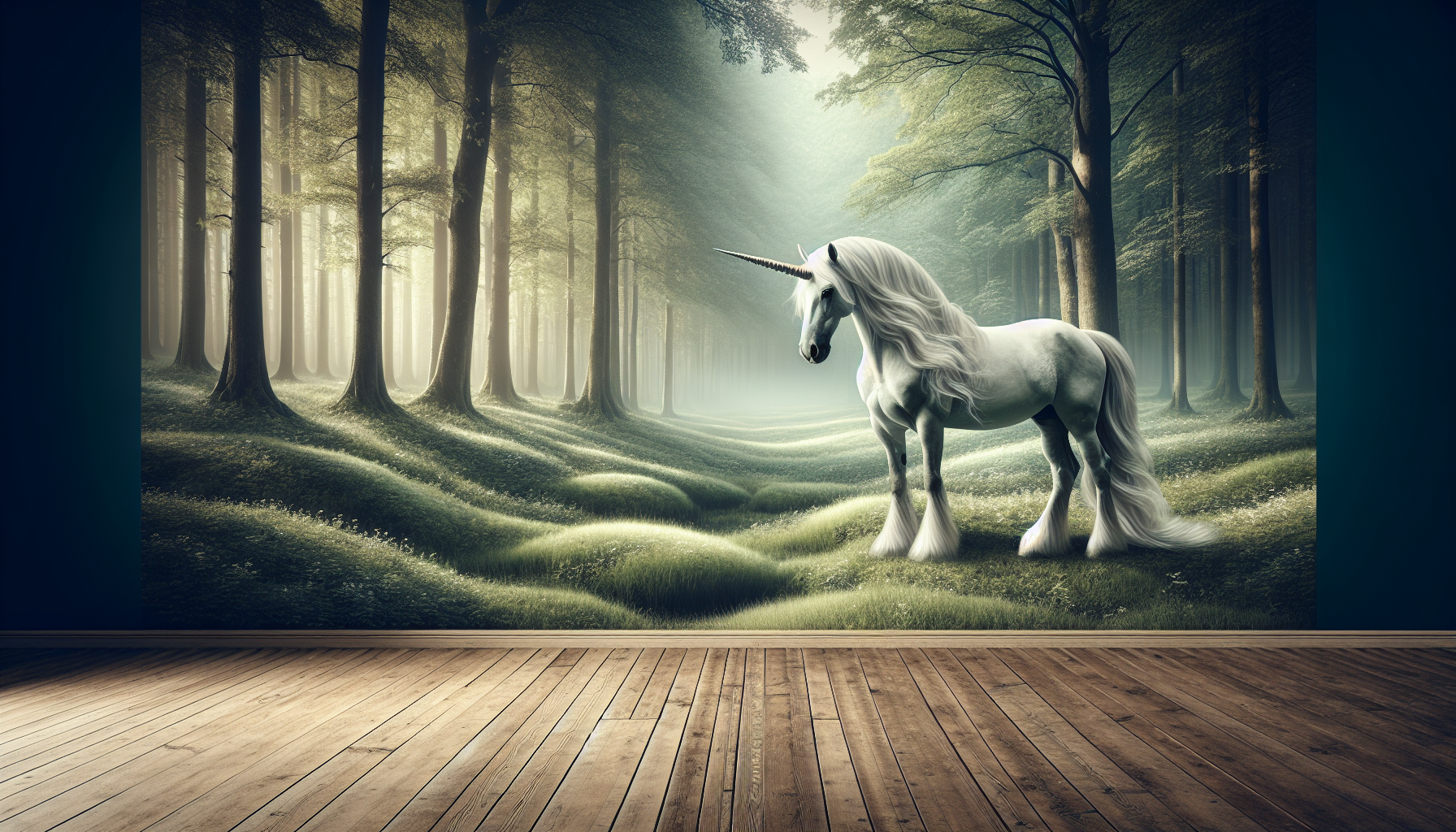
One of possibly the most renowned of fantastical beasties is the Unicorn. These enchanting mythical creatures are often depicted as white horses with a single horn on their forehead and have appeared in various myths, legends, and tales across cultures around the world. Here’s a detailed exploration of their presence and significance throughout history and across different cultures.
The word “unicorn” comes from the Latin “unicornis,” which is a combination of “uni-” (meaning “one”) and “cornu” (meaning “horn”). This term was used to describe the mythical one-horned creature depicted almost globally in ancient texts.
In Greek and Roman Myths, Greek historian Ctesias (c. 400 BCE) wrote about the “Indian wild ass,” a creature with a single horn on its forehead, which many believe was based on descriptions of the Indian rhinoceros. Pliny the Elder also described unicorns in his “Natural History,” adding to their mystique.
In Europe, unicorns were central to medieval folklore, depicted in bestiaries as symbols of purity and grace. The “Hunt of the Unicorn” tapestries (circa 1500) are famous medieval works that depict the unicorn hunt, symbolising Christ’s passion and the virginity of Mary.
In Persian Mythology the Karkadann, from Persian literature, is similar to the unicorn but is depicted more ferociously. It’s often associated with the Indian rhinoceros or the oryx and Chinese mythology tells us of the Qilin (or Kirin in Japan), a mystical creature often compared to the unicorn. This beastie is seen as a symbol of prosperity, peace, and good fortune, appearing during the birth or death of a sage.
Indian texts, like the Harivamsa, mention a one-horned animal called the “Eka-Sringa” or “Eka-Vrisha,” likely inspired by the Indian rhinoceros. This creature is depicted as a powerful, mystical being.
In some African cultures, stories of one-horned animals, like the oryx, exist. These creatures are sometimes considered powerful and mystical due to their unique appearance.
While not directly referencing unicorns, some Native American tribes have stories about mystical one-horned creatures, which symbolize strength and spiritual power.
In Christianity, the unicorn became a symbol of purity and chastity, often associated with the Virgin Mary. The image of a unicorn resting its head on a maiden’s lap symbolised Christ’s relationship with Mary. Unicorns also appear in heraldry, symbolising nobility, purity, and strength. The Royal Arms of Scotland, which includes a unicorn, is a prime example. When Scotland and England united, the unicorn was incorporated into the British Royal Coat of Arms.
In many cultures, encountering a unicorn or a similar creature was seen as a good omen, foretelling prosperity, happiness, or the birth of a significant person.
Unicorns have been utilised in literature. In ‘The Hunt of the Unicorn’ , a medieval allegory, a group of hunters capture a unicorn, which is often interpreted as a symbol of Christ’s crucifixion and resurrection. The unicorn’s ability to purify water by dipping its horn in it added to its mystical image.
In ‘The Unicorn and the Maiden’, a virgin maiden tames a wild unicorn, symbolizing that purity and innocence can conquer even the most untamed and wild spirits. This tale underscores the medieval connection between unicorns and purity.
Unicorns are deeply ingrained in Scottish folklore in particular, and are considered the national animal. Legends often depict unicorns as fierce protectors and noble creatures, aligning with the Scottish spirit of independence and strength, whilst in China the Qilin is depicted with the body of a deer, the tail of an ox, the hooves of a horse, and a single horn on its head. It is said to appear only during times of peace and prosperity or to mark the arrival of a great sage. In Persia the Karkadann, resembling a rhinoceros, was believed to inhabit the grassy plains of India and Persia. It was described as a fearsome beast, strong enough to fight elephants and lions, embodying the fierce and untameable spirit of the unicorn.
Nowadays, unicorns continue to fascinate, appearing in works like “The Last Unicorn” by Peter S. Beagle, which explores themes of magic, loss, and identity. J.K. Rowling’s “Harry Potter” series features unicorns whose blood has life-preserving properties, but at a moral cost. In fact Unicorns are prevalent in movies, TV shows, and art, often symbolising magic, wonder, and innocence. They are beloved by children and adults alike, featuring prominently in fantasy genres.
All in all, Unicorns, with their mysterious myths, legends, and folklore, continue to captivate and inspire. From ancient texts and medieval bestiaries to modern literature and pop culture, they symbolise purity, magic, and the untameable spirit that transcends cultures and eras.


Leave a Reply