History and Historical References:
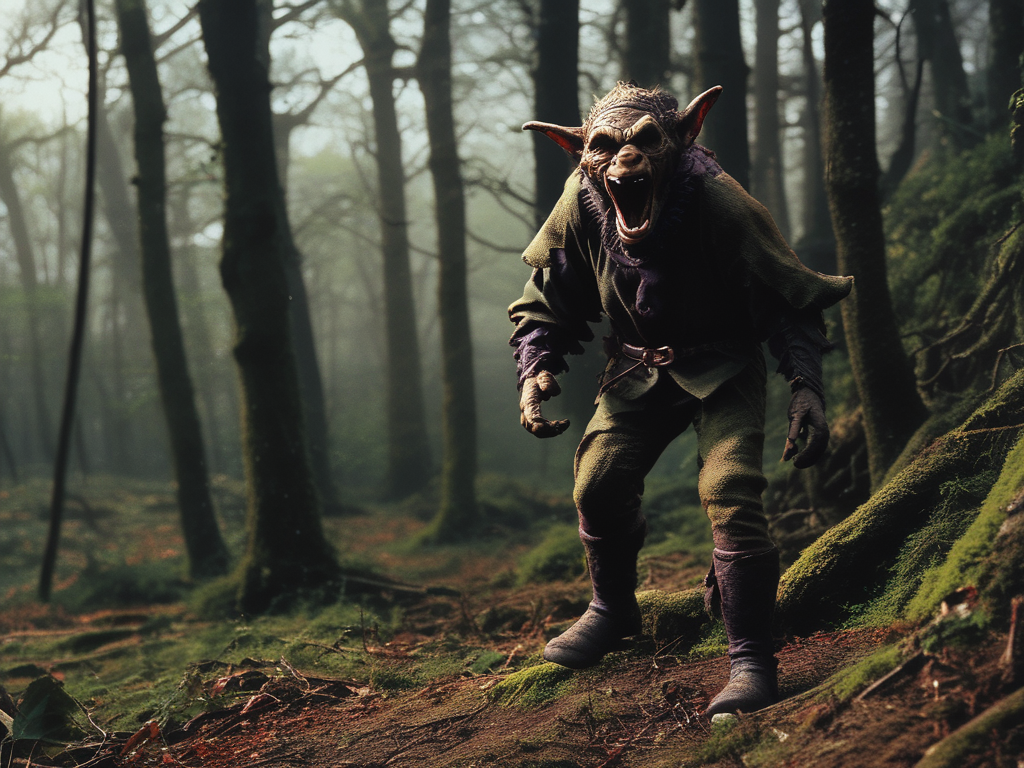
Boggarts have their roots deeply embedded in English folklore, with mentions dating back centuries. The term “boggart” is derived from the Middle English word “bogge” or “bugge,” signifying a ghost or hobgoblin. These mysterious spirits were believed to inhabit rural areas, particularly homes or countryside locales, where they would lurk in the shadows, unseen by human eyes.
Throughout history, boggarts have been referenced in various sources, including medieval texts and oral traditions. Tales of their shape-shifting abilities and mischievous behavior have been passed down through generations, adding to their mystique and allure. In some regions, boggarts were believed to be household spirits, either benevolent or malevolent, depending on how they were treated by the inhabitants.
Characteristics:
Boggarts are renowned for their shape-shifting abilities, which allow them to take on the appearance of whatever frightens or unsettles the person encountering them. This unique characteristic makes them particularly elusive and difficult to identify, as they can seamlessly blend into their surroundings, appearing as anything from a harmless creature to a terrifying apparition.
In addition to their shape-shifting prowess, boggarts are often associated with dark, unused spaces such as closets, attics, or cellars, where they may dwell and haunt unsuspecting inhabitants. While some boggarts are portrayed as harmless pranksters, others are more malevolent in nature, delighting in causing chaos and fear among those they encounter.
Notable Cases:
Throughout history, there have been numerous reported encounters with boggarts, some of which have left a lasting impression on local communities. These cases often involve sightings of strange lights, unexplained noises, or objects mysteriously moving on their own.
One notable case occurred in the small village of Widdrington, England, in the late 18th century. Locals reported sightings of a mysterious figure lurking in the shadows, believed to be a boggart haunting the nearby woods. Despite numerous attempts to capture or banish the spirit, it continued to elude detection, leaving the villagers in a state of fear and uncertainty.
Folklore:
Boggarts feature prominently in English folklore, where they are often depicted as cautionary figures warning against the dangers of the unseen and the importance of confronting one’s fears. Tales of boggarts haunting homes or tormenting travellers have been passed down through generations, perhaps as a reminder or caution to children to respect the natural world and the spirits that inhabit it.
In some traditions, boggarts are said to be vulnerable to laughter, suggesting that humor and levity have the power to dispel their dark influence. According to legend, a boggart’s power is weakened in the presence of laughter, making it easier to banish or drive away from a home or community.
Global Spread:
While boggarts are most commonly associated with English folklore, similar spirits and entities exist in cultures around the world. From the mischievous household spirits of Scandinavian folklore to the shape-shifting yokai of Japanese mythology, stories of elusive and enigmatic beings abound in diverse cultural traditions.
In Scandinavian folklore, for example, there are tales of the “nisse,” a small, gnome-like creature that inhabits farms and brings good luck to those who treat it kindly. Similarly, in Japanese folklore, the “yokai” are supernatural beings that can take on various forms and often play tricks on humans.
Inclusion in Literature and Media:
Boggarts have also made their mark in literature and media, where they continue to capture the imagination of audiences. From classic works of literature to contemporary films and television shows, boggarts are often portrayed as eerie or mysterious entities that haunt the human psyche.
In J.K. Rowling’s “Harry Potter” series, for example, boggarts are depicted as shape-shifting creatures that take on the form of their observer’s worst fears.
In Neil Gaiman’s “The Sandman,” a boggart causes chaos and confusion for one of the characters, highlighting their mischievous nature and ability to wreak havoc on the mortal world.
Boggarts, with their shape-shifting abilities and mischievous nature, have certainly left a mark on English folklore and continue to fascinate audiences around the world.
Whether encountered in ancient tales or modern media, these mysterious spirits embody humanity’s age-old fear of the unknown and the power of storytelling and the cautionary tales told to children to illuminate the mysteries of the supernatural world.


Leave a Reply