
In Scotland, encounters with fairies was a common part of everyday life for many people, especially in rural communities. This belief in the fae folk was deeply intertwined with the natural world, reflecting the Scottish people’s close connection to the land and its mysteries, and has become an integral part of Scottish folklore.
The Seelie Court is a concept within that folklore that represents a faction or group of fairies known for their friendly, helpful penchant for assisting humans. They may offer guidance, protection, or even gifts to those they favour.
Interactions with the fairies of the Seelie Court are generally seen as positive experiences for humans. They may provide aid in times of need, offer magical assistance, or simply bring joy and wonder to those they encounter.
Members of the Seelie Court are often described as exceptionally beautiful and graceful beings, with an otherworldly charm that captivates everyone who encounters them.
Despite their benevolence, fairies of the Seelie Court are still regarded as beings with their own agendas and motivations. Humans are advised to treat them with respect and caution, as they can be unpredictable creatures.
The Seelie Court is believed to partake in various celebrations and festivities, often involving music, dance, and merriment. These events are said to take place in enchanted realms hidden from human sight.
The Seelie Court symbolizes the dual nature of the fairy realm, portraying fairies as complex beings with both benevolent and mischievous aspects. This duality mirrors the complexities of human nature, where individuals may possess both kindness and selfishness.
The Seelie Court is often contrasted with the Unseelie Court, another faction of fairies known for their darker and more malevolent tendencies. While the Unseelie Court may cause harm or mischief to humans, the Seelie Court generally seeks to bring joy and positivity.
Tales involving the Seelie Court often serve as cautionary or moralistic stories, imparting lessons about respect, kindness, and the consequences of one’s actions.
These stories also reflect societal values and norms, such as the importance of honoring agreements and treating others with compassion.
In the ballad of “Tam Lin,” Tam Lin, a mortal man, is captured by the Queen of the Fairies and must be rescued by his human lover. Despite his captivity, Tam Lin speaks of the Seelie Court’s beauty and enchantment. Numerous versions of the ballad of Tam Lin exist, each portraying the encounter between mortal and fairy in unique ways. In some versions, Tam Lin’s rescue from the Seelie Court is a testament to the power of human love and bravery.
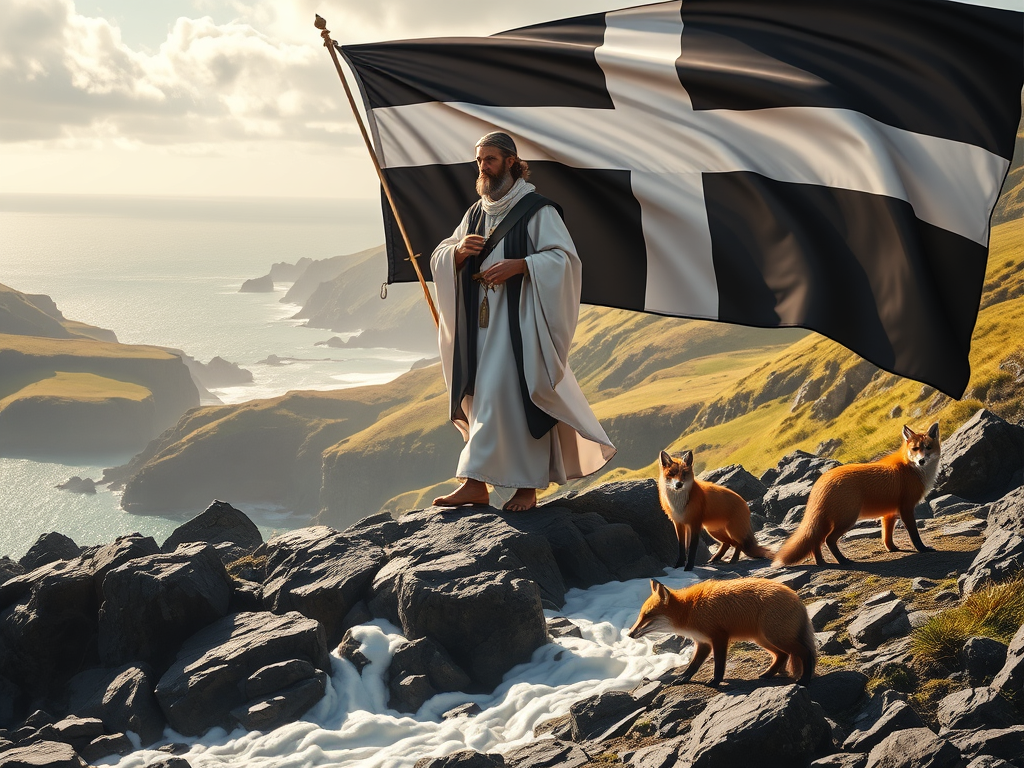
The legend of the Fairy Flag of Dunvegan tells of a flag gifted to the MacLeod clan by fairies from the Seelie Court. The flag is said to possess magical properties, providing protection and aid in times of need.
Thomas the Rhymer, a figure from Scottish balladry, is taken to the fairy realm by the Queen of Elfland, a representation of the Seelie Court. Upon his return, he gains the gift of prophecy but remains bound by his encounter with the fairy queen.
In “The Secret Commonwealth” by Robert Kirk written in the 17th-century, Robert Kirk describes the fairy realm and its inhabitants, including beings from the Seelie Court. He discusses their benevolent nature and their interactions with humans.
Contemporary authors, such as Neil Gaiman in his novel “Stardust,” draw inspiration from Scottish folklore and the Seelie Court. Gaiman’s portrayal of the fairy realm showcases its beauty and complexity, echoing themes found in traditional folklore.
Literary works such as these and myriad others offer insights into the cultural significance of the Seelie Court, exploring themes of beauty, enchantment, and the interplay between humanity and the Fae.
In the world of art. Masters of the Pre-Raphaelite Brotherhood frequently depicted scenes from Scottish folklore, including encounters with fairies from the Seelie Court. Their paintings capture the ethereal beauty and enchantment of the fairy realm.
Artists continue to explore the themes of Scottish folklore and the Seelie Court in their work, using various mediums such as illustration, sculpture, and digital art to bring these stories to life for modern audiences.
Through visual art, the Seelie Court is portrayed as a realm of wonder and magic, where mortal and fairy coexist in a delicate balance of beauty and mystery.
Over time, the concept of the Seelie Court has evolved and adapted to changing cultural contexts, but its core principles of benevolence and kindness remain central to Scottish fairy lore.
Today, the Seelie Court continues to captivate imaginations and inspire storytellers, keeping alive the rich tradition of Scottish folklore for future generations.
.



Leave a Reply