The Wendigo, a creature deeply entwined with the fabric of Native American folklore, particularly among the Algonquian-speaking tribes in the northern regions of the United States and Canada, stands as a symbol of malevolence and supernatural horror. Often depicted as a cannibalistic spirit or creature with otherworldly powers, the Wendigo’s legend has woven itself into a rich tapestry of storytelling, exploring themes of desperation, taboo, and the consequences of succumbing to the darkest depths of human nature.
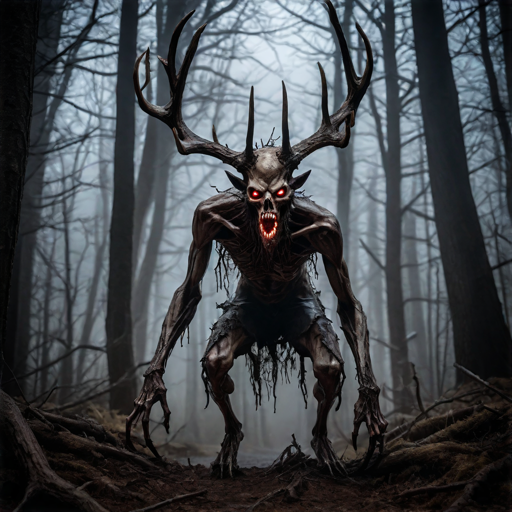
Descriptions of the Wendigo vary, but common elements include a skeletal frame, glowing eyes, and antler-like protrusions from its head. Its association with the frigid wilderness serves as a metaphor for the harshness of nature, making encounters with this mythical creature all the more terrifying.
One of the most intriguing aspects of the Wendigo legend is the concept of possession. It is believed that individuals who resort to cannibalism may either transform into a Wendigo or fall under its possession. This transformation is marked by insatiable hunger and an uncontrollable desire for human flesh, creating a horrifying narrative that explores the consequences of violating societal taboos.
While the Wendigo is prominently featured in Algonquian folklore, variations of similar creatures exist in other Native American cultures. The Ojibwe people, for instance, tell tales of the Weendigo, a creature that shares similarities with the Algonquian Wendigo but possesses distinct characteristics, often portrayed as a giant with a heart of ice, symbolizing the dangers of selfishness and greed. Similarly, the Cree people have their own version called the Witiko, a giant, malevolent spirit associated with winter, famine, and cannibalism, echoing the themes present in the Algonquian Wendigo mythology.
The influence of the Wendigo extends beyond Native American folklore, leaving an indelible mark on literature, film, and other forms of popular culture. In literature, Algernon Blackwood’s “The Wendigo” (1910) is a classic example, a short story delving into the psychological horror associated with encountering the creature. Contemporary authors like Stephen King have embraced the Wendigo in their works, with novels such as “Pet Sematary” featuring this mythical being as a central element.
In film and television, the Wendigo has become a recurring theme in horror. The film “Ravenous” (1999), for example, combines Wendigo folklore with a historical setting, creating a unique and chilling narrative. TV series like “Supernatural” and “Hannibal” have also explored their interpretations of the Wendigo myth, bringing this creature to a broader audience.
Video games, too, have embraced the Wendigo as a formidable and terrifying adversary. Games like “Until Dawn” and “The Long Dark” incorporate Wendigo lore, using its mythological aspects to heighten the horror elements within the gaming experience.
In conclusion, the Wendigo stands as a captivating and chilling figure deeply ingrained in Native American folklore. Its ability to transcend cultural boundaries and inspire creative works across various mediums highlights its enduring impact on our collective imagination. As the legend continues to evolve, the Wendigo remains a powerful symbol, reminding us of the timeless allure and terror associated with mythical creatures.