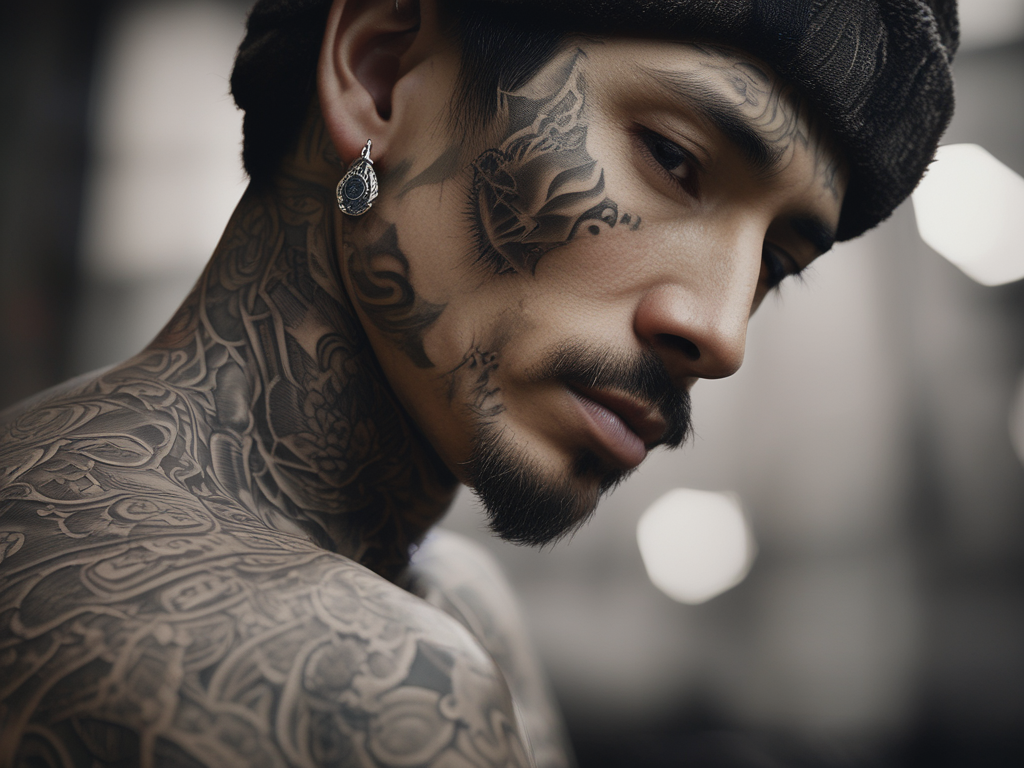
Tattooing has a long and varied history, deeply rooted in different cultures and societies across the globe.
The practice of marking the skin with ink or other pigments, creating permanent designs, has evolved over millennia, serving various purposes such as ritualistic, therapeutic, decorative, and punitive.
Understanding the intricate history and folklore of tattooing requires a journey through time, exploring how different civilizations have embraced and interpreted this form of body art.
The origins of tattooing can be traced back to prehistoric times. The oldest known tattoos were found on the mummified body of Ötzi the Iceman, who lived around 3300 BCE. Discovered in the Alps in 1991, Ötzi had a series of tattoos on his body, primarily consisting of simple dots and lines. These tattoos were located on various parts of his body, including his lower spine, right knee, and ankles.
Scholars believe that Ötzi’s tattoos were not merely decorative but likely had therapeutic or symbolic meanings. Some theories suggest that the tattoos were applied to alleviate pain or were related to a form of prehistoric acupuncture.
In ancient Egypt and Nubia, tattoos have been discovered on mummies dating back to as early as 2000 BCE. These tattoos were often religious and cultural symbols and were believed to serve as amulets, offering protection or representing spiritual beliefs.
Women, in particular, were often tattooed with symbols associated with the goddess Hathor, indicating a connection to fertility, motherhood, and protection during childbirth – you go, girls!
The practice of tattooing in ancient Egypt appears to have been closely linked to religious and magical beliefs, with specific motifs believed to carry protective powers or signify particular deities.
Polynesia has one of the richest and most deeply ingrained tattoo cultures in the world – indeed the word “tattoo” itself originates from the Polynesian word “tatau.”
Tattooing in Polynesian culture is an ancient tradition with profound cultural significance, involving elaborate and intricate designs that tell a person’s history, lineage, and rank within the tribe.
The process of tattooing was a sacred and communal event, often involving elaborate rituals and ceremonies. Each tattoo design, often covering large parts of the body, was unique to the individual, incorporating motifs that reflected their achievements, social status, and ancestral heritage.
The Maori people of New Zealand are renowned for their distinctive form of tattooing known as “moko.”
Moko tattoos are primarily facial tattoos that signify the individual’s family heritage, social status, and personal accomplishments.
The moko process is sacred and involves a deep spiritual component. Traditionally, moko was applied using chisels made from bone,(ouch!) a technique that resulted in a unique textured appearance.
For the Maori, moko is not just body art but a crucial element of their identity and cultural heritage, representing a connection to their ancestors and a marker of their personal journey.
In Japan, the history of tattooing, known as “irezumi,” dates back to the Jomon period (10,000 BCE). Over the centuries, Japanese tattooing evolved into a complex and highly artistic practice.
By the Edo period (1603-1868), tattoos became associated with the ukiyo-e art movement, with artists such as Horishige and Horiyoshi creating intricate and elaborate designs. These tattoos often depicted themes from mythology, history, and nature, including dragons, koi fish, and cherry blossoms.
Tattoos in Japan also served as a means of marking criminals during certain periods, although this practice created a stigma around tattooing that persists to some extent even today.
In ancient China, tattooing had different connotations. While some cultures within China, such as the Dulong people, practiced tattooing as a rite of passage for women, tattoos were generally associated with criminals and outcasts in other regions.
Chinese literature and historical records often depict tattoos as punitive measures, marking individuals who had committed crimes. Despite this negative connotation, tattoos in certain Chinese subcultures had positive and significant meanings, with designs often symbolizing strength, bravery, or spiritual beliefs.
Various Native American tribes also used tattoos for a multitude of purposes. These tattoos often held deep spiritual significance and were believed to endow the wearer with specific powers or attributes.
For some tribes, tattoos were used as a form of protection, with designs intended to guard against evil spirits or provide strength in battle. Others used tattoos as rites of passage, marking significant life events such as reaching adulthood, marriage, or achieving a certain status within the community.
The designs and motifs varied widely among different tribes, reflecting the diverse cultures and spiritual beliefs of Native American societies.
The Inuit people of the Arctic regions practiced tattooing as well, particularly among women.
Inuit women traditionally tattooed their faces and bodies as symbols of maturity and to denote life accomplishments, such as marriage and childbirth. The tattoos were also believed to enhance their beauty and signify their readiness for certain roles within their communities.
The practice of tattooing among the Inuit was deeply intertwined with their cultural and spiritual beliefs, with each design carrying specific meanings related to their way of life and the harsh environment in which they lived.
European sailors encountered tattooing during their explorations of the Pacific Islands in the 18th century and brought the practice back to Europe.
For sailors, tattoos often served as a means of commemorating their voyages and as symbols of protection against the dangers of the sea.
Common designs included anchors, ships, and nautical stars, each carrying specific meanings related to their seafaring life. Tattoos also served as a form of identification, a way for sailors to recognize each other and their shared experiences. The practice quickly spread among sailors, soldiers, and other groups, becoming a distinctive feature of maritime culture.
By the 19th and 20th centuries, tattooing began to gain popularity in Western societies beyond the confines of sailors and soldiers.
The invention of the electric tattoo machine in 1891 by Samuel O’Reilly revolutionized the practice, making it more accessible and less painful. This innovation allowed for greater precision and the ability to create more intricate designs.
During this period, tattoos were often associated with circus performers and sideshow acts, where tattooed individuals were displayed as curiosities and attractions. Despite this, tattooing started to gain a broader appeal as a form of personal expression and artistry.
Hurtling back to the present day, tattooing has evolved into a global phenomenon with diverse styles and techniques. It is embraced by people from all walks of life as a form of personal expression, art, and identity.
Tattoo conventions, television shows, and social media have contributed to its popularity and acceptance. Tattoo artists today draw inspiration from a wide range of sources, including traditional motifs, modern art, and personal experiences.
The artistry involved in modern tattooing has elevated the practice to a recognized form of visual art, with renowned tattoo artists gaining fame and recognition for their work.
So why am I wittering on about tattoos?
I’m so glad you asked… Let’s recap..
The folklore and symbolism associated with tattooing are as varied as the cultures that practice it. Many cultures have specific symbols and motifs that carry particular meanings.
For example:
In Japanese tattoos, dragons and koi fish symbolize strength, perseverance, and good fortune.
Polynesian tattoos often feature motifs such as turtles, sharks, and geometric patterns, each with its own set of meanings related to protection, guidance, and connection to the natural world.
In Western cultures, tattoos of skulls, roses, and hearts are common, each symbolizing different aspects of life, death, love, and loss.
Throughout history, tattoos have often been believed to offer protection, enhance strength, or provide other magical benefits:
In Polynesia, for instance, specific tattoo designs were thought to guard against evil spirits and bring good fortune to the wearer.
In ancient Egypt, tattoos associated with the goddess Hathor were believed to provide protection and fertility.
Similarly, some Native American tribes used tattoos as spiritual talismans, believing that the designs could endow the wearer with the powers and attributes represented by the symbols.
Tattoos have frequently played a role in rites of passage, marking significant life events and transitions.
In many cultures, receiving a tattoo is a deeply personal and often communal experience, symbolizing an individual’s journey through life.
For the Maori, the process of receiving a moko is a profound rite of passage, marking a person’s growth, achievements, and connection to their ancestors.
In Inuit culture, facial tattoos signify a woman’s maturity and readiness for her roles within the community.
In modern Western societies, people often get tattoos to commemorate personal milestones such as birthdays, anniversaries, and achievements.
The history and folklore of tattooing reflect the diverse and complex ways in which humans have used body art to convey meaning, identity, and cultural heritage, and nowhere is this more common than within Western Prisons and Street-gangs.
Tattooing within Western prisons and gangs has developed its own unique culture, characterized by specific symbols, meanings, and practices. These tattoos serve various purposes, including identification, intimidation, and expressions of loyalty and personal history.
The culture of tattooing in these contexts is complex, reflecting the harsh realities and intricate social structures of prison life and gang affiliations.
In Western prisons, tattoos often serve as a form of identification and communication. They can indicate an inmate’s gang affiliation, criminal record, personal beliefs, and experiences within the prison system.
Prison tattoos are typically done with makeshift tools, such as improvised needles made from sharpened staples or pieces of metal, and ink created from melted plastic, pen ink, or other readily available substances. Despite the rudimentary equipment, prison tattoos often display a high degree of skill and detail, reflecting the artistry and resourcefulness of the inmates.
Common prison tattoos include teardrops, barbed wire, spider webs, and clock faces without hands. Each of these symbols carries specific meanings.
For example, a teardrop tattoo can signify that the wearer has committed murder or, alternatively, that they have lost a loved one to violence. The exact meaning can vary based on geographical location and the specific prison culture. Barbed wire tattoos typically represent a life sentence or a long-term prison stay, symbolizing the wearer’s entanglement with the penal system. Spider web tattoos, often found on the elbow or neck, can denote time spent in prison, with each web strand potentially representing a year served.
Gang tattoos are another prominent aspect of prison tattoo culture, with each gang having its own distinct symbols and designs. These tattoos not only signify membership and loyalty but also serve as a warning to rival gangs and a means of establishing hierarchy within the gang.
For example, the Aryan Brotherhood, a notorious white supremacist gang, often uses tattoos featuring swastikas, lightning bolts, and shamrocks to signify membership. The Mexican Mafia, or La Eme, utilizes the letter “M” or the number “13” in their tattoos, referencing the 13th letter of the alphabet and their gang’s initials. The Latin Kings, another prominent gang, frequently use crowns and the initials “LK” in their tattoos.
The symbolism of gang tattoos extends beyond mere identification, they often encapsulate the gang’s ideology, history, and values. For instance, the five-pointed crown used by the Latin Kings symbolizes their allegiance to the People Nation, a larger coalition of street gangs. Each point of the crown represents different tenets of their philosophy, such as love, respect, honor, and loyalty. Similarly, the three dots tattoo, often seen on the hands or face, can represent the phrase “mi vida loca” or “my crazy life,” encapsulating the chaotic and violent lifestyle associated with gang life.
In addition to gang symbols, prison tattoos often incorporate personal elements that tell the story of the individual’s life and experiences.
Inmates might get tattoos commemorating significant events, such as the birth of a child, the death of a loved one, or personal achievements. These tattoos serve as a permanent record of their journey, marking their struggles, triumphs, and relationships.
Religious symbols are also common, with many inmates choosing to tattoo crosses, rosaries, or other spiritual imagery as a source of comfort and protection.
The process of getting a tattoo in prison is often a clandestine and risky endeavor. Due to the prohibition of tattooing equipment in most prisons, inmates must create makeshift tattoo machines using available materials.
This typically involves modifying electric shavers or small motors to create a device that can drive a needle. The ink is usually made from burnt paper, melted plastic, or other improvised substances, which are mixed with water to create a usable pigment. The lack of sterile conditions and proper equipment means that prison tattoos carry a high risk of infection and disease transmission, including hepatitis and HIV.
Despite the dangers, tattoos hold significant cultural value within the prison system. They are a means of establishing identity and status, providing a sense of belonging in the often brutal and isolating environment of prison life.
Tattoos can also serve as a form of resistance and defiance, a way for inmates to reclaim control over their bodies and assert their individuality in a setting where personal autonomy is severely restricted.
The culture of tattooing in Western prisons and gangs extends beyond the confines of the prison walls.
Gang members who have been released from prison often carry their tattoos into the outside world, where they continue to serve as markers of identity and allegiance.
These tattoos can help former inmates maintain connections with their gang and can also serve as a form of street credibility.
However, they can also pose challenges, making it difficult for individuals to leave the gang lifestyle behind and reintegrate into society.
In recent years, there has been growing recognition of the need to address the health risks associated with prison tattooing.
Some prisons have introduced supervised tattoo programs, providing inmates with access to clean equipment and professional tattoo artists. These programs aim to reduce the spread of infectious diseases and improve hygiene while allowing inmates to engage in a form of self-expression that holds significant cultural and personal meaning.
Additionally, some programs offer tattoo removal services, helping former gang members and inmates who wish to leave their past behind and start anew.
The culture of tattooing in Western prisons and gangs is a reflection of the broader social dynamics and challenges faced by these populations.
Tattoos serve as a powerful form of communication, identity, and resistance, encapsulating the harsh realities of prison life and the complex social hierarchies of gang affiliations. Understanding this culture provides insight into the ways in which individuals navigate and survive in these often hostile and oppressive environments.
From the ancient , possibly therapeutic tattoos of Ötzi the Iceman and the intricate and symbolic moko of the Maori to the self-expression and affiliating adornment within the penalty system, tattooing has been a powerful form of self-expression and cultural identity for thousands of years.
Despite the varying attitudes toward tattoos across different societies and historical periods, the practice has endured and evolved, continually adapting to the changing cultural landscapes.
Tattooings history illustrates the universal human desire to mark significant moments, express individuality, and connect with cultural heritage through the art of body modification.
As tattooing continues to gain acceptance and popularity worldwide, it remains a vibrant and dynamic form of art and expression, bridging the past and present and highlighting the diverse ways in which people across cultures, society and time periods have chosen to adorn their bodies with meaningful and enduring symbols.