The Icelandic witch trials were distinctive, with a surprising focus on male practitioners compared to the rest of Europe where women were primarily targeted. One of the most notable cases in Iceland was that of Jón Rögnvaldsson.
Jón Rögnvaldsson’s trial took place in 1625 and is one of the most infamous witch trials in Icelandic history. Unlike in other European regions where witchcraft accusations often targeted women, Icelandic society predominantly accused men of practicing witchcraft. This divergence is rooted in Icelandic cultural beliefs and societal structures. Magic in Iceland was frequently associated with learned practices, such as the use of runes and other scholarly magical practices, which were predominantly male domains.
Jón Rögnvaldsson, like many of his contemporaries, was accused of using magic for personal gain and to harm others. The accusations against him involved the use of spells and charms, which were common charges in Icelandic witchcraft trials. The details of his trial reflect a society deeply entwined with beliefs in the power of magic and the supernatural, where disputes and misfortunes were often attributed to magical interference.
During his trial, Jón was subjected to the legal framework that governed Iceland under Danish rule, as Iceland was part of the Danish kingdom at the time. This legal framework, influenced by Danish laws, dictated how accusations of witchcraft were prosecuted. However, Icelandic customs and local beliefs heavily influenced the proceedings and the interpretation of these laws.
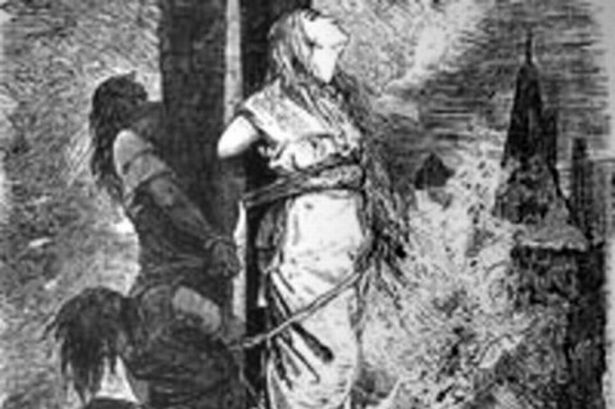
Jón was ultimately found guilty and executed, becoming one of the many men who faced such a grim fate in Iceland. His trial highlights the harsh realities of the time, where fear and superstition could lead to deadly consequences. It also underscores the unique gender dynamics of Icelandic witch trials, where men were the primary targets of such accusations.
The execution of Jón Rögnvaldsson marked a significant moment in Icelandic history, symbolizing the intense fear of magic and the lengths to which society would go to root out perceived evil. Despite the eventual decline of witch trials by the late 17th century, Jón’s case remains a poignant reminder of this dark chapter in Icelandic history.
In the broader context, the trial of Jón Rögnvaldsson and others like him illustrates the intersection of legal, cultural, and societal factors that shaped the witch hunts in Iceland. It shows how deeply ingrained beliefs in magic and the supernatural could influence the lives and fates of individuals, particularly in a society where men were more likely to be seen as the wielders of such forbidden powers.