Paranormal research, with its rich and controversial history, encompasses a wide array of phenomena and investigative techniques. As interest in the field grew, several notable investigators emerged, contributing significantly to our understanding and methodology. Additionally, specific tools and practices, such as electromagnetic field (EMF) detectors and temperature fluctuation measurements, have become central to paranormal investigations. Moreover, the use of mediums and Ouija boards continues to be a topic of debate, with both advantages and significant drawbacks.
In the 19th and 20th centuries, several key figures left an indelible mark on the field of paranormal research. One of the earliest and most influential was Harry Price (1881-1948), an English psychic researcher and author. Price is best known for his investigations of Borley Rectory, which he dubbed “the most haunted house in England.” His meticulous approach combined scepticism with a genuine interest in the paranormal, setting a standard for future researchers.
Another prominent figure was J.B. Rhine (1895-1980), often referred to as the father of modern parapsychology. Rhine’s work at Duke University focused on experiments in extrasensory perception (ESP) and psychokinesis (PK). He introduced statistical methods to the study of psychic phenomena, although his work was not without criticism regarding experimental design and reproducibility.
Hans Bender (1907-1991), a German parapsychologist, also made significant contributions. Known as the “German Rhine,” Bender founded the Institute for Frontier Areas of Psychology and Mental Health in Freiburg. He conducted extensive research on poltergeist phenomena, telepathy, and other psychic phenomena, often emphasizing the psychological aspects of paranormal experiences.
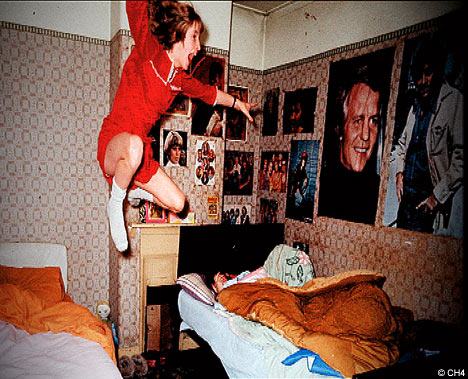
More recently, figures like Lorraine Warren (1927-2019) and her husband Ed Warren (1926-2006) have gained fame for their investigations into haunted houses and demonic activity. The Warrens founded the New England Society for Psychic Research and were involved in high-profile cases such as the Amityville Horror and the Enfield Poltergeist. While their work has been popularized in books and films, it has also faced scepticism and criticism for a lack of scientific rigor.
In modern paranormal investigations, EMF detectors and temperature fluctuation measurements are commonly used tools. EMF detectors measure electromagnetic fields, which are naturally produced by electrical devices and power lines. Paranormal investigators use these devices to detect unexplained EMF spikes, which they believe may indicate the presence of a spirit. The theory is that ghosts or other entities might emit or disrupt electromagnetic fields, making EMF spikes a potential sign of paranormal activity. However, critics argue that many environmental factors, such as faulty wiring or electronic devices, can cause EMF fluctuations, leading to false positives.
Temperature fluctuations, specifically sudden drops in temperature, are also considered potential indicators of paranormal activity. The rationale behind this belief is that spirits may draw energy from their surroundings, causing a localized decrease in temperature. Investigators use thermal imaging cameras and infrared thermometers to detect these changes. While temperature drops are often reported during paranormal events, skeptics highlight that drafts, poor insulation, and other natural factors can easily explain these occurrences.
The use of mediums and Ouija boards in paranormal investigations adds another layer of complexity. Mediums claim to communicate with spirits, often providing information that seems to be beyond their natural knowledge. The pros of using mediums include the potential for direct communication with entities and gaining insights that might not be accessible through other methods. However, the cons are significant: the subjective nature of mediumship, the potential for fraud, and the influence of psychological factors like suggestion and cold reading techniques can lead to unreliable results.
Similarly, Ouija boards, also known as spirit boards, are used to attempt communication with spirits through the movement of a planchette across a board marked with letters and numbers. Proponents argue that Ouija boards can facilitate direct communication with the spirit world. However, critics point out the ideomotor effect, where unconscious movements by participants can cause the planchette to move, giving the illusion of spirit communication. Additionally, the use of Ouija boards has been linked to psychological distress and fear, making them a controversial tool in paranormal investigations.
Despite the varied methodologies and the controversies that surround them, paranormal research remains a field that captures the imagination and curiosity of many. For those interested in delving deeper into the history and practice of paranormal research, the following resources offer comprehensive insights:
- “Ghost Hunters: William James and the Search for Scientific Proof of Life After Death” by Deborah Blum.
- “Parapsychology: A Handbook for the 21st Century” edited by Etzel Cardeña, John Palmer, and David Marcusson-Clavertz.
- “The Science of Ghosts: Searching for Spirits of the Dead” by Joe Nickell.
- “Supernormal: Science, Yoga, and the Evidence for Extraordinary Psychic Abilities” by Dean Radin.
- Articles from the Journal of Parapsychology and the Journal of the Society for Psychical Research.
The field of paranormal research is marked by a fascinating blend of historical curiosity, scientific investigation, and mystery. While it faces significant methodological challenges and scepticism, the ongoing exploration of the paranormal continues to push the boundaries of our understanding, inviting us to question the limits of reality and the potential for phenomena that lie beyond the scope of current scientific explanation. Whether one approaches the subject as a sceptic or a believer, the history and evolution of paranormal research offer a compelling glimpse into humanity’s quest to understand the unknown.