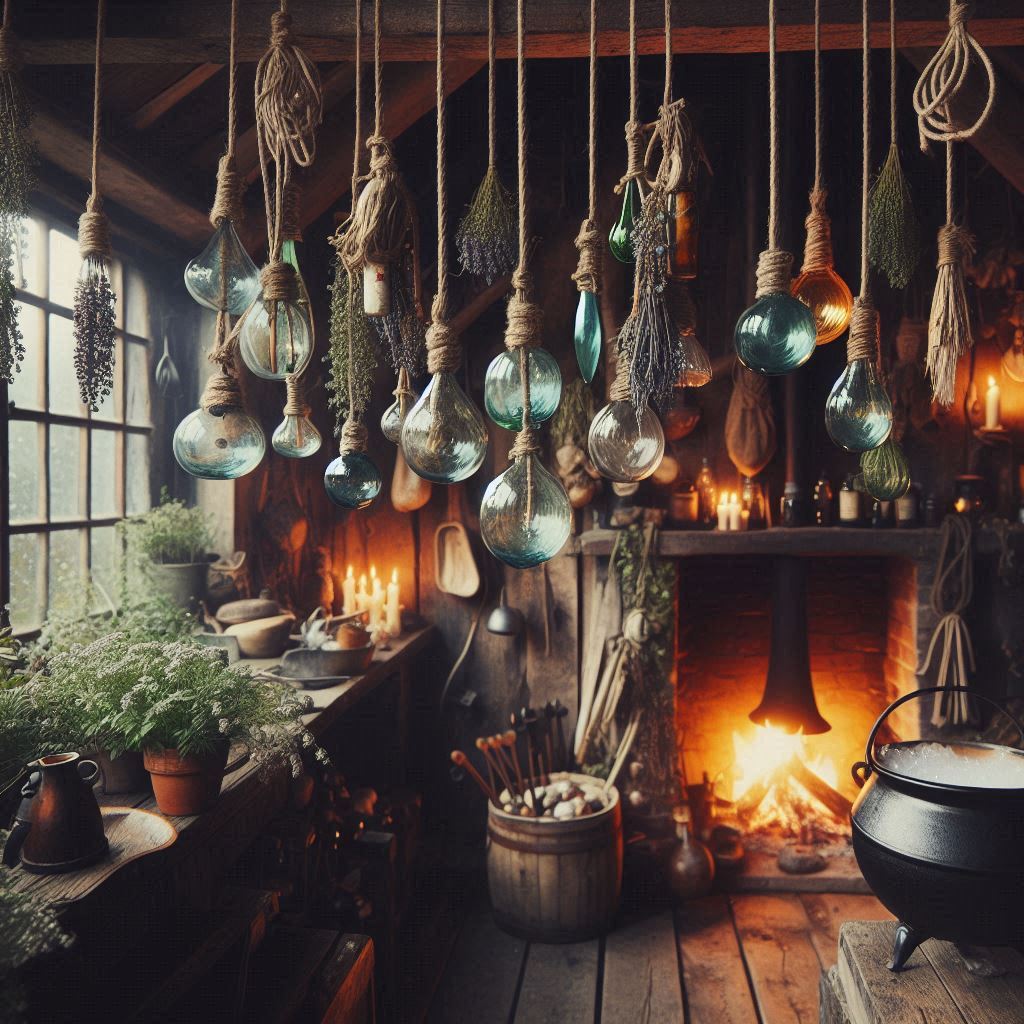
Witch balls are fascinating objects rooted in European folklore, primarily originating from England. These curious glass spheres, typically ranging in size from small ornaments to large globes, are rich in history, mystery, and superstition.
Traditionally hung in windows or above doorways, witch balls were believed to offer protection from malevolent spirits, witches, and other harmful entities. The origins, purpose, and cultural significance of witch balls reveal a captivating intersection of magic, superstition, and craftsmanship that has evolved over centuries.
The earliest mentions of objects resembling witch balls date back to the 17th century, although some claim that their origins are even older, possibly tracing back to medieval times. In these early periods, fear of witchcraft was prevalent, particularly in rural areas where communities were deeply superstitious.
This was a time when people believed that witches held the power to curse crops, animals, and even humans, causing illness, misfortune, and death. In such a climate, any means of protection was welcome, and the witch ball emerged as one such tool for safeguarding homes.
A witch ball is generally made of glass, often hand-blown, and is sometimes colored in vibrant hues like green, blue, or red, though clear glass examples also exist. The spherical shape of the witch ball was thought to be key to its protective properties.
Early folklore suggests that its reflective surface could confuse and trap evil spirits. As spirits approached the home, they would be drawn to the shiny, reflective ball. Once close, they would become ensnared within the sphere, where they would remain harmless.
In some versions of the lore, it is said that the spirits would lose their power once captured within the ball and eventually dissipate, while other beliefs suggested they were simply trapped indefinitely.The reflective and fragile nature of glass itself was considered significant in its ability to repel evil forces.
Glass was a relatively expensive material in earlier centuries, and the act of creating a glass ball specifically to ward off malevolent spirits elevated it beyond a simple household decoration. Some glassmakers were even believed to have infused magical properties into these witch balls during their crafting, further heightening their mystical reputation. In this way, glassblowers were sometimes seen as artisans who possessed knowledge of both the physical and the magical realms, blending practical craftsmanship with protective enchantments.
Witch balls also have a direct connection to a wider practice of glass-based apotropaic devices. In some cultures, similar glass objects were used as protective amulets. For instance, in Venice, the tradition of using mirrored glass to deflect the “evil eye” closely parallels the protective purpose of the witch ball in England.
The belief in the evil eye—the idea that a malevolent glare could cause harm—was widespread, and reflective objects were frequently employed to send this harmful energy back to its source. The witch ball’s reflective surface may have been seen in a similar light, functioning not only as a trap for spirits but also as a deterrent against any envious or evil intent directed toward the household.
The superstitions surrounding witch balls were not limited to their ability to trap evil spirits. Some believed that the balls could also absorb negative energies, such as curses or hexes cast by witches. In this sense, the witch ball served as a kind of supernatural sponge, soaking up harmful magical forces before they could reach the inhabitants of the home. The balls were often hung in windows or doorways because these were seen as points of entry for both human visitors and spiritual entities. By placing a witch ball at these thresholds, homeowners hoped to intercept any negative forces attempting to gain access.
There are also interpretations of witch balls as symbols of good fortune and prosperity. In this context, the balls were not merely protective but were believed to attract good luck. Some families would hang witch balls in their homes to ensure prosperity, fertility, and a general sense of well-being. It is thought that these positive associations with witch balls were particularly prevalent in rural communities, where the line between magical and practical thinking was often blurred.
The name “witch ball” itself is somewhat ambiguous, as its exact etymology remains unclear. One interpretation is that the term “witch” refers to the ball’s purpose of protecting against witches, while another suggests that the name may have originally referred to the notion of “bewitching” or fascinating viewers with their beautiful, reflective surfaces. Yet another possibility is that the word “witch” could be derived from an older term for “watch,” as in an object that keeps watch over the household.
In addition to their use in private homes, witch balls were sometimes placed in barns, stables, and other outbuildings. Farmers, in particular, were concerned with the well-being of their livestock, and witch balls were believed to guard animals against the malefic influence of witches who might cast spells to sicken or kill them. This practice likely grew from the widespread belief that witches were particularly fond of interfering with agriculture and livestock, seeking to destroy the prosperity of the community by attacking its food supply.
As the centuries passed, witch balls gradually became less associated with active magical protection and more connected with decoration and superstition. By the Victorian era, these objects had transitioned into popular ornaments, often given as gifts or hung in Christmas trees. The Victorian fascination with the supernatural, combined with their love of ornate, decorative items, ensured the witch ball’s continued presence in the home, albeit with diminished magical associations.
Instead of being solely seen as protective talismans, witch balls were now cherished as beautiful glasswork, with their magical origins often serving as charming anecdotes rather than serious beliefs.
However, witch balls never fully lost their mystical significance. Even in modern times, many people hang them in their homes as a nod to their protective heritage. For some, witch balls retain their role as spiritual protectors, while for others, they are simply a link to the folklore and traditions of the past. In contemporary pagan and Wiccan practices, witch balls are sometimes still used as tools of protection, often filled with herbs, feathers, or other magical items believed to enhance their protective qualities.
The witch ball’s lasting presence reminds us of the deep human need for protection and control in an uncertain world. At a time when the boundary between the spiritual and material realms was more fluid, objects like the witch ball provided reassurance and a sense of security. Today, whether viewed as a historical curiosity, a decorative item, or a legitimate tool of magic, the witch ball continues to captivate the imagination, standing as a testament to the power of folklore and the persistence of magical traditions.




Leave a Reply