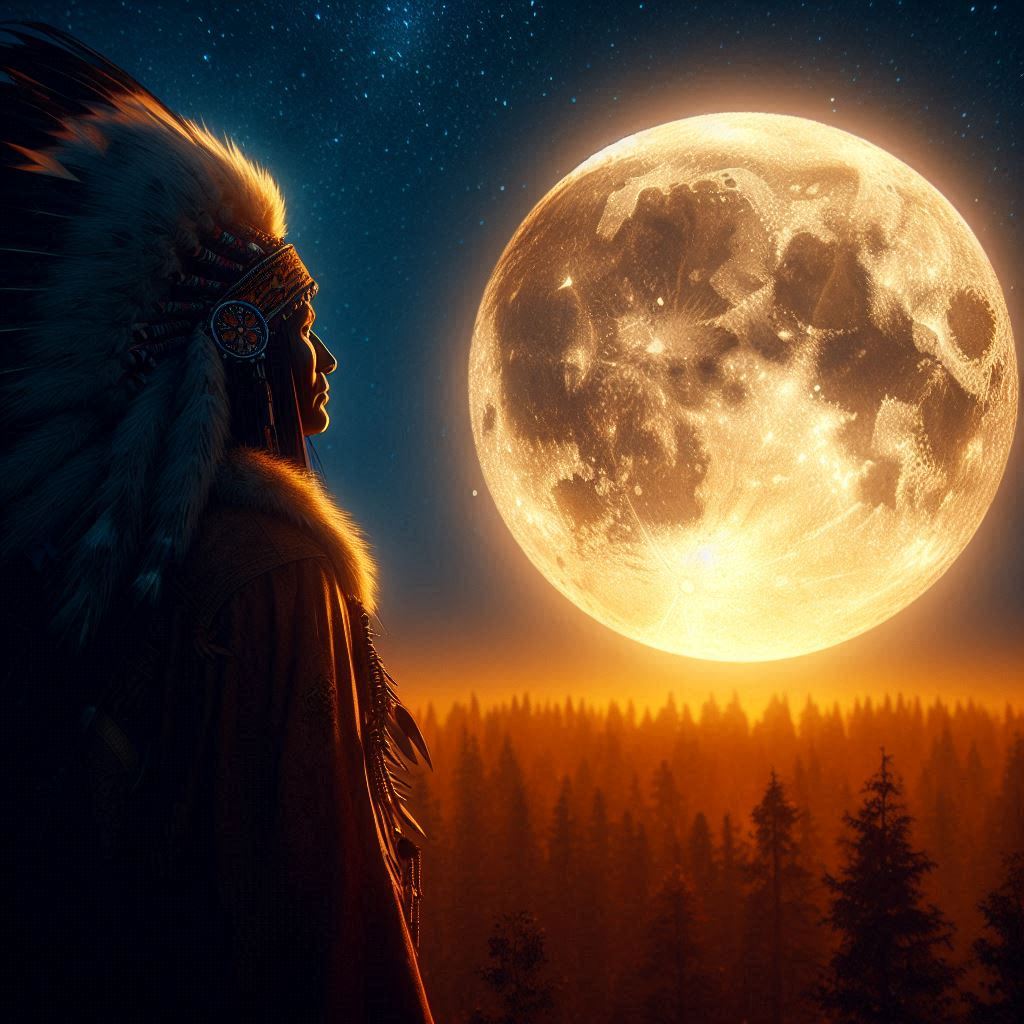
The Hunter’s Moon is a fascinating event in the calendar of lunar phases, marking a time of harvest and preparation for the winter months.
This full moon, which occurs in October, has a rich variety of folklore and traditions woven around it, reflecting the changing seasons and the relationship between humans and the natural world.
As we look forward to the Hunter’s Moon on 17 October 2024, it’s worth exploring the history, significance, and cultural stories associated with this luminous orb in the sky.
The term “Hunter’s Moon” is believed to have originated among Native American tribes and was later adopted by European settlers in North America. This moon is traditionally associated with the time of year when hunters would prepare for the winter by hunting game to stockpile food. It served as a reminder that as the days grew shorter and colder, it was essential to gather resources. The full moon provided light during the night, making it easier for hunters to see and track their prey, especially deer, which were fattened from the summer’s bounty and would soon be less active as winter approached.
Many Native American tribes had various names for this moon, often reflecting their unique cultural perspectives and lifestyles. For instance, the Algonquin tribes referred to it as the “Hunter’s Moon,” highlighting its significance for hunting. Other tribes called it the “Travel Moon” or the “Frosty Moon,” each name capturing the essence of what this time of year meant for their communities.
The full moon not only illuminated the night but also symbolized the deep connection between humans and the cycles of nature.
In many cultures, the moon has long been seen as a powerful entity, guiding and influencing human behaviour. It has inspired countless legends, myths, and folklore.
In medieval Europe, the Hunter’s Moon was often associated with the end of the harvest season. Farmers would gather their crops, and with the waning warmth of autumn, they would prepare for the upcoming challenges of winter. The moon’s bright light symbolised a time of abundance, a beacon of hope in the darkening months ahead.
Traditionally, many people celebrated the Hunter’s Moon with festivals, community gatherings, and rituals. In some regions, it was customary to hold feasts to celebrate the harvest, giving thanks for the earth’s bounty. These communal gatherings not only fostered a sense of community but also allowed for the sharing of stories, experiences, and knowledge about the changing seasons. As families and friends came together, they would recount tales from the past, honouring their ancestors and the spirits of nature.
Folklore surrounding the Hunter’s Moon often includes themes of transformation and preparation. In many cultures, this full moon is viewed as a time for reflection and introspection. People would take stock of their lives, considering the challenges and triumphs of the past year.
It is said that the Hunter’s Moon encourages individuals to set intentions for the coming winter months, contemplating what they wish to cultivate within themselves and their lives. This period of reflection can lead to personal growth and change, allowing individuals to emerge from the darker months with renewed energy and purpose when spring returns.
The connection between the Hunter’s Moon and the natural world is profound. As animals prepare for the winter months, many species engage in behaviours that reflect the changing seasons. For instance, deer begin to grow their winter coats, squirrels gather nuts, and birds migrate to warmer climates. This period of preparation resonates with the traditions and practices of various cultures. The Hunter’s Moon acts as a reminder of the interconnectedness of all living beings and the importance of living in harmony with nature.
As we approach the Hunter’s Moon in October 2024, it’s essential to reflect on how this event continues to inspire people today. In a fast-paced world, where the rhythm of nature can sometimes be overshadowed by technology and urban living, the Hunter’s Moon invites us to slow down and reconnect with the earth. It serves as a reminder of the cycles of life, the changing seasons, and the importance of being mindful of our surroundings.
Many modern celebrations of the Hunter’s Moon include moonlit hikes, outdoor gatherings, and activities that encourage people to engage with nature. In some communities, festivals are held to honour the full moon, featuring local foods, crafts, and traditional music. These gatherings often provide an opportunity to educate people about sustainable living and the importance of preserving natural resources.
In addition to community celebrations, individuals can create their own rituals to honour the Hunter’s Moon. This could include setting aside time to reflect on personal goals, writing in a journal, or spending time outdoors under the moonlight.
For those with a more spiritual inclination, the Hunter’s Moon can be an excellent time for meditation or rituals that focus on gratitude, intention setting, and connecting with the natural world. Lighting candles, offering thanks to the earth, or even participating in a simple ceremony can help individuals tap into the energies of this powerful time.
The Hunter’s Moon also serves as a poignant reminder of the cycles of life, death, and rebirth. Just as the moon waxes and wanes, our lives are filled with moments of growth, reflection, and renewal. This time encourages us to embrace the changes within ourselves and our surroundings, allowing us to navigate life’s challenges with grace and resilience. The full moon can act as a mirror, reflecting not only the physical illumination of the night but also the illumination of our inner selves.
Moreover, the folklore surrounding the Hunter’s Moon has inspired countless artistic expressions, from literature to visual arts. Poets and writers have captured its essence in verses and stories, exploring themes of nature, survival, and the human experience. Artists have portrayed the moon in paintings and photography, celebrating its beauty and the emotions it evokes. This creative legacy continues to thrive, reminding us of the enduring power of folklore and the stories we share across generations.
As we approach the 17th, we will witness the Hunter’s Moon in all its glory, an annual reminder of the connections we share with nature and with each other. Whether we are part of a community celebration or spending quiet time in solitude, the Hunter’s Moon invites us to pause, reflect, and honour the cycles of life. It is an opportunity to give thanks for the harvest, to appreciate the beauty of the world around us, and to prepare for the journey ahead.
In the end, the Hunter’s Moon is more than just a celestial event; it is a celebration of life, a reminder of our place in the natural world, and an invitation to reconnect with ourselves and our communities. As we gaze up at the bright orb illuminating the night sky, we can draw inspiration from the stories of those who have come before us, carrying forth the legacy of the Hunter’s Moon into our own lives. The folklore associated with this luminous phase encourages us to embrace the seasons, honour our relationships with the earth, and cherish the moments of light in the darkness. It is a powerful symbol of unity, continuity, and the enduring spirit of humanity.
So, as October draws near and the Hunter’s Moon rises high, let us celebrate this enchanting time and all the beauty it brings into our lives.


Leave a Reply