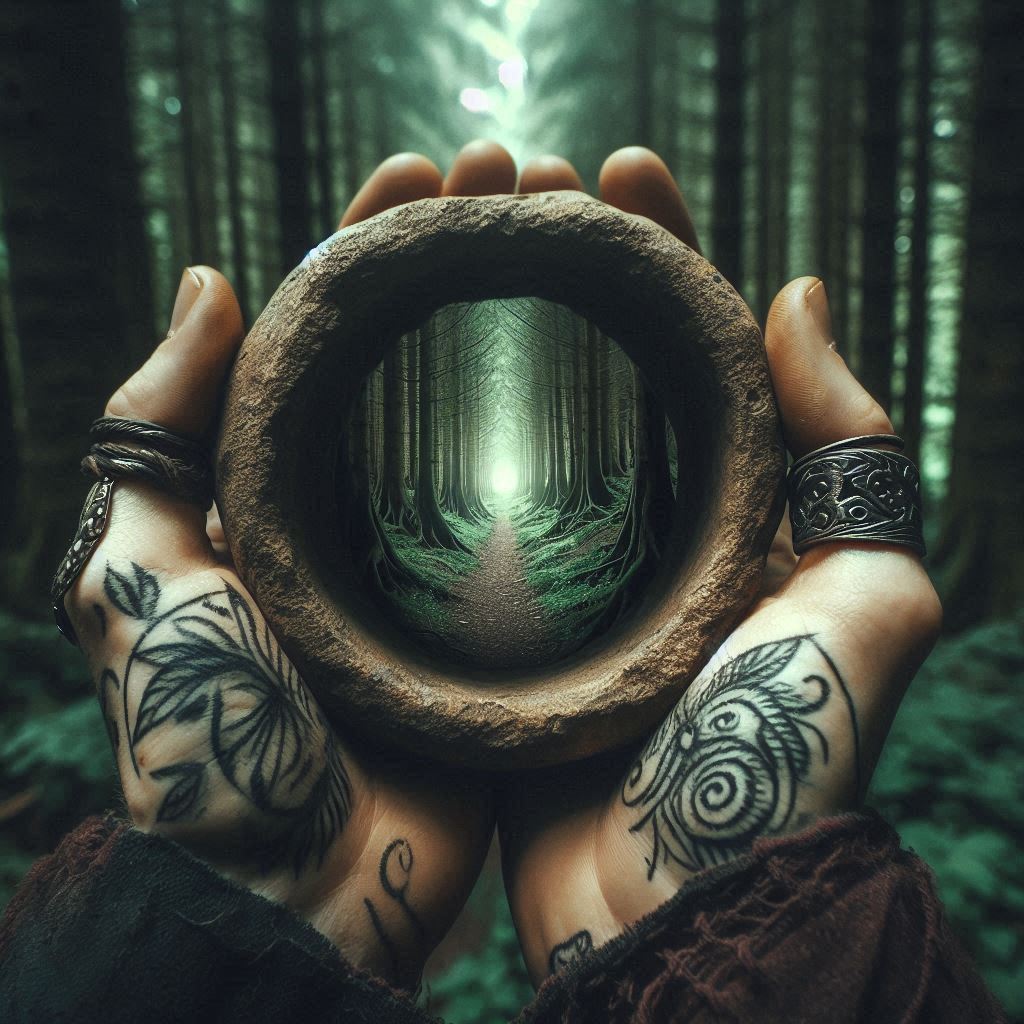
Hag stones are one of the most fascinating natural objects you can find on the beach, or in rivers and streams. These peculiar stones, with their naturally occurring holes, have been regarded with a blend of awe and reverence across many cultures.
Hag stones, also known as witch stones, holy stones, holey stones, adder stones or fairy stones, depending on the region, seem just humble rocks with holes, yet they have sparked centuries of folklore and superstitions.
Although we know their formation is the result of water erosion or the persistent action of small organisms boring through softer parts of the rock, in ancient times these stones hold an extraordinary mystique, and even the word ‘hag’ stone hints at the underlying mystery and power associated with them.
“Hag” is an old English term that originally referred to an old woman, but over time came to mean a witch or sorceress. Witches and supernatural beings were often associated with stones like these for their perceived magical properties. Holes in rocks were seen as symbolic passageways between worlds, conduits through which energy or spirits might pass from one realm to another.
Unlike other stones that might be used as charms or amulets, a hag stone must have a naturally formed hole. This detail was important to those who believed in its power, as an artificially drilled hole was thought to break the stone’s connection with the otherworld.
For people who find hag stones on a beach or riverbed there is a special joy in holding one up to the light and seeing through the other side, as though glimpsing into another world. In fact one of the most common superstitions associated with hag stones is that looking through the hole grants a person sight into realms hidden from ordinary vision.
In European folklore, particularly in England and Wales, hag stones were reputed to allow their holders to see through disguises or ‘glamour’. It was believed that if you looked through the hole of a hag stone you might see fairies, elves and other magical creatures that normally remain invisible to the human eye. This ability was not only for entertainment or fascination, but also had a protective function, as these spirits were sometimes seen as tricksters or even malevolent forces. Seeing them allowed a person to avoid their pranks and traps.
But hag stones were not just a gateway to magical sight, they were also powerful tools against evil. In many parts of Europe, hag stones were hung above doors or placed in windows as protection against witches and malevolent spirits. This belief was particularly strong in Britain, where it was thought that witches could not bear to look through the hole of a hag stone. The presence of one in the home or barn was said to keep them at bay, shielding livestock and family members alike.
This custom of using hag stones for protection extended to sailors and fishermen, who would often carry them on ships to protect against storms and supernatural threats at sea. Some sailors wore them as necklaces while others attached them to their boats, thinking that these stones would keep bad weather and bad spirits alike from ruining their voyage. Similar beliefs were held in parts of Scandinavia where hag stones were cherished as protection against sea monsters and other perils of the ocean.
Hag stones also found a place in personal superstition and magic, as amulets to ward off nightmares and illness. It was thought that by keeping a hag stone under one’s bed or hanging it by the bedstead one could ward off hag-riding, an experience that today we might recognize as sleep paralysis. In older folklore hag-riding involved a witch or a malevolent spirit pinning down a sleeping person or sitting on their chest rendering them unable to move or cry out. Those who experienced this terror believed that hag stones could prevent it keeping the witch from entering the room or from visiting harm upon them.
Likewise hag stones were used to ward off fevers in children, and were often passed down through families like treasured relics. A hag stone that had protected one generation might be handed down to the next with the understanding that its magical properties were proven, and passed along through use.
In addition to their protective qualities, hag stones also came to be associated with water, particularly in regions where they were found near rivers or the sea. Water was always seen as a mysterious and liminal force in folklore, a boundary between worlds. Hagstones were believed to retain some of the water’s power and were thought to be excellent charms for fertility and good health.
Some farmers buried hag stones in their fields or hung them in barns to ensure bountiful harvests, or the health of their livestock. Others believed that hag stones had curative properties, particularly for eye diseases which might stem from their association with vision and otherworldly sight. In some areas it was said that dipping a hag stone in water created a potion that could be used to wash sore eyes or wounds or even ward off illness.
Over time hagstones became part of the charms used in folk magic and ritual practices among cunning folk, healers or practitioners of folk magic in England, Scotland and other parts of Europe.
Cunning folk held respected positions in their communities, and were often called upon to deal with ailments that were believed to have supernatural causes.
For these healers hag stones served as potent tools, both for diagnosing and treating illnesses thought to be the result of curses or spirit interference. For instance a cunning person might peer through a hag stone to identify the source of a curse, or to discern whether a person had been hexed.
They might also rub a hag stone over the affected part of the body while reciting charms to draw out illness or bad luck. In some areas people even believed that the stone itself could absorb the illness or curse, taking it on so that the person was freed from its grip.
Interestingly despite their dark associations with witches and curses, hag stones were also associated with blessings and good fortune. They were thought to be able to bring prosperity to their bearers, especially in love and friendship. In some folk traditions it was said that two people who looked through a hag stone together would be bound in friendship or love. This might have stemmed from the belief that the stone’s hole allowed a connection between realms so that anything shared through that passage was bound by an invisible force. Young lovers might have sought out hag stones on beaches, hoping to peer through them and secure lasting love while friends exchanged them as tokens of loyalty.
Modern-day collectors and beachcombers may find hag stones and simply see them as intriguing curiosities. But for those who are familiar with folklore these stones hold an enduring magic. Though we no longer live in a world that explains misfortune or illness through curses, the idea that a simple stone could ward off nightmares or reveal hidden truths still resonates with us. Many people still place hag stones in their homes, or wear them as necklaces hoping to channel their ancient protection or find a little luck.
Even sceptics may find that hag stones possess a certain inexplicable charm. Their rarity combined with the stories that accompany them lend them an aura of mystery. Picking one up by chance on a walk or at the beach can feel like an encounter with something ancient and wise, a small reminder of the long line of people who looked at that stone and saw not just a rock but a conduit to another world.
In their quiet way hag stones remind us of a time when the world was filled with wonder and danger in equal measure, when everyday objects held the potential for enchantment and when the boundaries between this world and the next were thin and easily crossed.
Hagstones invite us to imagine a world that is still mysterious, to believe that protection and vision might be carried in a simple stone. For as long as people continue to pick them up feel their weight in the hand and gaze through their holes, hag stones will remain potent symbols of the unseen magic that surrounds us – just as they have for centuries.




Leave a Reply