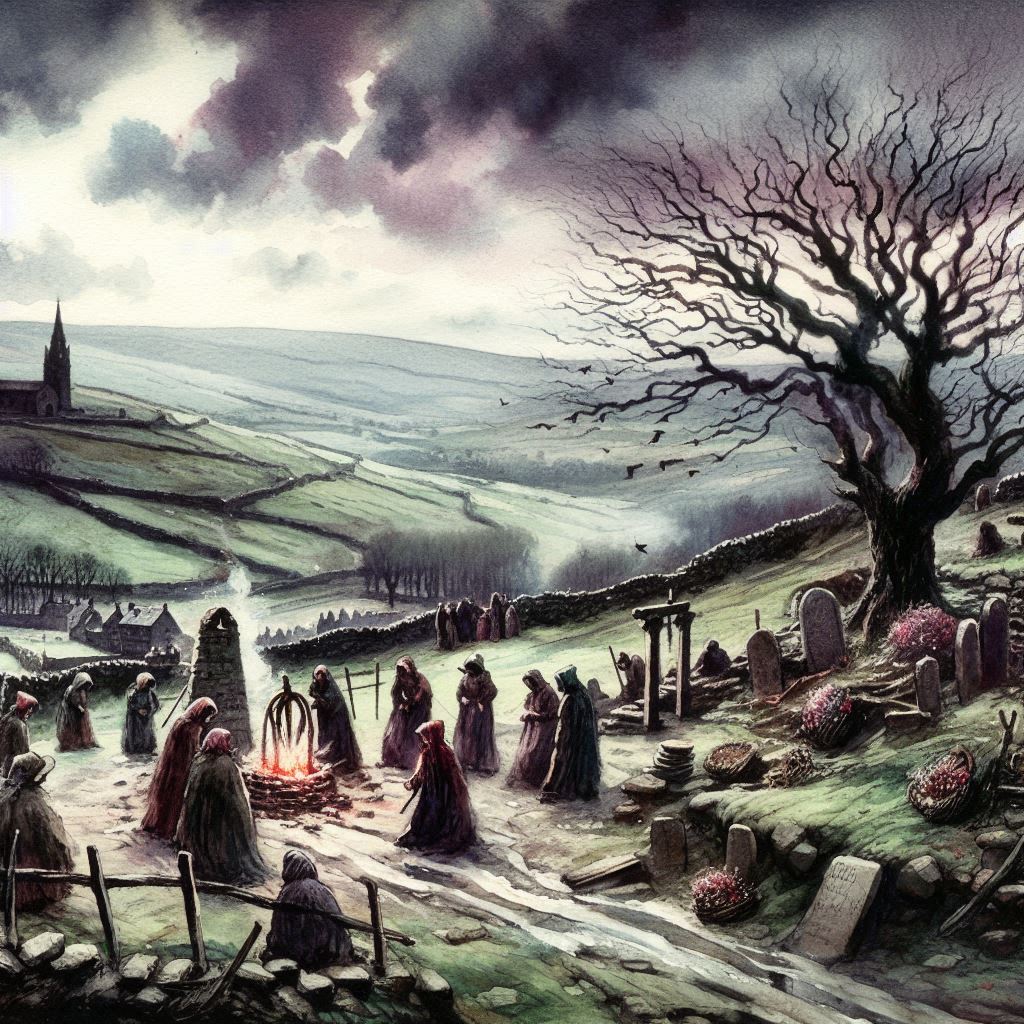
The Pendle witch trials of 1612 are among the most infamous episodes of witchcraft hysteria in England. These trials resulted in the execution of ten individuals from the area around Pendle Hill in Lancashire, primarily based on accusations of witchcraft.
The story of the Pendle witches is often framed by the judicial processes, the confessions extracted, and the sensational events leading up to their trial. However, much of what we think we know about these individuals is shaped by the narratives created during their persecution. Prior to the accusations of witchcraft, their lives remain largely obscured, leaving us to speculate about the daily existence of these people before they became ensnared in one of England’s most notorious witch hunts.
What we do know about the Pendle witches largely comes from Thomas Potts’ account of the trial, The Wonderfull Discoverie of Witches in the Countie of Lancaster, published later that year. Potts was the clerk of the court and his record offers a detailed – though likely biased – view of the trial proceedings. Yet, even this account is limited to their supposed involvement in witchcraft, providing little insight into the everyday lives of the accused before they became embroiled in this hysteria. To understand what their lives may have been like, we need to examine the broader context of early 17th-century rural England, particularly in areas like Pendle, a rugged and isolated region in Lancashire.
Pendle was an impoverished and relatively remote area. Many of its inhabitants lived in poverty, eking out a living through subsistence farming, manual labour, and, in some cases, petty crime. The economy of rural Lancashire, like much of northern England at the time, was fragile and unstable, with people living on the margins of survival. The isolated communities around Pendle Hill would have been insular, where people knew each other’s business, and tensions over resources or rivalries between families could easily escalate. In such an environment, accusations of witchcraft might arise from a mix of personal grudges, social tensions, and local superstitions.
Many of those accused of witchcraft were women, and in rural communities like Pendle, women often played key roles in the household economy. Their work might have included spinning wool, tending small plots of land, caring for animals, and gathering herbs or wild plants to sell or use for remedies. Some of the women accused of witchcraft, including Elizabeth Southerns (also known as Demdike) and Anne Whittle (Chattox), were said to be wise women or cunning folk—individuals believed to have knowledge of healing, herbal remedies, and protective charms. These skills, while valued in a practical sense, could also become grounds for suspicion, especially if a person’s remedies failed or if a neighbour fell ill after a quarrel.
Demdike and Chattox were both elderly women, and their rivalry may have played a role in the accusations. Local folklore suggested that both women had reputations for dealing in magic, but they were also poor, living on the fringes of society. Elizabeth Southerns, Demdike, was blind and lived with her family in abject poverty. Her granddaughter, Alizon Device, who was also accused, was a young woman trying to contribute to the family’s meagre income, possibly by begging. It is likely that these women were not particularly unusual in their community; many rural women at the time would have had some knowledge of herbalism and traditional healing practices. However, poverty and age, combined with their perceived otherness as healers, may have made them more vulnerable to accusations.
The lives of the accused men, too, offer glimpses into the precarious existence of people living on the margins of society. James Device, the son of Demdike, was described as feeble-minded and easily influenced, yet he found himself caught up in the hysteria. John and Jane Bulcock, a mother and son who were also executed, were described as drunkards, another indication that these individuals were often viewed through the lens of social deviance or moral failure. In rural England, especially in poorer areas, those who did not fit neatly into the social order – whether through poverty, mental illness, or unconventional behaviour – were often targets for suspicion and scapegoating.
One critical factor in understanding the lives of the Pendle witches before the trial is the role of religion. The early 17th century was a period of religious tension in England, following the Protestant Reformation. In Lancashire, Catholicism had strong roots, and the region was seen as a hotbed of recusancy – those who remained loyal to the Catholic faith despite the state – imposed Protestantism. It is possible that some of the accusations of witchcraft were linked to the religious tensions of the time, as witchcraft was often associated with heresy and defiance of religious normalities. The inhabitants of Pendle, living in a remote area with little oversight, may have held onto older, more superstitious beliefs, blending Catholic traditions with folk practices, which could be seen as suspicious by more Puritanical neighbours.
The social structure of the time was deeply hierarchical, and those at the bottom – like the Pendle witches – had little recourse to defend themselves against accusations from their wealthier or more powerful neighbours. The supposed bewitching of John Law, a peddler, by Alizon Device, seems to have been the spark that ignited the Pendle trials, but it likely reflects broader social and economic tensions. As a peddler, Law would have been a relatively important figure in rural communities, bringing goods that were otherwise hard to come by. When Alizon allegedly cursed him after he refused her request for pins, and he subsequently had a stroke, it is easy to see how superstition and fear could lead to accusations of witchcraft.
While we know the outcome of the trial and the sensational details of the accusations -Alizon’s confession, the discovery of clay figures, and the supposed meetings of witches at Malkin Tower – we are left with little information about the true nature of these people’s lives. Their involvement in witchcraft may have been nothing more than local gossip, misunderstandings, and the pressures of survival in a harsh, competitive environment. These individuals were likely trying to navigate a world in which they had little power, living hand-to-mouth existences, and struggling to survive in a community where suspicion and accusation could lead to deadly consequences.
In many ways, the Pendle witches reflect the broader experience of those accused during witch trials across Europe and the UK. These trials were often less about witchcraft itself and more about social control, the enforcement of religious orthodoxy, and the settling of personal scores. For the people of Pendle, witchcraft accusations may have been the culmination of long-standing feuds, poverty, and the sense of powerlessness felt by those living on the fringes of society. The fact that many of the accused were elderly, poor, or otherwise vulnerable speaks volumes about how society treated those who did not conform to the expectations of the time.
Ultimately, while we know much about the accusations against the Pendle witches, we know very little about the reality of their lives before they became the focus of hysteria. They likely lived in difficult circumstances, reliant on the limited resources they could scrape together, perhaps using their knowledge of herbalism and traditional healing to survive. Their stories, like those of so many accused witches, remind us that the witch trials were often about more than just superstition; they were about poverty, power, and the precariousness of life for those at the bottom of society.





Leave a Reply