One of the most famous and enduring ghost cases in the UK is the Borley Rectory haunting, often referred to as the “most haunted house in England.”
Located in the small village of Borley in Essex, the Rectory was built in 1862 and quickly gained a reputation for being plagued by supernatural occurrences.
This case spanned several decades, drawing the attention of both paranormal investigators and the media, and remains a fascinating study of ghostly phenomena to this day.
The story of the Borley Rectory haunting began with the building’s first resident, Reverend Henry Dawson Ellis Bull, and his family. Built on the grounds of a former Benedictine monastery, it was said that the site already had a long history of strange happenings.
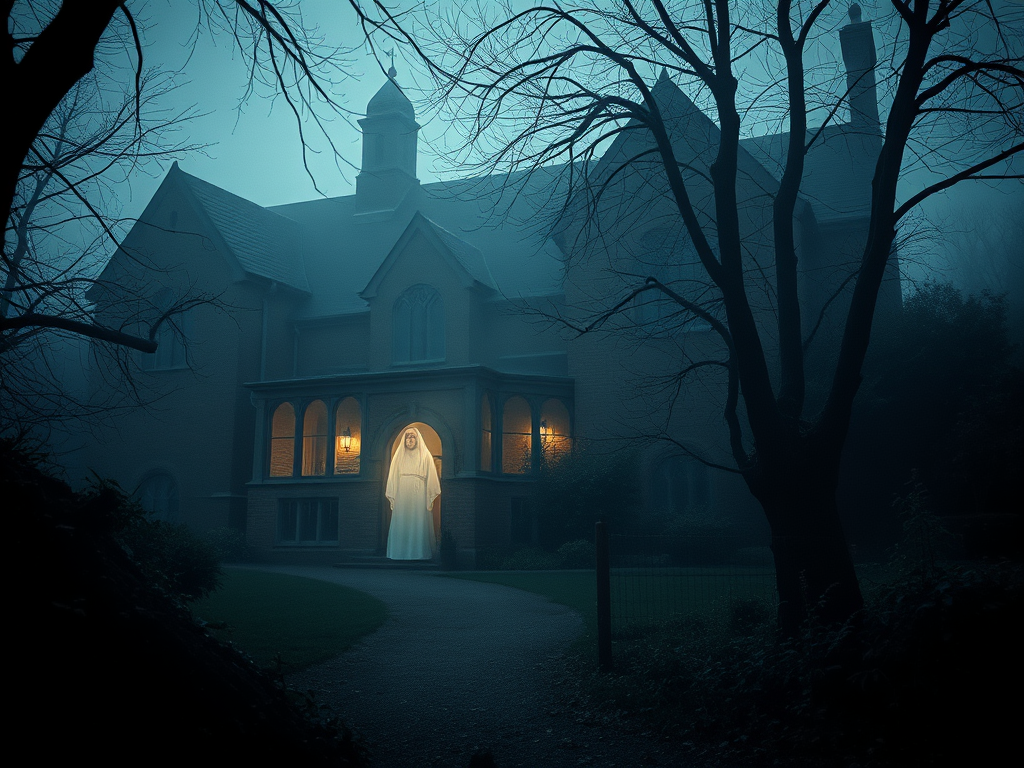
Local legends told of a ghostly nun who wandered the grounds, searching for her forbidden lover, a monk from the nearby monastery. According to the tale, they were caught trying to elope, and the nun was bricked up alive within the walls of the convent.
From the start, the Bull family reported strange sounds and sightings, including ghostly footsteps, unexplained cold spots, and the apparition of a nun gliding through the garden.The paranormal activity reportedly increased in intensity after the death of Reverend Bull in 1892, and his son, Harry Bull, took over the Rectory.
Both residents and visitors reported seeing ghostly figures, hearing unexplained knocking, and witnessing objects moving on their own. The ghost of a coach and horses was also spotted frequently by locals.
However, it wasn’t until 1929, when Reverend Lionel Foyster and his wife Marianne moved into the Rectory, that the haunting became well-documented and more sensational. The couple experienced a series of disturbing phenomena, which included windows shattering, objects being thrown across rooms, and mysterious messages appearing on walls. One message seemed to be directed at Marianne, pleading for “help” and hinting at tragic secrets from the past. Marianne herself claimed to have been physically attacked by the entity, including being thrown from her bed and struck by unseen hands.
Lionel Foyster attempted exorcisms and spiritual interventions to rid the house of the spirits, but his efforts were unsuccessful. During their five-year stay, the Foysters kept a detailed record of the strange occurrences, which later became an essential part of the Borley Rectory legend.
The most famous investigation of Borley Rectory was carried out by Harry Price, a well-known British paranormal investigator. Price first became involved in 1929, after the Daily Mirror published a story about the hauntings, drawing national attention. Price was a controversial figure in the field of paranormal research, admired by some for his dedication and criticized by others for his unorthodox methods and sensationalism.
Price rented Borley Rectory for a year in 1937 and conducted extensive investigations, bringing in a team of researchers to document any paranormal activity. During his investigation, Price and his team reported numerous unexplained events, including objects being moved, strange lights, and cold spots. One of the most chilling pieces of evidence was the continued appearance of ghostly writing on the walls, which Price believed was an attempt by a spirit to communicate with the living.
Price’s 1940 book, The Most Haunted House in England, detailed his findings and solidified Borley Rectory’s place in the annals of haunted history. However, despite Price’s claims, many skeptics argued that much of the paranormal activity could have been hoaxes or the result of natural phenomena, such as drafts, creaky floorboards, or the overactive imaginations of those living in the Rectory.
In 1939, shortly after Price’s investigation concluded, Borley Rectory was severely damaged by fire. The fire was reportedly started accidentally by the new owner, Captain W.H. Gregson, who claimed he knocked over an oil lamp while unpacking.
However, some have speculated that the fire was more than just a tragic accident, possibly even an attempt to destroy the house and its lingering spirits.
Even after the Rectory was reduced to ruins, reports of paranormal activity persisted. Visitors to the site continued to see ghostly figures, and the infamous phantom nun was said to still wander the grounds. Price himself returned to the site in 1943, where he discovered human remains in the cellar.
He believed these remains could have belonged to the murdered nun of local legend, though no definitive connection was ever established.
While many believe in the haunted reputation of Borley Rectory, the case has not been without its critics. Sceptics point to the lack of hard evidence and suggest that much of the haunting was exaggerated or fabricated by Price himself to promote his books and investigations.
Marianne Foyster, later in life, admitted that some of the events during her time at the Rectory were faked, though she insisted that many of the hauntings were genuine.
Over the years, Borley Rectory has become an enduring ghost story, representing both the mystery and controversy of the paranormal. Whether the strange happenings were real, the product of a few imaginative minds, or something in between, the tale of Borley Rectory continues to capture the public’s fascination, maintaining its reputation as one of the UK’s most famous hauntings. Even though the Rectory no longer stands, its legend remains a key part of Britain’s ghostly history.