John Lennon, the legendary musician, artist, and peace advocate, remains one of the most influential figures in modern history. As a member of The Beatles, he changed the world with his music and message, leaving an indelible mark on millions. But some believe that Lennon’s spirit continues to linger long after his tragic death in 1980.
Over the years, countless stories and encounters have emerged, suggesting that John Lennon’s ghost may still walk among us.These tales often evoke a mixture of fascination, scepticism, and curiosity. After all, how could someone as larger-than-life as Lennon ever fully fade away?
In this article, we’ll look at some of the most… compelling accounts, explore why his presence might remain so palpable, and consider what his lingering spirit might mean for those who have felt his influence directly.
Lennon’s fascination with the spiritual world was never a secret. During his lifetime, he openly explored mystical ideas, dabbling in meditation, tarot cards, and Eastern philosophies. His interest in the metaphysical was evident in songs like Tomorrow Never Knows, inspired by The Tibetan Book of the Dead. Lennon himself spoke of déjà vu experiences and a deep belief in an interconnected universe. Could this fascination with the beyond have tethered him to the world in an unusual way after his passing?
The idea of John Lennon’s ghost first gained traction in the years following his death. Fans mourning the loss of their hero reported inexplicable phenomena near the Dakota, the New York apartment building where Lennon was shot. Some spoke of strange lights flickering in the windows late at night or the sound of faint music drifting through the air.
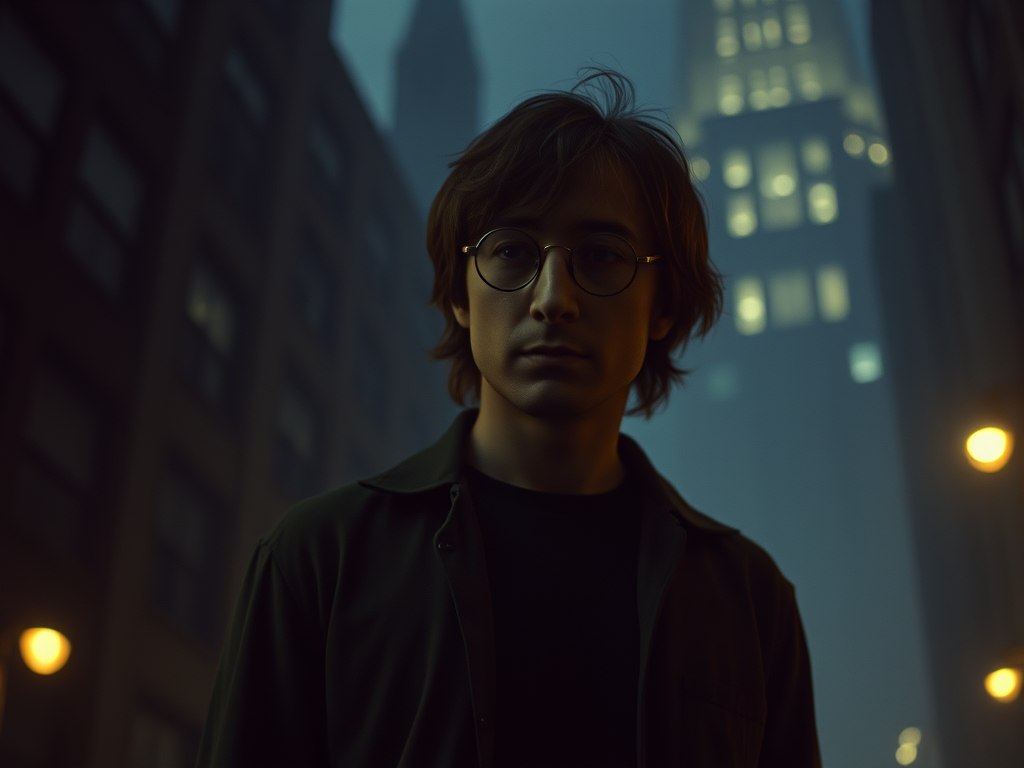
Even more startling were stories from those who claimed to have seen a figure resembling Lennon wandering nearby. Dressed in his iconic round glasses and casual clothes, the apparition often seemed calm, even peaceful, but undeniably present.
One of the most famous accounts comes from Paul McCartney, Lennon’s former bandmate and lifelong friend. In interviews, McCartney has admitted to feeling Lennon’s presence during recording sessions with his band Wings. One moment, in particular, stood out. While recording the song Free as a Bird in 1995 – a Beatles track posthumously completed using Lennon’s demo vocals – Paul, George Harrison, and Ringo Starr experienced something eerie.
Equipment inexplicably malfunctioned, and a white peacock wandered into the studio. McCartney later remarked that he felt it was Lennon’s way of showing approval, a subtle yet unmistakable sign that he was still watching over them.
Similarly, Yoko Ono, Lennon’s widow and artistic collaborator, has shared her own experiences. She once recounted a chilling moment in their Dakota apartment when she encountered John’s ghost.
According to Yoko, he appeared at the foot of their bed and reassured her, saying, “Don’t be afraid. I am still with you.” She described the experience not as frightening but as deeply comforting – a reminder of the profound bond they shared.
Fans visiting Lennon’s memorial in Central Park, Strawberry Fields, have also reported unusual occurrences. Some claim to hear snippets of Lennon’s voice or the faint strumming of a guitar when no one nearby is playing. Others describe sudden chills or an overwhelming sense of peace while standing by the iconic “Imagine” mosaic.
Whether these experiences are manifestations of grief, overactive imaginations, or genuine encounters with Lennon’s spirit, they continue to draw people to the site, seeking connection with the man who preached love and unity.
One of the more curious aspects of Lennon’s ghostly legend involves séances and psychic mediums. Over the years, several mediums have claimed to channel Lennon’s spirit, delivering messages they say are from beyond.
These messages often carry themes of forgiveness, love, and a desire for humanity to continue striving for peace. Critics dismiss these claims as exploitative or coincidental, but believers argue that the messages align perfectly with Lennon’s personality and ethos.
There are also tales of Lennon’s spirit appearing to complete strangers. In one particularly intriguing story, a young musician in Liverpool, Lennon’s hometown, described encountering a man who looked uncannily like the Beatle late one night. The man offered words of encouragement, saying, “Keep playing, you’re going to change the world someday.”
The musician turned away briefly, and when he looked back, the figure was gone. The mysterious encounter left him convinced he’d been visited by Lennon himself.
Sceptics, of course, have their explanations. Many argue that these experiences are the result of people’s deep emotional connection to Lennon. Grief and nostalgia can play tricks on the mind, leading fans to interpret ordinary events as signs from beyond. Psychologists often refer to this phenomenon as “apophenia,” the tendency to find meaningful patterns in random data. A flickering light or a distant sound might be nothing more than coincidence, amplified by the longing to feel close to a lost idol.
Despite the scepticism, the stories persist. Perhaps it’s because Lennon’s presence was so extraordinary in life that it seems impossible for it to dissipate entirely. His voice, his words, and his vision for a better world continue to resonate, making him feel as alive today as he did decades ago.
Some have speculated that Lennon’s enduring spirit is less about the supernatural and more about the power of collective memory. His music is still played, his lyrics quoted, his ideals championed.
In this sense, John Lennon’s ghost exists not as an apparition but as a cultural force, haunting us in the best possible way.
Whether you believe in ghosts or not, the stories surrounding John Lennon offer a fascinating glimpse into the ways we cope with loss and keep the memories of those we admire alive. For some, Lennon’s ghost is a comforting presence, a reminder that the love and creativity he embodied can never truly be extinguished. Perhaps the question isn’t whether John Lennon’s ghost is real but why so many feel the need to believe it is.
Lennon once sang, “You may say I’m a dreamer, but I’m not the only one.” Maybe the enduring tales of his spirit reflect our collective yearning to dream, to connect, and to imagine a world where he still walks among us, inspiring us to be better, kinder, and more at peace.




Leave a Reply