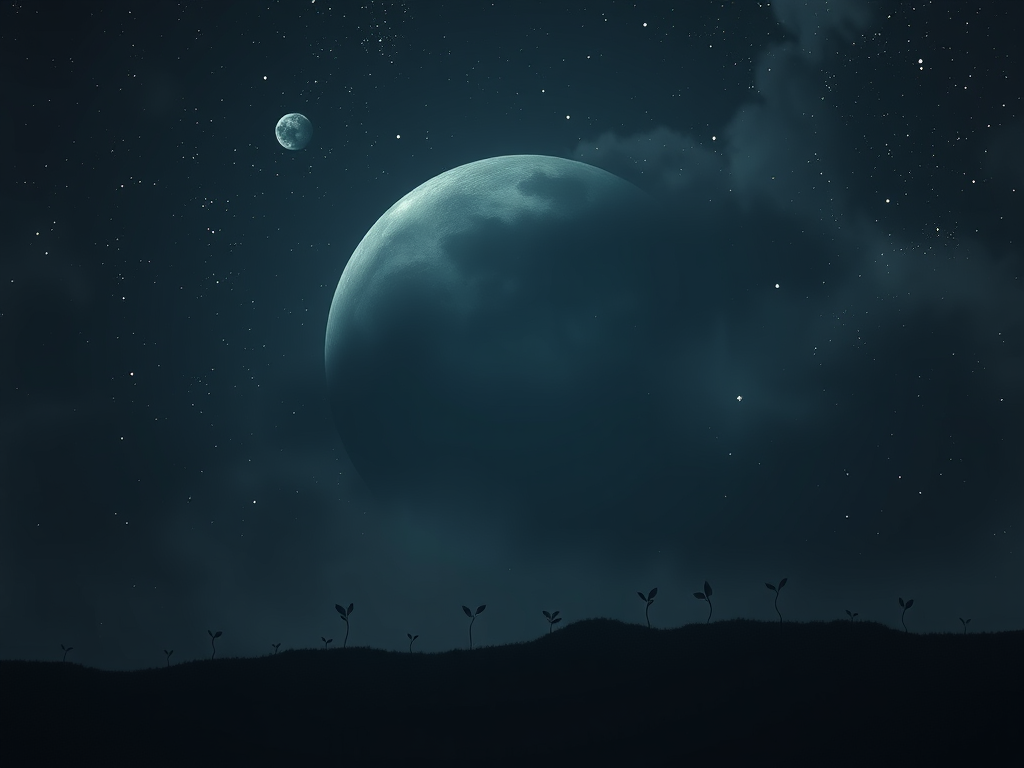
The new moon is one of the most intriguing and mysterious phases in the lunar cycle, marking a time when the moon is not visible from Earth. Though it’s not as celebrated as the full moon in popular culture, the new moon has long been a source of fascination, woven into folklore, superstitions, and customs across the globe.
From an astronomical standpoint, the new moon occurs when the moon is positioned between the Earth and the Sun, making the side of the moon that faces Earth completely dark. This absence of light creates an opportunity to look at the sky without the moon’s glow interfering, allowing for better views of distant stars and planets. However, the new moon is often seen as a time for rest and reflection, symbolizing new beginnings, fresh starts, and the potential for growth.
In folklore, the new moon is often associated with new beginnings, a time to set intentions and wishes. In many cultures, it’s considered an ideal time for personal reflection, goal setting, and planting seeds – both literally in terms of agriculture and metaphorically in terms of personal development. This belief likely stems from the fact that the new moon marks the start of the lunar cycle, when the moon is ‘reborn.’
In ancient agrarian societies, people believed that certain times of the lunar cycle could impact planting and harvesting, with the new moon being a good time to plant crops and start new ventures.
Superstitions around the new moon often carry a sense of mystery and caution. In some parts of the world, people believe that it’s a time when magic is at its strongest. For example, in parts of Europe, people thought that the new moon could bring about unexpected events, with some believing that it was a time to avoid making important decisions, as the dark moon could cause confusion or misfortune.
Conversely, there are cultures that associate the new moon with luck and prosperity, seeing it as a time to start a new project or make an important change.
In certain traditions, the new moon is a time for rituals and ceremonies aimed at harnessing the energy of the moon for personal or spiritual growth. Some people observe “new moon rituals,” where they write down their intentions or wishes for the upcoming month, focusing on what they want to manifest or achieve. This practice, popular in modern spiritual communities, draws on ancient beliefs that the lunar phases influence human behavior and the natural world.
Another fascinating custom linked to the new moon is the practice of “moon gazing,” where people gather to observe the sky during different lunar phases. While the new moon itself is invisible, many cultures have developed ways to honour it symbolically – such as lighting candles, holding quiet meditation sessions, or walking in nature. This ritual is believed to connect individuals to the natural cycles of the Earth and the moon, fostering a sense of grounding and clarity.
For some cultures, the new moon holds particular significance in terms of divination. For example, in Chinese folklore, the new moon marks the beginning of the lunar calendar, and certain customs and festivals are tied to this phase. In ancient Egypt, the new moon symbolized the rebirth of the goddess Hathor, associated with love and fertility.
Across many cultures, the absence of light during the new moon was also seen as a time when the veil between the physical world and the spirit world was thinnest, offering opportunities for spiritual communication or insight.
In modern times, while the new moon may not have the same cultural prominence as its more celebrated counterpart, the full moon, it remains a powerful symbol of renewal, change, and the cyclical nature of life. Whether through rituals, superstition, or simply appreciating the quiet stillness of the dark sky, the new moon continues to evoke a sense of wonder and connection to the mysteries of the cosmos.


Leave a Reply