Today is the shortest day of the year. The Winter Solstice. Or as I like to call it – Yule. Just saying the word feels like conjuring a bit of magic, doesn’t it?
Now, I often find myself neck-deep in myths, legends, and the odd ghost story, but Yule holds a special place in my heart. It’s ancient, it’s layered, and in the words of ai generated articles everywhere, it’s a tapestry of traditions woven together over centuries.
Yule isn’t just a festival – it’s a journey, a blend of darkness and light, frosty nights and blazing fires, old gods and new rituals. So grab a mug of something warm and spiced, settle in, and let me tell you all about Yule: its origins, its evolution, its quirks, and why it still lights up our hearts (and our hearths) today.
Let’s start at the beginning – because that’s where all the best stories start. Yule’s origins are as ancient as the stars themselves, or at least as old as humans gazing up at those stars, wondering why the nights grew so long and the days so cold.
Long before Christianity arrived in Europe, people across the Germanic and Norse lands were marking this time of year with a festival known as “Jól” or “ġeōl,” depending on whether you’re chatting with a Norseman or an Anglo-Saxon. The name might differ, but the idea was the same: celebrate the winter solstice, the shortest day of the year, and welcome the sun’s gradual return.
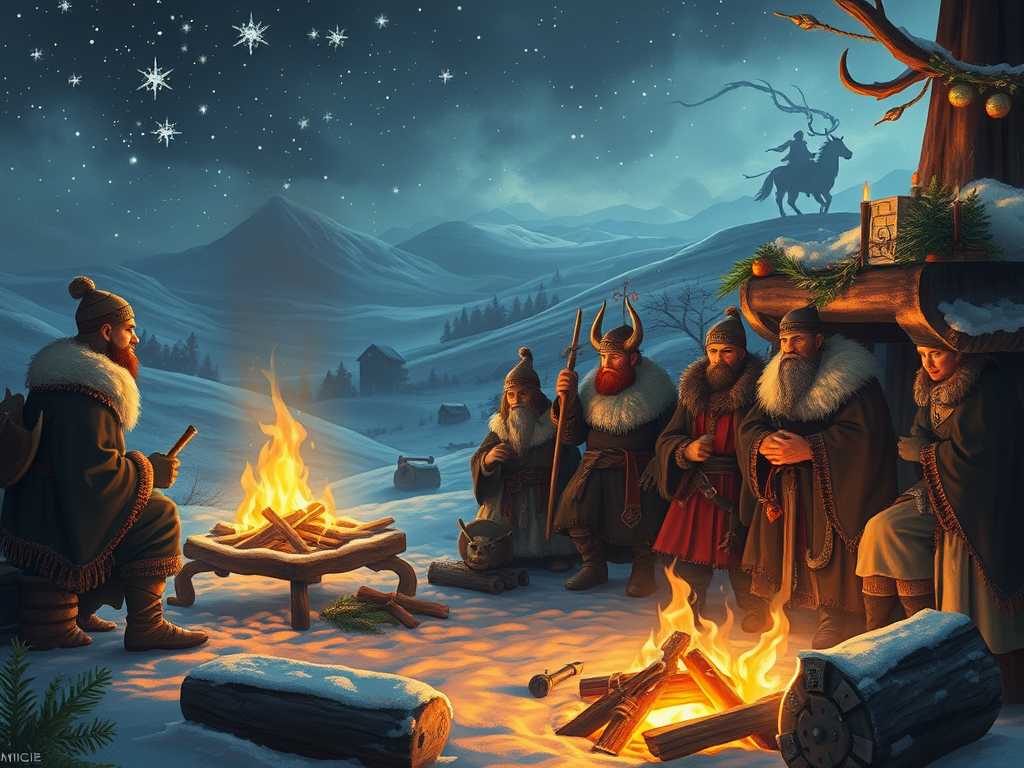
Imagine this: you’re a Viking in the depths of winter. The nights stretch on forever, the winds howl, and the world feels cloaked in darkness. Food is scarce, warmth is precious, and survival is never a guarantee. But then comes the solstice, the pivot point of the year. You gather with your kin, light fires to chase away the shadows, feast on the fruits of the harvest, and raise a horn of ale to toast brighter days ahead. That’s the essence of Yule. It’s not just a party – it’s a promise, a reminder that even in the darkest times, light will return. Almost a Dumbledore quote, but not quite…
One of my favourite bits of Yule lore is the Wild Hunt – and why wouldn’t it be? Who wouldn’t love a ghostly procession led by none other than Odin himself, thundering across the winter skies on his eight-legged steed, Sleipnir?
The Wild Hunt is part celebration, part cautionary tale and sounds, to me, like the best night ever! It’s said that Odin would ride with a host of spirits and gods, howling through the dark forests and stormy skies. Some tales say they came to gather the souls of the dead whilst others suggest they brought omens for the living. Either way, hearing the Wild Hunt was a sign to stay inside, huddle by the fire, and maybe pour another drink – by the way… if you’re thinking, “Hang on, that sounds a bit like Santa’s midnight sleigh ride,” you’re not wrong. Old Odin might just be the original Father Christmas.
And speaking of traditions that have stuck around – which seems to be all I do lately – let’s talk about the Yule log. No, not the chocolate cake kind (we’ll get to that later). The Yule log was a massive piece of wood, carefully chosen and brought into the home to burn in the hearth. This wasn’t just any firewood.. and it wasn’t M&S firewood either. This, my friends, was a sacred act.
The log was meant to burn for twelve nights, symbolising light, warmth, and protection for the coming year. The ashes, they believed, held magical properties – good luck, fertility, even a bit of weather control if you spread them on your fields. These days, most of us don’t have giant hearths to burn logs in, but the tradition survives in candles, cakes, and even digital fireplace videos (bless technology).
Now, let’s fast-forward a bit to when Christianity started spreading through Europe. Rather than abolishing old festivals like Yule, the Church often found it easier – and smarter – to adapt them. After all, people love their traditions. So Yule became Christmas, and many of its symbols were reimagined. Evergreens, holly, and mistletoe – sacred plants in pagan lore – found new meaning in Christian celebrations. The Yule log became a decorative cake, and feasting, singing, and gift-giving carried on as part of the season’s cheer.
But even as Yule merged with Christmas, its roots remained. In Northern Europe, the word for Christmas is still “Jul,” and many modern traditions echo their pagan past.
Take Scandinavia, for example. There, families light candles and gather around for a feast that’s a blend of old and new, complete with glögg (spiced wine) and heartwarming stories. Iceland has a delightful twist called “Jólabókaflóð,” or “Yule Book Flood,” where people exchange books on Christmas Eve and spend the night reading by the fire. If that doesn’t sound like the coziest tradition ever, I don’t know what does.
In the modern era, Yule has found new life among neo-pagans, Wiccans, and folks who just want a deeper connection to nature’s rhythms. For these groups, Yule isn’t about shopping or Santa – it’s about honouring the cycle of the seasons, reflecting on the past year, and setting intentions for the future.
Some celebrate with rituals like lighting candles, meditating, or crafting wreaths from evergreen branches. Others go all out with feasts, bonfires, and storytelling, reviving the communal spirit of ancient Yule.
And then there’s the lore. The stories and symbols that make Yule so enchanting. Evergreens, for instance, are a reminder of life’s resilience, even in the dead of winter. Mistletoe, growing mysteriously on trees, was sacred to the Druids and symbolised fertility and unity. Stags, bears, and wolves – creatures of strength and endurance – often appear in Yule tales as guardians or guides. Even the colours of Yule, green, red, and gold, carry symbolic weight, representing life, blood, and the returning sun.
Now, I’d be remiss if I didn’t mention the fun stuff. Yule is a time for revelry, after all. Feasting is a must, with foods like roasted meats, spiced cakes, and mulled drinks taking centre stage. Wassailing, a sort of carolling-meets-toasting tradition, involves going from house to house, singing and sharing good cheer. (If you’ve ever belted out “Here We Come A-Wassailing,” now you know where it comes from!)
And let’s not forget the gifts. In ancient times, people exchanged small tokens – handmade trinkets, bits of food – to show appreciation and strengthen bonds.
So why does Yule still matter?
Well.. In a world that often feels disconnected from nature, Yule is a reminder of our place in the great cosmic dance. It’s about pausing to honour the darkness, knowing that light will return. It’s about gathering with loved ones, sharing stories and laughter, and finding warmth in each other’s company. Whether you’re lighting a candle, baking a Yule log cake, or simply taking a moment to marvel at a starry winter sky, you’re tapping into a tradition that stretches back thousands of years.
Yule isn’t just a relic of the past, it’s a celebration of life’s eternal rhythms. And as long as the earth keeps turning and the seasons keep shifting, Yule will remain a time of magic, wonder, and joy.
So here’s to Yule: a festival of light in the darkest night, a tale as old as time, and a tradition that invites us all to gather, reflect, and celebrate.
Cheers!


Leave a Reply