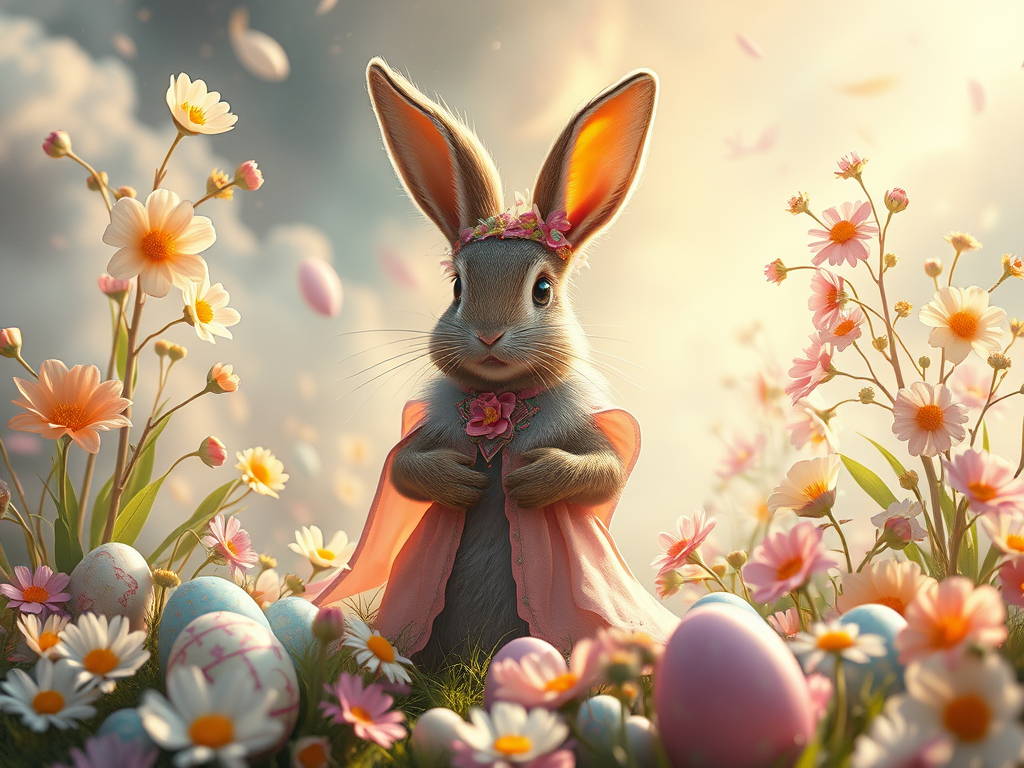
Easter is one of those peculiar times of year where ancient rituals, religious solemnity, and downright bizarre traditions all tumble together in a pastel-coloured basket. It’s the only time when it’s perfectly acceptable to hunt for chocolate in your best clothes, talk about resurrection over roast lamb, and give a side-eye to a six-foot rabbit who somehow moonlights as a master of egg distribution. But where did all this come from? And why, in the name of all things holy, are rabbits and eggs even part of it?
Straighten your bonnet and I’ll explain..
Let’s start at the (almost) beginning. Long before Jesus made his mark in biblical history, this time of year was already sacred. The spring equinox, falling around the 20th of March, marked a turning point – the earth’s great balancing act where day and night stand equal.
Across the ancient world, it was a season of fertility, rebirth, and light’s victory over darkness. Nature gets frisky, flowers bloom with reckless abandon, and animals… Ahem.. well, animals do what animals do when the weather warms up. People celebrated too, with fire festivals, feasting, and rites that would make a modern vicar blush.
The name “Easter” itself is thought to come from the Old English Ēastre or Ēostre, a goddess of spring and fertility. The Venerable Bede, that old chronicler of the 8th century, tells us that Anglo-Saxons held feasts in her honour during April. No written rituals survive, but given the usual pagan pattern, there were likely symbols of growth and fertility involved – think hares, eggs, and the cheeky twinkle of moonlight on fresh dew.
Fast-forward to the Christian overlay, and you’ve got the crucifixion and resurrection of Jesus – arguably the most pivotal weekend in the Christian calendar. The Church, never one to miss a chance to merge meaning with existing merriment, adopted the timing and added its own weighty symbolism. The tomb becomes the womb of the world. Life triumphs over death. It’s not just about resurrection; it’s about renewal, hope, and that odd human instinct to look skyward and believe there’s more going on than meets the eye.
Of course, like all good festivals, Easter doesn’t behave the same way everywhere. In Greece, Easter is a big deal – fireworks, lamb on the spit, and the smashing of red-dyed eggs in a symbolic duel of luck. In Sweden, children dress up as witches and go door to door for sweets – some scholars think it’s a holdover from pre-Christian beliefs where spring spirits needed appeasing. In Bermuda, they fly homemade kites to symbolise Christ’s ascension, and in the Philippines, some people take the Passion play so seriously they volunteer for crucifixions.
Real nails. Real pain. Real belief.
And then there’s the rabbit. Ah, the rabbit. Or should I say, the hare – because it was the hare that first hopped into the springtime spotlight. Hares were sacred to Ēostre and often seen as moon creatures, watching from the shadows with twitchy noses and a talent for vanishing. Their mad March antics were linked to fertility, magic, and the moon’s cycles.
At some point, that mystical hare was tamed into the Easter Bunny, particularly in German folklore, where he judged children’s behaviour and laid coloured eggs in nests.
Let’s be honest – if any adult said a rabbit was watching kids and laying eggs, they’d be escorted off the premises. But in springtime, anything goes.
Eggs, too, are ancient symbols of life and rebirth. Long before the invention of the chocolate crème variety, eggs were buried in graves, painted with bright colours, and offered to deities. In early Christianity, eggs were forbidden during Lent, so people got creative with boiling, decorating, and preserving them. On Easter Sunday, those eggs came out in a riot of colour and celebration. It was a symbolic feast – the shell broken like the tomb, the yolk like the sun, and the egg itself a promise of new life.
In some traditions, red eggs symbolise the blood of Christ; in others, golden ones are hidden by sneaky fairies or benevolent saints.
Then, somewhere along the line, the Victorians got their hands on it all and polished it up. Add in a sprinkle of German immigrants to America, a dash of commercial flair, and voilà: chocolate bunnies, pastel foil-wrapped eggs, and aisles of supermarket madness.
These days, you’re more likely to find a kid high on sugar than pondering the symbolic resonance of an ovoid object. But that’s part of the charm.
So is Easter religious, pagan, commercial, or just another excuse for a four-day weekend and a slice of Simnel cake?
Yes. All of the above.
It’s a festival that carries its history like a chocolate-layered trifle – pagan sponge, Christian cream, and a swirl of fluffy consumerism on top. You can bite into it wherever you like, and still taste something ancient underneath.
In the end, Easter reminds us that after the long dark slog of winter, light returns. Life carries on, whether through divine resurrection or daffodil resilience. And if that message happens to arrive courtesy of a rabbit clutching eggs, well… stranger things have happened.
Just ask anyone who’s ever tried to explain how a crucifixion became a chocolate hunt..


Leave a Reply