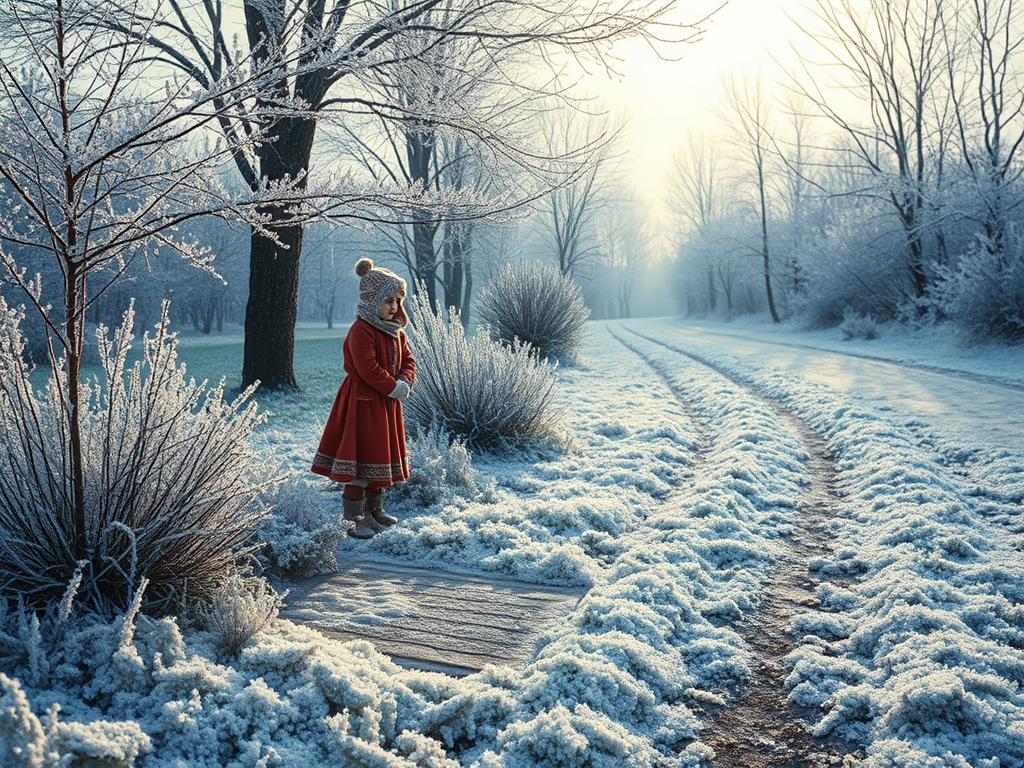
There’s something almost sacred about stepping outside on a winter morning and hearing that first crrrrk of frost under your boots. It’s nature’s way of saying, “Good morning, human. I’ve iced every possible surface. Please try not to fall on your backside.” And historically, people took this annual glittering menace very seriously indeed. Before central heating, gritters, and padded jackets that make us look like disgruntled marshmallows, frost was a real opponent, a force of nature to be appeased, negotiated with, and occasionally bribed.
Across Britain and beyond, communities once practised a whole array of old-fashioned frost rituals: some charming, some bizarre, and some clearly invented by someone who had been left alone with a jug of mead for too long. Today, we honour them in our own small ways, mostly by muttering at the car windscreen, but the spirit remains.
And so, in the darker mornings and brighter nights of late November, let’s wander through the glittering folklore of frost, and the strange old customs that helped our ancestors survive it.
Whistling for Jack Frost
Jack Frost may be more of a Victorian PR rebrand, but the character – the nipping, icing sprite of winter – has roots in Northern European folklore long before he got his jaunty name. In some rural communities, children were encouraged to whistle for the frost on the first really cold morning of winter, a kind of invitation ritual. The idea was simple: show the frost you were expecting him, that you respected his handiwork, and in return he’d go easier on your toes.Today, we replicate this in our own way: by swearing creatively at the pavement when it tries to assassinate us.
The Doorstep Ritual
A rather charming old custom involved sprinkling a pinch of flour, ash, or oats on the doorstep before bed on the first frosty night. In some places it was said to keep away mischievous winter spirits; in others it was a way of checking for unwanted visitors (human or otherwise). A clean, untouched surface in the morning meant good luck. Footprints meant… well, that depended on the size.
I suppose we now recreate this ritual every morning when we check the cat hasn’t brought home a “gift” and laid it proudly by the front door. Same concept. Slightly more unpleasant result.
Bonus Tip – Sprinkling salt on your doorstep or path WILL stop it freezing for a while at least. Try it. The Amazon delivery man will thank you.
Frost Divination – Because of course they did!
The Victorians adored a bit of divination, and winter gave them endless opportunities. Single women in the north were once told to breathe onto a frosty windowpane and draw a circle with their finger; if the circle stayed clear in the middle, their future husband would be loyal. If it misted over again, the man would be unreliable. If it cracked, best stay single and buy a cat.
Even today, we have our own frost-based divination rituals – like gazing at the icy car windscreen and predicting your entire mood for the day based on how quickly you can find the scraper.
Wake The Winter aka Hedge Tapping
This delightful little tradition involved lightly tapping hedges, trees, or fence posts with a stick on the first frost of the season. It’s thought to have been a holdover from older animistic beliefs – a way of acknowledging the spirits of the land and “waking” the sleeping world into its winter phase. Think of it as nature’s version of clocking in for the season.
Nowadays, we recreate this by banging the ice off the wheelie bin in full view of the neighbours, hoping they assume we’re “very involved in the garden” and not just late putting out the recycling again.
OLD-FASHIONED FROST RITUALS: A CELEBRATION OF CRUNCHY MORNINGS AND MISCHIEVOUS MAGIC
Nearly every European tradition has its winter goddess, crone, or hag – from Frau Perchta to the Cailleach. Many frost rituals involved leaving her offerings: a bowl of cream, a crust of bread, a sip of ale. The idea was to keep her appeased so she didn’t bury your cottage in snow while you were trying to dry your only pair of socks.
We still honour her, in our own way. Every time we leave a biscuit out “for later,” knowing full well we’ll forget it until it has the exact texture of a paving slab – that’s an offering. So is the mug of tea you lose, rediscover at a worrying temperature, and declare “for the spirits now.”
THE FIRST FROST RUN
Children in parts of East Anglia once raced outside barefoot at the first frost – yes, barefoot, because parents in the past were apparently built of sterner stuff – to stamp patterns into the whitened grass. Doing so was believed to secure good health for the winter and strengthen the body.
Today, this ritual survives in the modern practice known as “running outside in your pyjamas because you’ve forgotten to put the bin out and the lorry is already turning the corner.”
THE FROST GUARDIAN
Some cottages, especially in upland regions, had a designated “frost guardian”: usually the eldest member of the household, whose honoured role was to rise first, check the windows for ice, and declare the nature of the day. “Hard frost,” “white frost,” “hoar frost,” “black frost,” and the ever-ominous “oh dear God it’s Baltic” were all acceptable proclamations.
We continue this noble tradition when someone in the house peeks out of the curtains and announces, solemnly:“It’s cold.”
Everyone else: “We know.”
HONOURING THE CRUNCH
In some traditions, walking through the first frost before anyone else set foot on it was a blessing: a promise that you’d meet challenges head-on, break trails, and move boldly into the winter. There’s a quiet, private triumph in being the first one to leave footprints in a fresh frosty field.
We still feel that little thrill today – even if the field is now the lid of your wheelie bin, and the footprint is made by the fox who’s eaten half it’s contents.
WINTER’S LITTLE RITUALS TODAY
Despite our radiators, heated seats, and full-fat insulated jumpers, we still practise frost rites without knowing it. We warm our palms on a mug. We breathe like dragons in the morning air. We mutter thanks to the gods when the boiler behaves. We curse creatively at the car that won’t defrost fast enough. We light candles, switch on fairy lights, and lean into the season’s slow magic.
The old frost rituals weren’t really about controlling winter – they were about accepting it. Marking the moment. Acknowledging the shift. Finding the wonder in the whiteness, and a bit of humour in the hardship.
And truly, what better way to honour the cold months than with the simplest ritual of all: stepping outside on a crisp morning, scarf wrapped high, boots crunching, and whispering into the glittering air,
“Right then. Let’s get on with it.”




Leave a Reply