November 2024 offers a dazzling array of celestial events, with a variety of moon phases, meteor showers, and even the potential appearance of a bright comet. The month is a rich opportunity for stargazers and night-sky enthusiasts to enjoy the beauty of the heavens. With the correct dates for moon phases and meteor showers, here’s what to expect in November’s night sky.
The month opens with a New Moon on November 1, 2024, giving observers the benefit of dark skies right at the start. New Moons are the best time for stargazing and spotting faint celestial objects, as there is little moonlight to interfere.
This is particularly useful for catching the Southern Taurid meteor shower, which peaks around November 4–5. Known for its slow-moving, bright fireballs, the Southern Taurids are not known for a high frequency of meteors but offer some of the brightest ones. These meteors come from the remnants of Comet Encke, and their slow, brilliant trails create an impressive sight. The New Moon will make this one of the best nights of the month for meteor-watching.
A week later, the Moon will reach its First Quarter phase on November 9. At this point, half of the Moon’s face is illuminated, and it sets around midnight, leaving the later night hours dark. This phase is particularly popular for lunar observing, as the contrast along the “terminator” – the line between the lit and unlit portions of the Moon – allows surface details like craters and lunar mountains to stand out.
November 11–12 brings the Northern Taurids, which are active from late October to early December. This meteor shower also produces bright fireballs, adding a touch of spectacle to the mid-month skies. Since the First Quarter Moon sets earlier in the night, the Taurids should be visible during the darker hours before dawn, giving stargazers a good chance to spot these meteors.
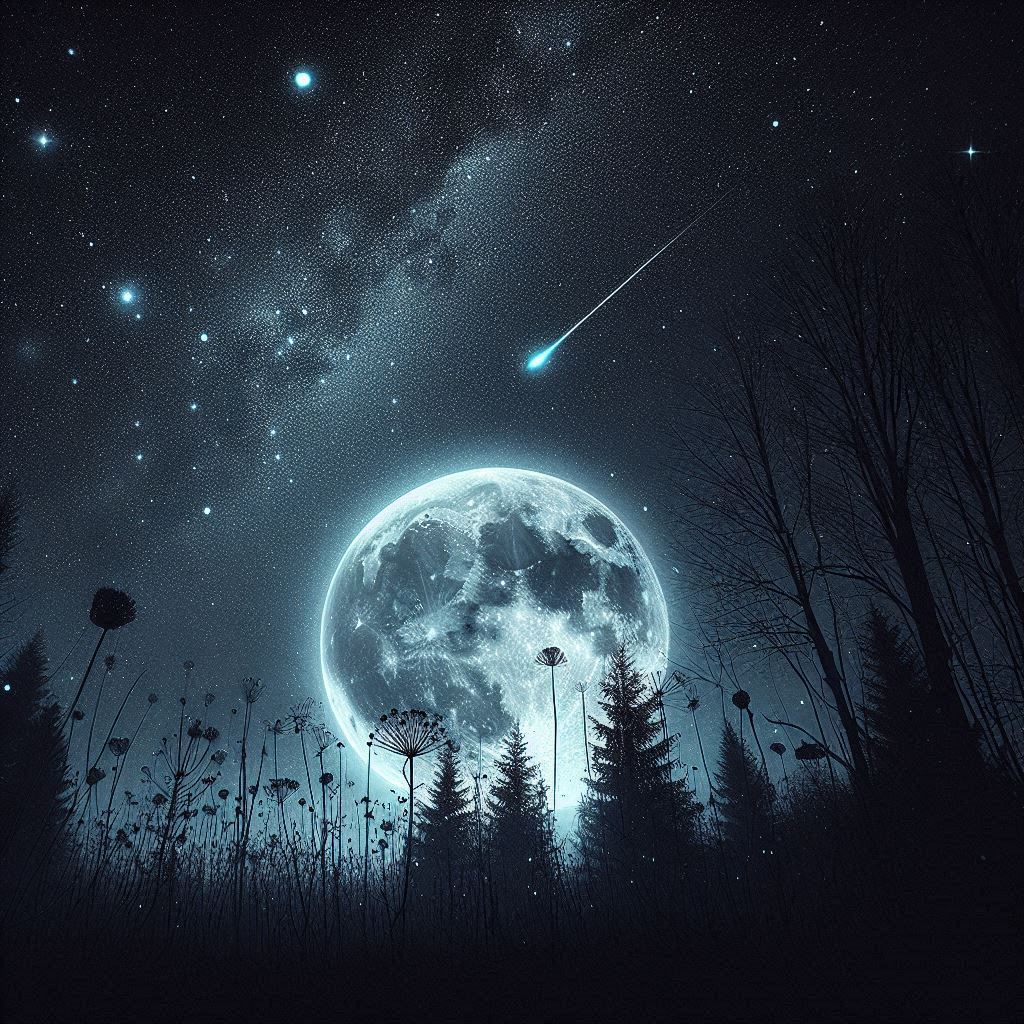
On November 17, the Moon will be full. Known as the Beaver Moon, this November Full Moon traditionally marks a time when preparations were made for winter, such as setting beaver traps. This Full Moon will have a strong presence in the night sky, its bright light illuminating the landscape.
However, it will also create a challenge for viewing the Leonid meteor shower, which peaks on the same night, November 17–18. The Leonids, known for their fast, bright meteors, are remnants of Comet Tempel-Tuttle, which produces a meteor storm approximately every 33 years.
While this year’s Leonid display is expected to be modest, with around 10–15 meteors per hour under ideal conditions, the brightness of the Full Moon may obscure all but the very brightest meteors.
Following the Full Moon, the Moon begins to wane, entering the Waning Gibbous phase. This period is ideal for observing bright objects in the night sky, like planets and larger constellations, since the Moon rises later each night and its light becomes less intense. The Waning Gibbous Moon also provides an opportunity for early morning observation of planets such as Jupiter, which will be prominent in the sky throughout November. Jupiter, the largest planet in our solar system, is easy to spot and appears as a bright, steady light. A telescope or binoculars can reveal its four largest moons – Io, Europa, Ganymede, and Callisto – which orbit around it and change position from night to night.
Later in the month, on November 24, the Moon reaches its Last Quarter phase. During this time, only half of the Moon is illuminated, and it rises after midnight, leaving the evening skies relatively dark. This is a prime opportunity for stargazing, as the reduced moonlight enhances visibility for fainter stars and other celestial phenomena.
The Last Quarter is also a good time to catch a glimpse of Comet C/2023 A3 (Tsuchinshan-ATLAS), which is expected to be visible in November. Early predictions suggest that this comet could be visible with the naked eye if it brightens as anticipated, and a pair of binoculars or a small telescope might reveal more detail, including a possible tail and the comet’s coma, a cloud of gas and dust around its nucleus.
By the end of the month, the Moon continues to wane, leaving the skies increasingly darker each night. This cycle concludes as the Moon approaches its next New Moon on December 1, allowing for one last chance in November for clear, moonless stargazing. The dimmer skies at the end of the month provide a backdrop to catch some of the more subtle celestial objects, such as star clusters, galaxies, and nebulae, for those with the right equipment or access to dark-sky areas.
. Whether you’re observing from your backyard or venturing out to a dark-sky location, November’s skies provide ample opportunity to marvel at the universe’s vastness and beauty. Keep an eye on weather forecasts for clear skies, and don’t miss the chance to look up and experience these wonders firsthand.
Enjoy!