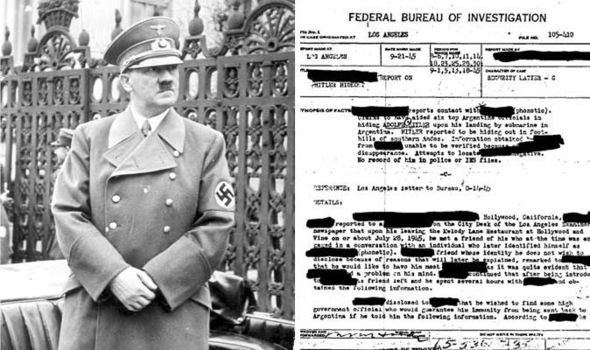
The United States government’s recent wave of declassifications has sparked a profound debate about its true motives. While some argue that these disclosures represent a genuine effort to restore public trust, others see them as a calculated attempt to control narratives and suppress conspiracy theories. Given the history of governmental secrecy and the persistent distrust of official accounts, is this newfound openness an authentic move toward transparency, or is it a strategic maneuver designed to reshape public perception?
The Eternal Legacy of Secrecy and Mistrust
For decades, conspiracy theories have flourished in the United States, and why wouldn’t they? They are almost always fuelled by the government’s own history of withholding crucial information. Events such as the assassinations of President John F. Kennedy, Robert F. Kennedy, and Martin Luther King Jr. have long been shrouded in secrecy, leading many to believe that the truth has been intentionally buried.
The JFK assassination remains a prime example of how secrecy breeds suspicion. Although the U.S. government has released thousands of related documents, some remain classified, feeding speculation that the full truth has yet to be revealed. The 1992 JFK Assassination Records Collection Act mandated the release of all assassination-related files by 2017, yet significant portions were withheld under claims of national security. Even when President Biden authorized further declassification in 2021 and 2022, critical redactions remained, sustaining the belief that the government is still concealing vital information. (The Times)
This pattern extends beyond political assassinations. The CIA’s covert operations, such as the infamous MKUltra mind-control experiments, remained hidden for decades before partial disclosures in the 1970s confirmed what many had suspected. Even then, much of the original documentation had already been destroyed. Similar secrecy surrounds the topic of Unidentified Aerial Phenomena (UAPs), with government reports acknowledging the existence of unexplained sightings but stopping short of full transparency.
A New Era of Disclosure – or Controlled Narratives?
The current push for transparency appears, on the surface, to be a radical departure from past policies. Recent years have seen an unprecedented release of classified files, from intelligence reports on UAPs to declassified documents on the Watergate scandal, CIA operations, and secret Cold War programs. President Trump’s decision to declassify files related to the assassinations of JFK, RFK, and MLK was framed as a move to “restore public trust” and put an end to speculation. (The Independent)
However, the selective nature of these disclosures raises questions. Instead of offering full transparency, the government has chosen to release information in stages, often with redactions. This approach allows officials to claim openness while still maintaining control over the narrative. Partial releases, rather than quelling conspiracy theories, often reinforce them by validating long-standing suspicions that the government continues to withhold critical details.
The Pentagon’s approach to UAP disclosures is a prime example. While recent reports acknowledge that military pilots have encountered unidentified objects exhibiting extraordinary flight characteristics, they stop short of confirming extraterrestrial involvement. Sceptics argue that the government is drip-feeding information to shape public perception while keeping the most explosive revelations hidden.
The Global Impact of U.S. Disclosure Efforts
America’s handling of classified information has significant international implications. The erosion of trust in government institutions is not confined to the U.S.; it is a global phenomenon. The World Economic Forum’s Global Risks Report 2025 highlights misinformation and declining public confidence in official sources as major threats to global stability. (World Economic Forum)
Governments worldwide have historically relied on secrecy to maintain power, and the U.S. is not alone in selectively disclosing information. Russia, for instance, has only partially acknowledged its involvement in Soviet-era assassinations and intelligence operations. China maintains strict control over information related to historical events such as the Tiananmen Square massacre. Even democratic nations like the United Kingdom continue to classify key documents on sensitive topics, such as British intelligence operations during the Troubles in Northern Ireland.
The international conspiracy community has long speculated about a coordinated effort among world governments to manage disclosure. The “Project Blue Beam” theory, for example, posits that global elites are orchestrating a staged alien invasion to unite humanity under a one-world government. While there is no credible evidence to support such claims, they illustrate how secrecy breeds increasingly extreme interpretations of reality. (New York Post)
Does Disclosure Really Abolish Conspiracy Theories?
A crucial question remains: Can government transparency actually put an end to conspiracy theories? Evidence suggests otherwise. In many cases, disclosure has the opposite effect, reinforcing existing suspicions rather than debunking them.
Psychologists who study conspiracy thinking argue that once people distrust an official narrative, no amount of evidence will fully restore their faith. Partial disclosures, redacted documents, and staggered releases only serve to deepen the belief that something is being hidden. The JFK files are again a perfect example – while the release of thousands of documents should have dispelled doubts, the continued withholding of key materials has only strengthened the theory that the full truth remains buried.
Moreover, in the digital age, misinformation spreads rapidly. Even when a government fully declassifies a subject, alternative narratives continue to flourish online. Social media amplifies speculation, often making conspiracy theories more influential than the official explanations.
A Broader Agenda?
Some analysts argue that the U.S. government’s disclosure push serves purposes beyond mere transparency. The timing of major declassifications often coincides with politically sensitive moments. For example, the release of UAP reports in 2021 came during a period of intense domestic turmoil, including debates over election integrity and the COVID-19 pandemic. This has led to speculation that such disclosures are used as distractions, shifting public focus away from more immediate crises.
Another possibility is that controlled disclosure allows intelligence agencies to shape public perception. By selectively releasing information, they can direct attention to specific aspects of a story while diverting interest from more sensitive elements. This tactic has historical precedent – during the Cold War, both the CIA and KGB used controlled leaks to influence media narratives and public opinion.
Conclusion
The U.S. government’s recent push for transparency raises as many questions as it answers. While the release of previously classified files may seem like a step toward openness, the selective and partial nature of these disclosures often fuels more speculation than it quells.
If the goal is truly to abolish conspiracy theories, then the current strategy appears flawed. The paradox of transparency is that partial disclosure often creates more doubt than secrecy. True openness would require the release of all relevant information, without redactions or strategic delays. Until that happens, the cycle of mistrust will continue, not just in the U.S. but across the world.