Hannah Beswick, born in the idyllic village of Hathershaw near Oldham in 1688, was more than just a woman of her time; she was a witness to the transformative forces that shaped the cultural, social, and industrial landscapes of 17th and 18th-century England.
The daughter of William Beswick, a prosperous landowner, Hannah inherited not only a substantial estate but also a unique vantage point to observe the dynamic changes that unfolded around her.
Oldham, during this period, stood as a bustling hub of the Industrial Revolution, with the rhythmic hum of textile mills dominating the auditory landscape. Hathershaw, nestled amidst this tapestry of progress, retained a blend of rural charm and burgeoning industry, contributing to the rich fabric of the region. Against this backdrop, Hannah’s life unfolded, marked by a confluence of societal norms and the evolving economic dynamics of the time.
Hannah’s story takes an intriguing turn as she grappled with an intense fear that reflected the prevailing uncertainties and limitations in medical knowledge – the fear of being buried alive. In a move ahead of her time, she stipulated in her will that her body should not find its final resting place until the unmistakable signs of putrefaction had set in, underscoring the pervasive anxieties of her era.
The year 1758 marked the conclusion of Hannah’s earthly journey, but her legacy took a curious twist as surgeon Charles White embarked on the uncommon task of embalming her body.
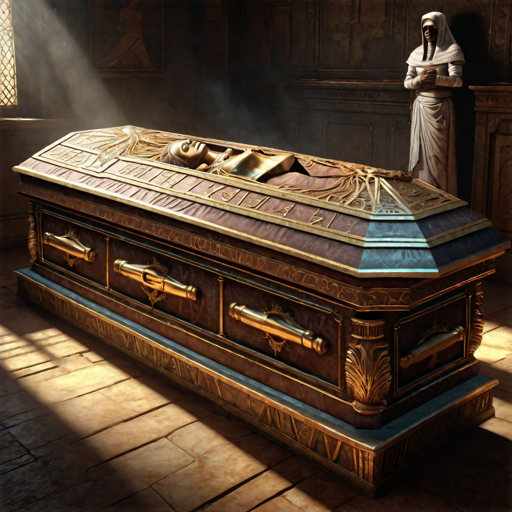
Encased in a lead-lined coffin, her remains found an unconventional sanctuary above ground on her estate, evolving into a local attraction that drew curious visitors from far and wide. The periodic examinations by physicians not only contributed to the mystique surrounding her well-preserved body but also offered insights into the medical practices of the time.
Hannah Beswick’s tale, woven into the broader story of Oldham’s history, goes beyond the personal to illuminate the societal norms and gender roles that shaped her existence.
As the winds of industrial change swept through Oldham, her story became a microcosm of the larger transformations taking place in England.
The unique chapter in the life of Hannah Beswick eventually found its denouement when her body, after more than a century of above-ground repose, was graciously donated to the Manchester Museum. In doing so, her story lives on as a testament to the intricacies of life in 18th-century England, where personal fears, societal expectations, and medical practices intertwined in a narrative both curious and compelling.