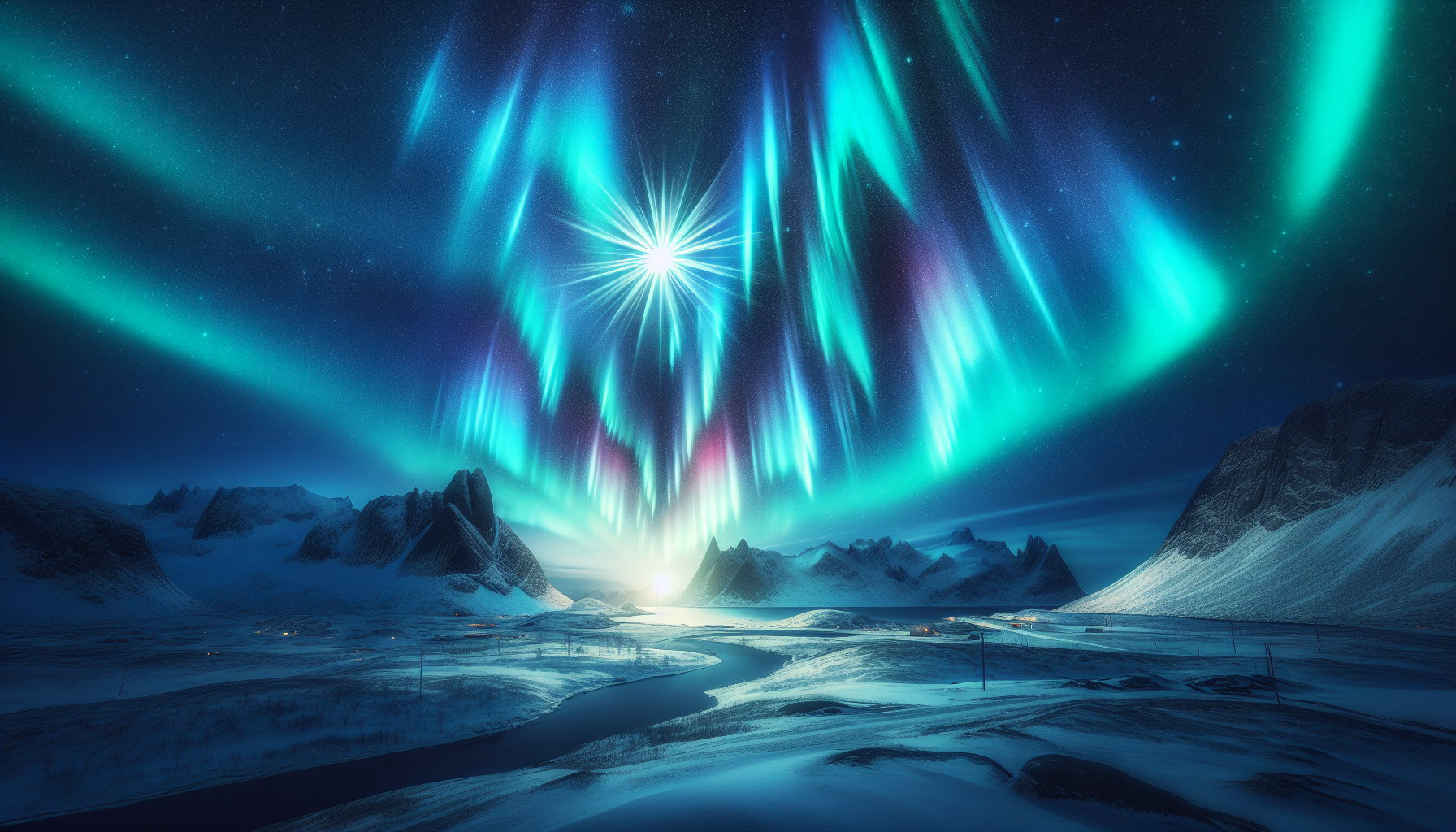
The Aurora Borealis, also known as the Northern Lights, is one of nature’s most mesmerizing and enchanting phenomena. This celestial display occurs predominantly in the high-latitude regions around the Arctic Circle, although it can sometimes be observed at lower latitudes during periods of heightened solar activity. Luckily for us guys in the U.K, over the last few days we have had a very rare chance to observe them for ourselves.
So, since the weather is boiling, I’m off work and I’m an ADHD info junkie, grab yourself a brew, put on your best budgie smugglers and come take a deep dive with me into the phenomenal paddling pool of information that I’ve dredged the tinterwebs for – Don’t forget your sun block!
Understanding the science behind the Aurora Borealis not only enhances our appreciation of its beauty but also provides valuable insights into the interactions between the Sun, the Earth, and the vast reaches of space.
At the heart of this spectacle lies the interaction between charged particles from the Sun and the Earth’s magnetic field and atmosphere. When the Sun releases a burst of charged particles into space, known as a solar wind, some of these particles are funnelled towards the Earth’s poles by the planet’s magnetic field. As these charged particles collide with atoms and molecules in the Earth’s atmosphere, they transfer their energy, causing the atoms to emit light. This emission creates the vibrant hues of the auroras.
Here’s a breakdown of the science behind this captivating display:
Solar Wind: The solar wind is a stream of charged particles, primarily electrons and protons, that emanates from the Sun and permeates the solar system. This continuous outflow of solar material plays a crucial role in shaping the space environment and influencing phenomena such as the auroras, space weather, and the structure of planetary magnetospheres. Here’s a brief explanation:
The solar wind originates from the outer layer of the Sun known as the solar corona. The corona is composed of extremely hot ionized gas, or plasma, which is constantly escaping from the Sun’s gravitational pull due to the high temperatures and intense magnetic activity in the solar atmosphere.
The solar wind consists primarily of protons and electrons, which are electrically charged particles known as ions. These particles are emitted from the Sun’s corona at speeds ranging from 300 to 800 kilometres per second (about 670,000 to 1,800,000 miles per hour), although they can reach much higher velocities during periods of heightened solar activity.
The solar wind is not uniform but rather exhibits variability in its speed, density, and composition over time. These variations are influenced by factors such as the Sun’s magnetic field, solar activity cycles, and the occurrence of solar flares, coronal mass ejections (CMEs), and other solar phenomena.
As the solar wind streams outward from the Sun, it interacts with the magnetic fields of planets in the solar system, including Earth. This interaction can result in a variety of effects, such as the formation of magnetospheres, auroral displays, and geomagnetic storms. The solar wind also plays a role in shaping the outer atmospheres and surfaces of planets, moons, and other celestial bodies.
The solar wind is a key driver of space weather, which refers to the dynamic conditions in space that can affect technological systems, satellites, and astronauts. Variations in the solar wind can lead to disruptions in communication and navigation systems, satellite operations, and power grids on Earth, highlighting the importance of monitoring and understanding solar activity.
Overall, the solar wind is a fundamental aspect of the Sun-Earth system, influencing the dynamics of space and shaping the environments of planets and other celestial bodies throughout the solar system.
Magnetosphere: The magnetosphere is a region of space surrounding a celestial body, such as a planet or a moon, that is influenced and protected by its magnetic field. The Earth’s magnetosphere, in particular, plays a crucial role in shielding the planet from the harmful effects of the solar wind and other space weather phenomena. Here’s an overview of the Earth’s magnetosphere and its characteristics:
The Earth’s magnetosphere is shaped like a teardrop or a comet’s tail, with its long axis extending away from the Sun and trailing behind the planet in the direction opposite to the solar wind. The magnetosphere is asymmetrical, with its shape and size constantly changing in response to variations in solar wind conditions and the Earth’s magnetic field.
The Earth’s magnetic field is generated by the movement of molten iron and nickel in the planet’s outer core. This geodynamo process creates a dipole magnetic field, with magnetic field lines extending from the Earth’s north magnetic pole to its south magnetic pole. The magnetosphere is defined by the region of space where the Earth’s magnetic field dominates over the solar wind.
The outer boundary of the Earth’s magnetosphere is called the magnetopause, where the pressure of the solar wind balances the pressure of the Earth’s magnetic field. The magnetopause acts as a barrier, deflecting and diverting the solar wind away from the Earth and preventing it from directly impacting the planet’s atmosphere.
Within the magnetosphere, there are regions of trapped charged particles known as the Van Allen radiation belts. These belts consist primarily of energetic electrons and protons, which are captured by the Earth’s magnetic field and held in place along the magnetic field lines. The radiation belts serve as a natural barrier that protects the Earth’s surface from the harmful effects of cosmic radiation.
The trailing end of the Earth’s magnetosphere, opposite to the direction of the solar wind, is known as the magnetotail. The magnetotail extends for tens of thousands of kilometers into space and is shaped by the interaction between the solar wind and the Earth’s magnetic field. It is a region of dynamic activity, where magnetic reconnection events and plasma instabilities occur.
The Earth’s magnetosphere plays a critical role in modulating space weather phenomena and protecting the planet from solar storms, coronal mass ejections (CMEs), and other disturbances from the Sun. However, the magnetosphere is not completely impervious to solar activity, and variations in solar wind conditions can lead to geomagnetic storms, auroral displays, and other effects on Earth’s ionosphere and magnetosphere.
Understanding the Earth’s magnetosphere and its interactions with the solar wind is essential for predicting and mitigating the impacts of space weather on technological systems, satellite operations, and human activities in space.
Magnetic Field Lines: Magnetic field lines are imaginary lines used to represent the direction and strength of a magnetic field in space. They are a visual tool that helps illustrate the behaviour of magnetic fields, including their shape, orientation, and intensity. Near the Earth’s poles, the magnetic field lines converge and dip into the atmosphere. This creates regions known as the auroral zones, where charged particles from the solar wind are funneled towards the Earth’s atmosphere along these magnetic field lines. Here are some key points about magnetic field lines:
Magnetic field lines always form closed loops, meaning they have no beginning or end. They extend from the north pole of a magnet to its south pole, and they continue outside the magnet, looping back around to connect to the opposite pole. This creates a continuous path that traces the shape of the magnetic field.
Magnetic field lines point from the north pole of a magnet to its south pole, both inside and outside the magnet. This means that the direction of the magnetic field lines indicates the direction a compass needle would point when placed in the vicinity of the magnet.
The spacing of magnetic field lines indicates the strength of the magnetic field. Where the field is stronger, the field lines are closer together, and where the field is weaker, the field lines are farther apart. This is analogous to the density of contour lines on a topographic map, where closer lines represent steeper slopes.
The shape of magnetic field lines depends on the configuration of the magnetic source. For example, the magnetic field lines around a bar magnet form smooth curves that extend from one pole to the other, while the field lines around a straight current-carrying wire form concentric circles around the wire.
Magnetic field lines exert a force on charged particles that move within them. Charged particles, such as electrons or protons, experience a magnetic force that is perpendicular to both the direction of their motion and the direction of the magnetic field lines. This phenomenon is known as the Lorentz force and is the basis for many applications of magnets and magnetic fields, such as electric motors and particle accelerators.
Magnetic field lines are often visualized using magnetic field line diagrams or computer simulations. These diagrams use arrows or lines to represent the direction and density of the magnetic field lines, providing a clear and intuitive representation of the magnetic field’s behavior.
Overall, magnetic field lines are a valuable tool for understanding and visualizing the behavior of magnetic fields in space and their interactions with magnetic materials, charged particles, and other phenomena. They play a fundamental role in various fields of science and engineering, from electromagnetism and plasma physics to astrophysics and geophysics.
Atmospheric Interaction: Atmospheric interaction refers to the process by which the Earth’s atmosphere interacts with external factors such as solar radiation, cosmic rays, and magnetic fields. This interaction plays a crucial role in shaping the Earth’s climate, weather patterns, and the behavior of the ionosphere, among other phenomena.
The Earth’s atmosphere interacts with incoming solar radiation in various ways. The atmosphere absorbs, scatters, and reflects different wavelengths of solar radiation, depending on factors such as the composition and density of gases, aerosols, and clouds. This interaction influences the Earth’s energy budget, temperature distribution, and weather patterns.
One of the most significant interactions between the atmosphere and solar radiation is the greenhouse effect. Certain gases in the atmosphere, such as carbon dioxide (CO2), methane (CH4), and water vapor (H2O), absorb and re-radiate infrared radiation emitted by the Earth’s surface, trapping heat and warming the lower atmosphere. This process helps regulate the Earth’s temperature and maintains a habitable climate for life.
The Earth’s atmosphere contains a layer of ozone (O3) molecules in the stratosphere, known as the ozone layer. This layer absorbs ultraviolet (UV) radiation from the Sun, protecting life on Earth from harmful UV rays. Human activities, such as the release of chlorofluorocarbons (CFCs), can deplete the ozone layer, leading to increased UV radiation exposure and environmental damage.
The ionosphere is a region of the Earth’s upper atmosphere (approximately 60-1,000 kilometers above the surface) where solar radiation ionizes gas molecules, creating a layer of charged particles known as ions. The ionosphere plays a crucial role in radio communication, navigation systems, and the propagation of electromagnetic waves, as well as influencing space weather phenomena such as auroras and geomagnetic storms.
The interaction between charged particles from the solar wind and the Earth’s magnetic field produces auroras, such as the Aurora Borealis (Northern Lights) and the Aurora Australis (Southern Lights). These colourful displays occur primarily in the polar regions and result from the excitation and emission of gases in the Earth’s atmosphere, creating stunning visual phenomena that inspire awe and wonder.
Emission of Light: As the excited gas molecules return to their normal, lower energy states, they release the excess energy in the form of light. Different gas molecules emit light at specific wavelengths, resulting in characteristic colours – Oxygen molecules typically produce green and red light, while nitrogen molecules contribute to blue and purple hues. The altitude at which the collisions occur determines the colour of the auroras.
Green: The most common colour of the auroras is green, which is produced by the excitation of oxygen molecules at lower altitudes. When these oxygen molecules are excited by collisions with charged particles from the solar wind, they emit green light . Green light is emitted due to the higher concentration of oxygen at this level.
Red: Red auroras are less common than green auroras and are also produced by the excitation of oxygen molecules, but at higher altitudes. When the excited oxygen molecules return to their normal state, they emit red light with a longer wavelength, typically around 630 nanometers. Red auroras are only visible during intense solar activity, this is due to low concentrations of oxygen at higher altitudes.
Blue and Purple: Blue and purple hues are less common and are typically produced by the excitation of nitrogen molecules in the Earth’s atmosphere. Nitrogen emissions occur at higher altitudes and are less intense than oxygen emissions, resulting in fainter blue and purple colours in the auroras.
Pink: Occasionally observed and are thought to result from a combination of red and blue emissions, as well as interactions with other atmospheric gases. Pink auroras are often seen during periods of strong auroral activity and are particularly striking against a dark sky.
In addition to the vibrant colors mentioned above, auroras can also appear white or colorless, especially when they are faint or diffuse. White auroras occur when the emissions from oxygen and nitrogen molecules are mixed together or when the auroras are observed from a distance.
It’s important to note that the colours of the auroras can vary depending on factors such as the altitude of the auroras, the intensity of the solar wind, and the composition of the Earth’s atmosphere. Additionally, human perception of auroral colours can be influenced by factors such as atmospheric conditions, light pollution, and individual differences in colour vision.
Dynamic Display: The auroras are a dynamic and ever-changing phenomenon, influenced by factors such as solar activity, the Earth’s magnetic field, and atmospheric conditions. During periods of heightened solar activity, such as solar storms or increased sunspot activity, the auroras can become more intense and widespread, extending further from the poles and appearing brighter and more vibrant.
While the Aurora Borealis is a well-documented phenomenon in modern times, references to it in ancient texts are scarce due to the limited geographic scope of its visibility and the lack of detailed records from those times. However, there are a few potential allusions to the Northern Lights in ancient writings.
Some scholars speculate that ancient Greek and Roman writers may have made passing references to the Aurora Borealis. For example, the Roman poet Ovid’s work “Metamorphoses” includes descriptions of celestial phenomena, though it’s unclear if any of these passages specifically refer to the Northern Lights.
The Norse sagas, which date back to the Viking Age, occasionally mention celestial events that could be interpreted as descriptions of the Aurora Borealis. In Norse mythology, the Bifröst, a rainbow bridge connecting the mortal realm with the realm of the gods, has been suggested by some scholars to have been inspired by the Northern Lights.
There are some ancient Chinese texts that may contain references to auroras, although interpretations are speculative. The “Book of Changes” (I Ching), an ancient Chinese divination text, mentions celestial omens, and some interpretations suggest that these could include references to auroral displays.
While not written texts in the traditional sense, the oral traditions of indigenous peoples living in regions where the Aurora Borealis is visible may contain descriptions or interpretations of the phenomenon. These traditions often include folklore, myths, and legends that explain the origins or significance of the Northern Lights within their cultural context.
Among the Inuit peoples of the Arctic, the Northern Lights are often seen as spirits or celestial beings dancing across the sky. According to Inuit mythology, the auroras are the spirits of the dead playing a game of soccer with a walrus skull. Others believe that the lights are the spirits of the animals they hunted, guiding them to the afterlife.
In Norse mythology, the Aurora Borealis was believed to be the armour of the Valkyries, warrior maidens who escorted fallen warriors to Valhalla, the hall of the slain. The flickering lights were seen as the reflection of their shining armour as they rode across the night sky.
Finnish folklore tells of the “Revontulet,” or fox fires, which are said to be caused by a magical fox running across the snow-covered landscape, its tail sweeping up sparks that ignite the sky. According to some versions of the tale, the fox was running so fast that its tail set fire to the snow, creating the colorful display of the Northern Lights.
The Sami people of northern Europe have their own rich traditions surrounding the Aurora Borealis. Some believe that the lights are the souls of the departed, while others see them as omens of good fortune or impending change. In Sami folklore, it is said that if you whistle at the Northern Lights, they will come closer to hear you.
Among the indigenous peoples of Alaska, the Northern Lights are often seen as the spirits of their ancestors communicating with the living. Some tribes believe that the lights can bring blessings, while others see them as warnings of danger or ill fortune.
These diverse legends and beliefs reflect the deep spiritual connection that northern peoples have with the natural world and the profound sense of awe and wonder inspired by the Aurora Borealis.
The Aurora Borealis often serves as a symbol of magic, wonder, and the sublime in literature. Writers like Jules Verne, Jack London, and H.P. Lovecraft have incorporated the Northern Lights into their works to evoke a sense of mystery and otherworldliness. For example, in Verne’s “A Journey to the Center of the Earth,” the protagonist encounters a mesmerizing display of auroras deep within the Earth’s core.
Artists throughout history have been captivated by the Aurora Borealis, depicting it in paintings, drawings, and other visual mediums. The Northern Lights have been immortalized in the works of renowned artists such as Frederic Edwin Church, Albert Bierstadt, and Vincent van Gogh, who sought to capture the awe-inspiring beauty of this natural phenomenon on canvas.
The Aurora Borealis often makes appearances in films and television shows as a backdrop for dramatic or romantic scenes. From epic adventure films like “The Revenant” to animated classics like Disney’s “Brother Bear,” the Northern Lights have been used to create visually stunning and emotionally resonant moments on screen. Additionally, documentaries and nature programs frequently feature the Aurora Borealis as a subject of exploration and wonder.
Musicians and composers have drawn inspiration from the Aurora Borealis to create evocative and atmospheric pieces of music. From classical compositions like Jean Sibelius’s “The Swan of Tuonela” to contemporary works by artists like Björk and Sigur Rós, the Northern Lights have served as a muse for musical expression, with their shimmering colours and ethereal movements mirrored in the soundscape.
The Aurora Borealis has also been used in advertising and marketing campaigns to evoke a sense of wonder and awe. Companies seeking to convey a message of beauty, magic, or environmental conservation often incorporate images of the Northern Lights into their branding and promotional materials, tapping into the universal fascination with this natural spectacle.
Overall, the Aurora Borealis holds a special place in popular culture as a symbol of natural beauty, mystery, and transcendence, inspiring creativity and imagination across a wide range of artistic and creative endeavours.
Explorers throughout history have encountered the Aurora Borealis during their voyages to the northern reaches of the globe, often recording their awe and wonder at witnessing this captivating phenomenon. Here are some notable sightings by explorers:
Vitus Bering (1733): The Danish explorer Vitus Bering, while leading an expedition in search of the northeastern passage between Asia and North America, observed the Aurora Borealis during his travels in the Arctic region. His journals documented the vibrant colours and shimmering curtains of light that illuminated the polar sky, adding to the scientific understanding of the phenomenon.
John Ross (1818): During his expedition to find the Northwest Passage, British naval officer John Ross encountered the Aurora Borealis while navigating the icy waters of the Arctic Ocean. His descriptions of the Northern Lights added to the body of knowledge about their appearance and behaviour in the polar regions.
Fridtjof Nansen (1893): Norwegian explorer Fridtjof Nansen, famous for his attempt to reach the North Pole, experienced the Aurora Borealis during his Arctic expeditions. Nansen’s vivid descriptions of the Northern Lights, as seen from the deck of his ship Fram, captured the imagination of readers around the world and inspired future generations of explorers.
Roald Amundsen (1903): Another Norwegian explorer, Roald Amundsen, encountered the Aurora Borealis during his historic voyage through the Northwest Passage. Amundsen’s accounts of the Northern Lights, along with his meticulous observations of the Arctic environment, provided valuable insights into the natural wonders of the polar regions.
Robert Peary (1909): American explorer Robert Peary, during his quest to reach the North Pole, witnessed the Aurora Borealis illuminating the Arctic sky. Peary’s expeditions, though controversial in some aspects, contributed to our understanding of the Arctic environment and the challenges faced by early polar explorers.
…and if you made it this far, well done!! I’ll finish with some notable aurora’s which I may go even deeper diving with at another time – Enjoy!
Carrington Event (1859): One of the most famous aurora sightings occurred during the Carrington Event, named after the British astronomer Richard Carrington. In September 1859, a massive solar storm unleashed a barrage of charged particles towards Earth, leading to an exceptionally intense aurora that was visible as far south as the Caribbean. The event was so powerful that it disrupted telegraph systems and caused sparks to fly from equipment, highlighting the potential impact of space weather on modern technology.
Great Geomagnetic Storm (1921): In May 1921, another significant aurora event occurred when a series of solar flares and coronal mass ejections bombarded the Earth’s magnetosphere. The resulting geomagnetic storm produced spectacular auroras that were visible across much of the northern hemisphere, including in regions where they are rarely seen, such as Hawaii and Cuba.
Aurora Australis from Space (2003): While auroras are typically associated with the Northern Hemisphere, their southern counterpart, the Aurora Australis, can also produce awe-inspiring displays. In 2003, astronauts aboard the International Space Station (ISS) captured stunning images of the Southern Lights as they shimmered and danced across the night sky, offering a breathtaking perspective of this celestial phenomenon.
St. Patrick’s Day Storm (2015): On St. Patrick’s Day in 2015, a powerful geomagnetic storm sparked by a solar flare treated skywatchers in northern latitudes to a dazzling aurora display. The event coincided with a partial solar eclipse, creating a rare celestial spectacle that delighted observers around the world.
Halloween Storm (2003): In October 2003, a massive solar flare unleashed a powerful coronal mass ejection towards Earth, triggering a geomagnetic storm that produced intense auroras visible as far south as Texas and Florida. The Halloween Storm, as it came to be known, ranks among the most vivid aurora displays of recent decades.
Learn more about the Aurora Borealis Here