The White Lady, a mysterious figure that transcends cultural boundaries and historical epochs, continues to weave her ethereal presence through the pages of human folklore and legend.
From ancient myths to contemporary encounters, tales of the White Lady captivate the imagination, evoking feelings of awe, wonder, and spectral intrigue. This investigation dives into the depths of the White Lady phenomenon, examining its cultural origins, historical manifestations, and global significance in the realm of the supernatural.
Throughout history, sightings of the White Lady have been documented in various contexts, ranging from ancient castles and medieval monasteries to modern-day mansions and theatres. The concept of the White Lady resonates deeply within the collective consciousness of humanity, manifesting in diverse cultures and mythologies around the world.
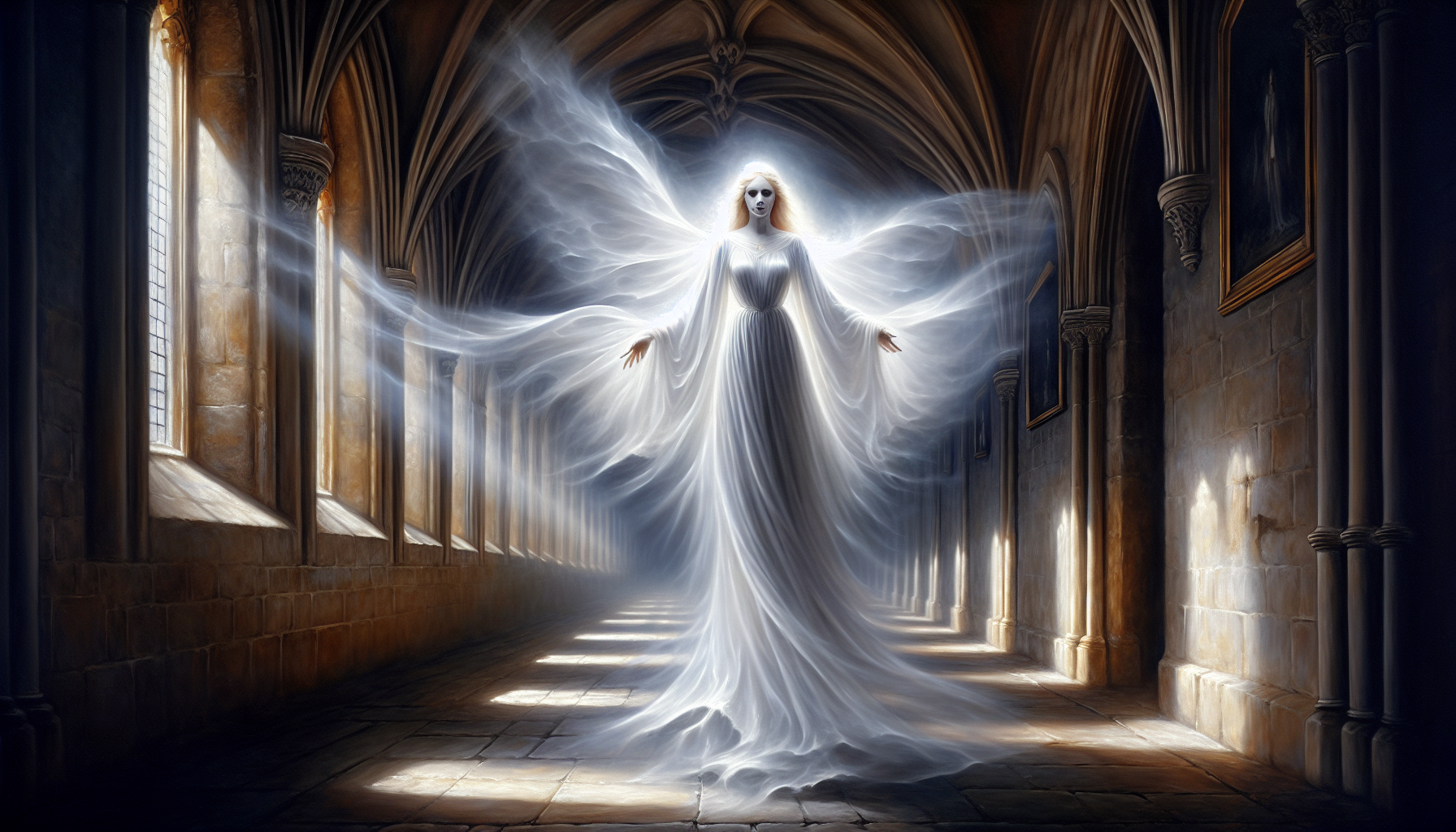
In European folklore, the White Lady often symbolizes purity, innocence, and protection, appearing as a benevolent spirit or guardian angel. She is depicted as a luminous figure clad in flowing white garments, radiating an otherworldly aura that inspires reverence and awe.
In Scotland, the haunting tales of the “White Lady of Stirling Castle” endure, with locals and visitors alike reporting sightings of a spectral figure clad in white robes. According to legend, she is the ghost of a grieving mother who lost her child during a siege of the castle, forever condemned to roam its halls in search of solace.
Across Asia, similar spectral entities exist, each with its own cultural nuances and symbolic associations.
In Japan, the yūrei, or “ghost woman,” is a pale figure draped in white burial robes, representing the restless spirits of the deceased seeking resolution or vengeance.
Similarly, in China, the guǐlái, or “ghost bride,” is a spectral figure adorned in bridal attire, embodying the tragic tales of unfulfilled love and lost souls.
Beyond Europe and Asia, similar spectral entities exist in cultures across the globe, each with its own unique characteristics and cultural significance. In Latin America, the “Dama Blanca” or “White Lady” is a common figure in folklore, often associated with tragic love stories or unsolved mysteries.
In the Philippines, the “Kaperosa” is a spectral entity that appears as a pale, ghostly figure dressed in white, often encountered in abandoned buildings or lonely roads. Legends surrounding the Kaperosa vary from region to region, with some stories depicting her as a benevolent guardian and others as a malevolent harbinger of doom.
In modern times, reports of White Lady sightings continue to surface, with individuals from all walks of life sharing their encounters with these ethereal beings. Paranormal investigators often attribute these sightings to residual hauntings, suggesting that the White Lady may be a lingering imprint of past traumas or emotions imprinted on the environment.
Psychological explanations for White Lady encounters include suggestion, hallucination, and the human tendency to perceive familiar patterns in ambiguous stimuli. Sceptics argue that many sightings can be attributed to natural phenomena, such as reflections, shadows, or misinterpretations of ordinary objects.
Whatever theory you subscribe to, the White Lady phenomenon continues to captivate and mystify those who encounter it.
Whether viewed as a guardian spirit, a harbinger of fate, or a product of the human imagination, the White Lady embodies the very archetype of the traditional supernatural encounter. Across cultures and continents, her luminous presence lights up the depths of human imagination and our timeless interest in myths and legends.