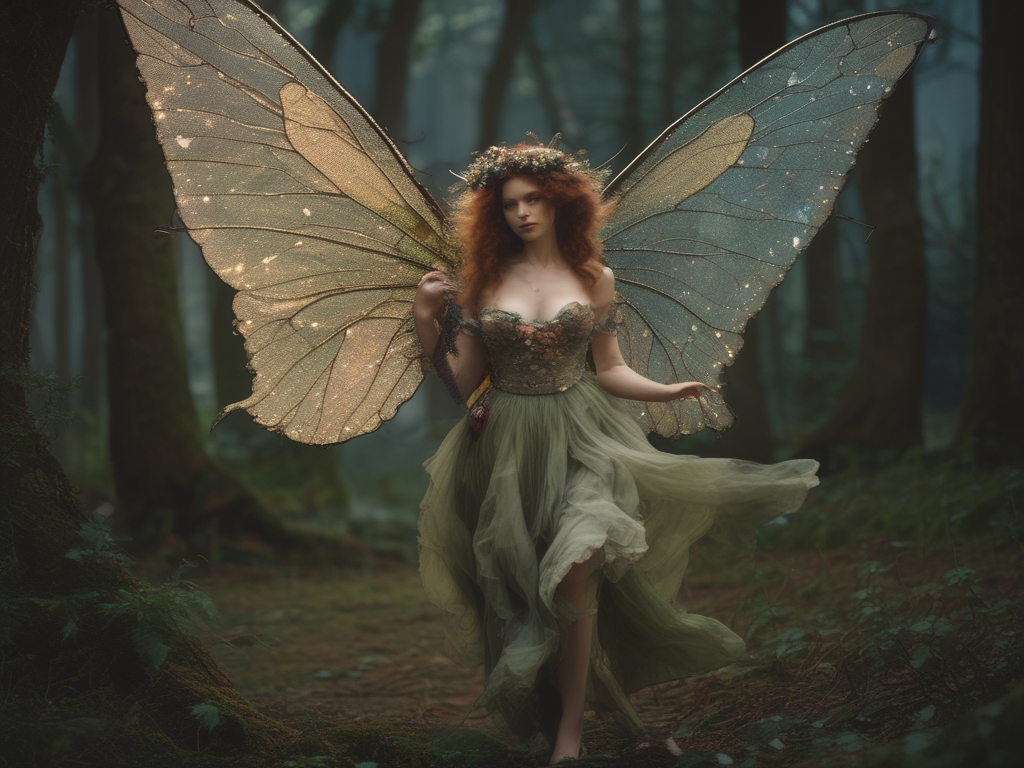
British fairy folk encompass a wide array of beings, each with distinct characteristics and roles within folklore and mythology. These classifications provide a deeper understanding of the varied nature of faeries in British tradition:
1. Seelie Court – The Seelie Court includes faeries known for their benevolence towards humans. They are generally perceived as kind-hearted and are more inclined to assist humans if treated respectfully. Seelie faeries may offer blessings, guidance, or protection, particularly to those who show hospitality or respect towards them. They are often associated with beauty, grace, and a penchant for revelry, celebrating seasonal festivals and joyous occasions with music and dance.
2. Unseelie Court – In stark contrast, the Unseelie Court comprises faeries who exhibit malevolent tendencies towards humans. They are unpredictable and often engage in malicious behavior such as playing harmful pranks, causing illnesses, or leading travelers astray. Unseelie faeries are associated with darkness, deceit, and danger, emerging during twilight or the winter months when the boundary between the mortal realm and the faerie world is believed to be thin. Creatures like the Redcap, a malevolent faerie who dyes its hat with the blood of its victims, are often considered part of the Unseelie Court.
3. Trooping Fairies – Trooping fairies are faeries who travel in groups or processions through the countryside or other landscapes. They are often associated with specific locales such as ancient mounds, stone circles, or fairy hills where they gather to celebrate or conduct their affairs. Trooping fairies are known for their spectral dances, ethereal music, and enchanting songs, which humans may witness during certain times of the year, especially on Midsummer’s Eve or Halloween.
4. Solitary Fairies – Solitary fairies are those who prefer to live alone or in small groups rather than joining larger gatherings. They are often tied to specific natural features such as ancient trees, secluded lakes, or ruined castles, where they may dwell in hidden hollows or underground chambers. Solitary fairies vary widely in temperament and behavior, from benevolent guardians who protect their domains to capricious beings who may exact revenge on those who trespass or disturb their solitude.
5. Household Fairies – Household fairies are benevolent spirits who reside within or around human dwellings, assisting with domestic chores and tasks. They are known for their industriousness and reliability, performing tasks such as sweeping, cooking, or caring for livestock during the night while the household sleeps. Household fairies appreciate small offerings of food or milk left out as gratitude, ensuring harmony and prosperity within the household. However, they may become mischievous or even vindictive if offended or neglected by their human hosts.
6. Changelings – Changelings are supernatural beings found in British folklore, believed to be left by fairies in place of human infants. According to legend, fairies would abduct human babies and replace them with changelings—often sickly or unusual in appearance—who would then be raised in the fairy realm. Changeling tales reflect fears of infant mortality and disability in traditional societies, offering explanations for children who failed to thrive or exhibited unusual behaviors.
7. Brownies – Brownies are helpful household spirits originating from Scottish and English folklore. They are known for their diligent work ethic and willingness to perform domestic chores in exchange for small offerings of food or milk. Brownies typically work unseen during the night, completing tasks such as cleaning, mending clothes, or tending to livestock. They are benevolent beings who take pride in their work but can be easily offended by ingratitude or attempts to spy on them. When offended, Brownies may leave the household or become mischievous, causing disruptions until they receive an apology or offering.
8. Pixies – Pixies are mischievous faeries primarily found in the folklore of Devon and Cornwall. They are known for their small stature, playful nature, and penchant for causing trouble or pranks. Pixies inhabit natural landscapes such as hills, caves, or ancient sites where they may interact with humans in both helpful and trickster-like ways. Despite their mischievous tendencies, Pixies are not inherently malicious and may offer assistance or guidance to those who show them respect or kindness.
This brief classification list outlines the variety of fairy folk in British folklore, each type reflecting different aspects of human experience, cultural beliefs, and the natural world. Whether viewed as benevolent guardians, mischievous tricksters, or enigmatic beings from the Otherworld, British fairy folk continue to inspire wonder, caution, and fascination among those who delve into the magical realms of folklore and mythology.