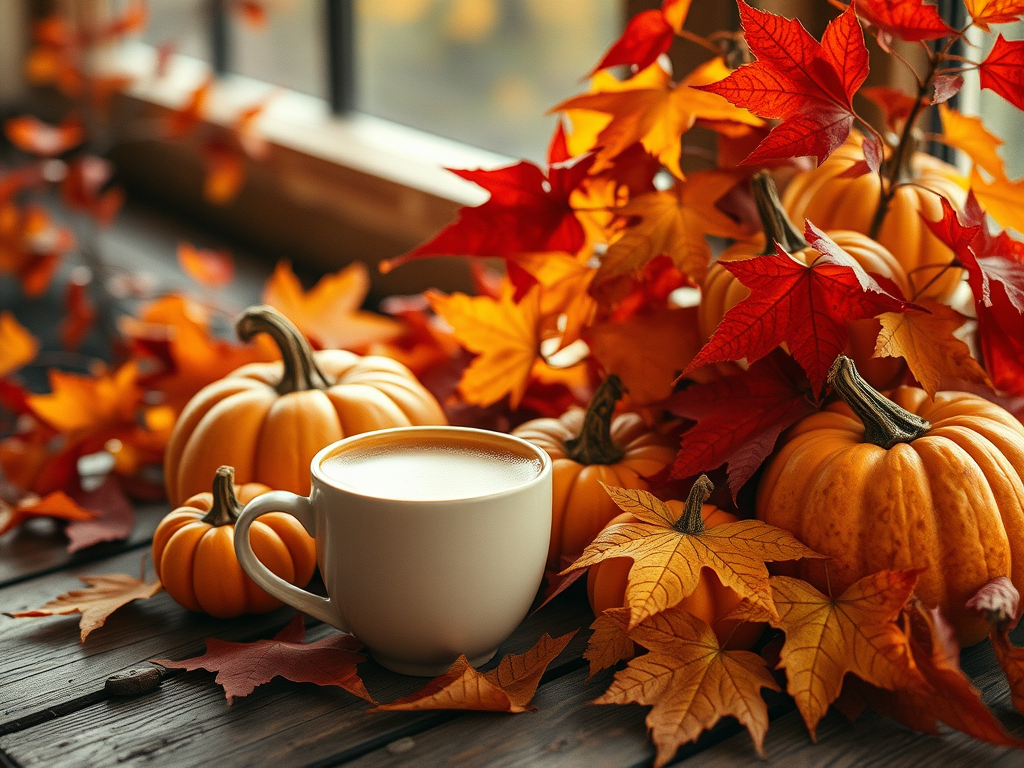
Mabon (pronounced Ma-bon) is a modern Pagan holiday that celebrates the autumnal equinox, usually falling around September 21-24 in the Northern Hemisphere. Named after Mabon ap Modron from Welsh mythology, this festival is one of the eight holidays in the Wheel of the Year, a calendar of seasonal festivals observed by many contemporary Pagans.
The celebration of Mabon bears striking similarities to the celebration of the Autumn Equinox which I will cover tomorrow, sharing themes of renewal and gratitude for the harvest and celebrating the transition from light to the darker, more restful months of the year. But who exactly are we celebrating as we honour this Celtic deity?
Grab yourself a pumpkin spice latte and I’ll tell you the tale..:)
Mabon appears in the “Mabinogion,” a collection of Welsh tales from the 11th and 12th centuries. He was born to Modron, a figure often associated with the goddess Matrona, a mother goddess tied to fertility and the earth. Mabon, (meaning “Divine Son” or “Great Son,”) was a child of great promise, but his fate took a tragic turn. Three days after his birth, Mabon was abducted from his mother’s side and taken away to an unknown location.
The abduction of her little boy left Modron heartbroken and desolate. For many years, no one knew where Mabon had been taken, nor who had taken him. His disappearance became a legendary mystery, and despite the efforts of many warriors and kings, Mabon remained hidden, imprisoned in some unknown place.
Mabon’s abduction and imprisonment symbolize the loss of light and fertility, akin to the setting of the sun or the descent of the earth into the barren months of winter. Mabon, like many figures in mythology who are abducted or imprisoned (such as Persephone in Greek myth), represents the cycle of death and rebirth, as his story foreshadows his eventual return and renewal. This is where the association with Autumn originates.
However, that makes for a very short article and it has taken me most of the day and several expeditions down rabbit holes to find that information. Also, that is not where the story ends… Mabon get’s rescued! and the story of his rescue is tied to the tale of Culhwch and Olwen, one of the oldest Arthurian tales from the Mabinogion.
Culhwch, a young nobleman, was cursed to love only the beautiful Olwen, the daughter of the giant Ysbaddaden – you’ve heard of Ysbaddaden? Tall fella? no? Well, anyway..
To win her hand, Culhwch had to complete a series of impossible tasks (anoetheu), 39 in total, each madder than the one before. One of these tasks was to hunt down the supernatural creature known as Twrch Trwyth, a monstrous boar that wreaked havoc wherever it went.
However, only one man could track and catch Twrch Trwyth and that was your boy Mabon, son of Modron, the greatest huntsman who ever lived. Yet, Mabon had been missing since his abduction in infancy, and no one knew where he was held captive. Which kind of poses the question ‘how do they know he’s the greatest hunter?’ They just do. Maybe he sent postcards to his mum. Maybe it was on his facebook profile under interests… who knows?
Determined to complete the tasks, Culhwch sought the aid of his cousin, King Arthur, and Arthur’s knights. Together, they embarked on a quest to find and free Mabon, knowing his skills were essential to the success of their mission – which was to win the hand of the fair Olwen.
So off they all set on what could probably be regarded as if not the first, then arguably the worst Stag Night ever. Arthur, his men and Culhwch, who we have to assume was sporting a pointy hat with a veil and a Learner Jouster plate at this point, sought out the oldest and wisest creatures in the land, hoping they might know where Mabon was imprisoned.
First, they went to the Blackbird of Cilgwri, a bird so ancient that its song had worn away the anvil upon which it perched. The Blackbird, however, had no knowledge of Mabon’s whereabouts but directed them to a creature even older – the Stag of Rhedynfre.
The Stag, having lived through countless ages, had also not seen Mabon but suggested they ask the Owl of Cwm Cawlwyd, who was even older. The Owl, in turn, sent them to the Eagle of Gwernabwy, who had flown over the land for centuries. The Eagle finally gave them a clue: he had heard of Mabon, who was held prisoner in a dark, stone fortress, but the exact location could only be confirmed by the Salmon of Llyn Llyw, the oldest and wisest of all creatures.
Or maybe all these ancient animals were actually ancient pubs and Mabon had been on a bender and not imprisoned at all!!
Best. Conspiracy Theory. Ever!
I digress. Back to the fishy story…
Arthur and his knights travelled to the river where the Salmon of Llyn Llyw lived, a fish so ancient that it had seen the foundations of the earth being laid. The Salmon revealed that Mabon was imprisoned in the dungeon of Gloucester, within a stone fortress that no one had ever breached. With the Salmon’s help, Arthur’s knights followed the river currents to the dungeon.
When they arrived at the fortress, they heard the mournful cries of Mabon, still imprisoned, his voice echoing through the walls. Using their combined strength and magic, Arthur’s knights stormed the fortress, breaking through the heavy stone walls and freeing Mabon from his long captivity.
Mabon, though he had been imprisoned for years, was still in the prime of his youth and strength—thanks to his divine nature as the son of Modron. His release symbolized a rebirth, the return of light and vitality to the world, like the sun rising after the longest night.
With Mabon free, he joined Arthur and Culhwch in their quest to hunt Twrch Trwyth. His unmatched hunting skills proved crucial, and he helped Culhwch complete the impossible tasks set by Ysbaddaden, allowing him to marry Olwen.
…And if that was the stag night, I would love to see the wedding photo’s.
Anyway, back to the serious bit. Wouldn’t want anyone being offended at my frivolity..
Mabon’s abduction, imprisonment, and rescue are deeply symbolic, drawing on themes of darkness and light, death and rebirth. His disappearance is akin to the loss of fertility and warmth during the winter, while his rescue represents the return of the life-giving force of spring.
Mabon’s story also emphasizes the importance of wisdom from the natural world. The involvement of ancient animals like the Blackbird, the Stag, the Owl, the Eagle, and the Salmon reflects the deep respect for nature in Celtic mythology, suggesting that the world’s oldest creatures hold the keys to understanding life’s greatest mysteries.
In Arthurian legend, Mabon is a figure who bridges the ancient, mythical past with the chivalric ideals of King Arthur’s time, embodying the power of youth, strength, and renewal in the face of great challenges. His rescue and subsequent role in Culhwch’s quest mark him as one of the key figures in the legendary cycle of Welsh mythology.
Mabon has been incorporated into modern pagan practices, particularly Wicca and other neopagan traditions, and in these traditions, Mabon is often seen as a deity of balance, representing the equilibrium between light and dark, life and death.
He is often associated with the following symbols:
- Apples: Apples are a symbol of abundance and fertility, representing the harvest season.
- Pomegranates: Pomegranates are also associated with abundance and fertility, as well as the underworld.
- Grapes: Grapes are a symbol of the harvest and the bounty of the earth.
- Autumn Equinox: The autumn equinox itself is a symbol of balance and renewal.
If you’re interested in celebrating Mabon, here are some ideas:
- Decorate your altar: Creating altars is a common practice during Mabon. These altars are often decorated with autumn symbols such as leaves, acorns, apples, pomegranates and cornucopias. People may make offerings of food or other items to honour nature or deities, expressing gratitude for the abundance they have received.
- Offer a libation: Pour a libation of cider or mead onto the earth as a thank you for the harvest. Many people celebrate Mabon with feasts that highlight the bounty of the season, including foods like apples, squash, and grains. It’s a time for sharing meals with loved ones, giving thanks for the harvest, and enjoying the richness of the earth’s offerings.
- Perform a ritual: Perform a ritual of gratitude and reflection, honouring the cycle of the seasons. Reflection and gratitude play a significant role in Mabon celebrations. Many take this time to reflect on the past year, acknowledge their blessings, and set intentions for the future. It’s a moment to pause, appreciate the present, and prepare for the coming months.
- Spend time in nature: Take a walk in nature and appreciate the beauty of the autumn landscape. Connecting with nature is a key aspect of Mabon. People might go on walks, hikes, or simply spend time outdoors, gathering natural items like colorful leaves, pinecones, and stones to bring the spirit of the season into their homes. Engaging in seasonal crafts, such as making wreaths, candles, or other autumn-themed decorations, adds a creative touch to the celebration.
By celebrating Mabon, you can connect with the ancient traditions of your ancestors and honouring the changing seasons, the cycle of life, and the interconnectedness of all living things. It invites us to appreciate balance, give thanks for the earth’s abundance, and prepare ourselves for the quieter, introspective time of the year..
..and perhaps wonder to ourselves what our ancestors used to cure hangovers..
Until next time… 🙂


Leave a Reply