Today the interwebs are divided – nothing new there then 😂
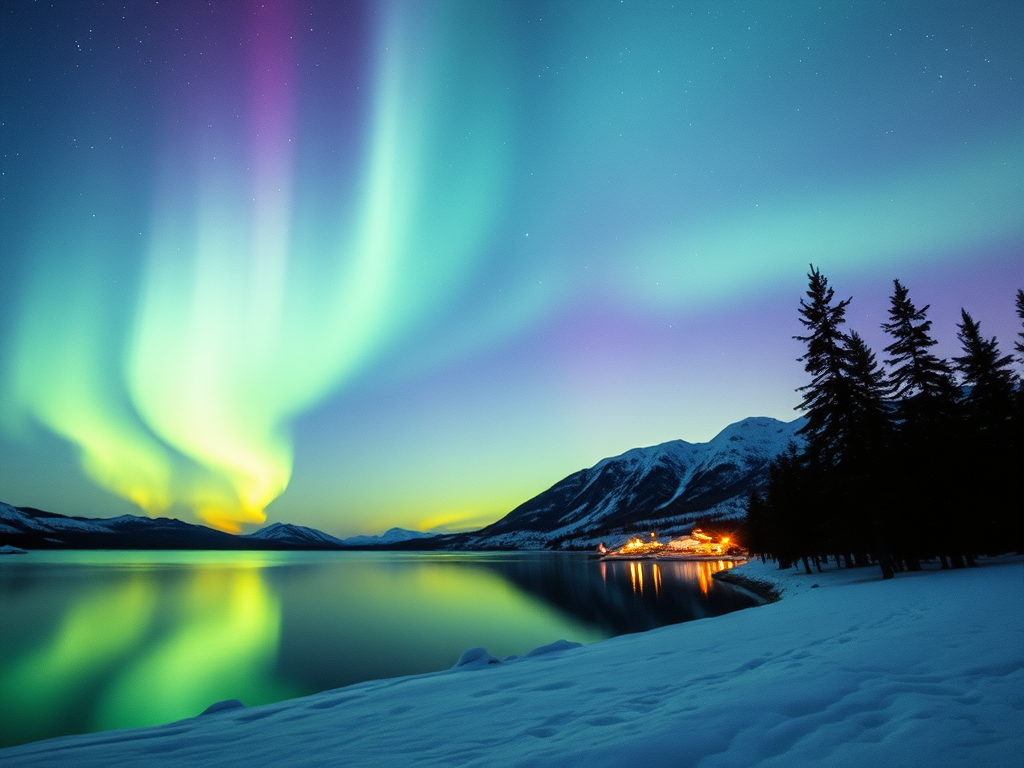
Some people are posting their amazing pics of last night’s aurora – amazing pics!
There are quite a few very anxious posts about how the aurora’s seem to be getting more frequent.
And then there are people who appear (and I may be wrong here) to have no astronomical interest or experience and a tendency to offer nefarious and, ahem, dark theories to explain just about everything..
Auroras are becoming more frequent, but this is primarily due to the Sun approaching its solar maximum, the peak of its 11-year solar cycle.
It literally is a thing that happens, has happened and indeed will continue to happen on a fairly regular basis. So much so that there are actually scientists that can predict roughly when it’s going to happen and there are websites and even apps that give this information freely to the masses and will even make your phone ping to alert you of possible aurora displays!
At this point I will bid a fare thee well to the more hardcore conspiracy theorists who already know all the intel because they’ve seen all the YouTube videos about secret government experiments that are causing auroras… Bye!
For anyone who is still here and interested, I have put together a more in-depth explanation of the solar maximum and how it kinda works. I hope it helps or sets someone’s mind at ease.
🙂
So, the solar maximum is a phase within the larger solar cycle, and it plays a vital role in shaping space weather. It has a huge connection to the aurora borealis, or northern lights which we all know and love.
To fully understand the relationship between the solar maximum and the aurora borealis, we need to explore the mechanisms of the solar cycle. I’m sorry about that but you really do need to have a grasp on the dynamics of solar activity, and how these processes interact with Earth’s magnetic field and atmosphere. Also, it might come up as a question in a quiz one day and win you a million quid, you never know… so here we go…
The Sun, our closest star, is far from a static entity. It experiences continuous changes and fluctuations in activity over roughly 11-year cycles known as solar cycles. At the heart of this cycle is the magnetic field of the Sun, which twists, warps, and occasionally realigns as the solar cycle progresses.
The solar cycle can be divided into two phases: the solar minimum, characterized by relatively low solar activity, and the solar maximum, when solar activity peaks. See how easy this is so far?
The solar maximum is a time of heightened turbulence on the Sun’s surface. Solar flares, coronal mass ejections (CMEs), and sunspots become far more common during this period. Sunspots, which are cooler regions on the Sun’s surface caused by intense magnetic activity, serve as markers of the Sun’s magnetic state.
As the Sun approaches its maximum, the number of sunspots rises dramatically, sometimes reaching hundreds, before beginning to taper off again as the cycle enters its declining phase. These sunspots, though small in relation to the size of the Sun, can release immense amounts of energy through solar flares and CMEs.
Going back to Solar flares – these are intense bursts of radiation that occur when the magnetic energy stored in the Sun’s atmosphere is suddenly released. A flare can produce energy equivalent to millions of hydrogen bombs, with the most powerful flares capable of disrupting communications and navigation systems on Earth. It happens relatively rarely but it can happen.
CMEs, on the other hand, are massive clouds of charged particles and magnetic fields that are ejected from the Sun’s corona and sent hurtling through space at incredible speeds. Simple.
While solar flares primarily affect radio communication and GPS systems, CMEs are the primary drivers of geomagnetic storms when they interact with Earth’s magnetosphere.
Now, this is where the relationship between the solar maximum and the aurora borealis comes into play. Earth is surrounded by a magnetic field that protects it from the majority of solar radiation and cosmic rays. This field, known as the magnetosphere, is not impenetrable.
When CMEs and solar wind – that’s a continuous flow of charged particles from the Sun – reach Earth, they interact with the magnetosphere, causing disturbances known as geomagnetic storms. These storms can compress the magnetosphere, squashing those particles down and funnelling them toward the polar regions, where the magnetic field lines converge.
As these particles collide with gases in the Earth’s upper atmosphere, specifically oxygen and nitrogen, they excite these atoms, causing them to emit light.
This is the aurora borealis.
The strength and frequency of the aurora borealis are directly influenced by the level of solar activity. During periods of solar maximum, when sunspots are abundant and CMEs occur more frequently, guess what? – the aurora borealis becomes more intense and widespread.
Under the right conditions, auroras that are typically confined to high-latitude regions like Alaska, Canada, and Scandinavia can be visible much farther south, in places like the northern United States or even central Europe.
The colours of the aurora ( I have covered this before in another article but to save you the bother of searching for it) – most commonly green, but also red, purple, and blue – depend on the type of gas being excited and the altitude at which the interaction occurs. For example, oxygen atoms at high altitudes (around 200 km) produce red auroras, while lower-altitude oxygen (around 100 km) results in the more common green light. Nitrogen, which is more prevalent at higher altitudes, contributes blue and purple hues.
People who actually studied the sun have known the link between solar maximum and auroral displays for centuries, though the full scientific understanding only began to take shape in the last hundred years.
Observers in ancient China, Rome, and Scandinavia recorded vivid descriptions of the aurora, often attributing it to supernatural or divine phenomena. It wasn’t until the development of modern astronomy and the discovery of the solar cycle in the mid-19th century that scientists began to make the connection between solar activity and the aurora.
The pioneering work of astronomer Heinrich Schwabe in the 1840s, who first documented the cyclical nature of sunspots, laid the foundation for this understanding.
Further advances in the 20th century, particularly with the advent of space exploration and satellite technology, allowed scientists to study the Sun’s behavior in greater detail and confirm the connection between solar storms and geomagnetic activity.
The aurora borealis is not only a beautiful sight. It’s also a window into the workings of space weather, which can have far-reaching consequences for human technology and infrastructure.
During periods of high solar activity, such as the solar maximum, Earth is at greater risk of geomagnetic storms. These storms, while beautiful in their auroral displays, can wreak havoc on modern technology.
In March 1989, for example, a powerful geomagnetic storm, triggered by a CME during a solar maximum, caused the collapse of the Hydro-Québec power grid in Canada, leaving millions of people without electricity for several hours. The storm also disrupted satellite communications and caused widespread auroras that were visible as far south as Florida.
More recently, scientists have become increasingly concerned about the potential for even more powerful solar storms, such as the Carrington Event of 1859.
Named after British astronomer Richard Carrington, who observed the associated solar flare, this geomagnetic storm is considered the most powerful on record.
It caused auroras visible as far south as the Caribbean and sparked fires in telegraph stations across Europe and North America. If a storm of similar magnitude were to occur today, it could cause widespread damage to the global power grid, satellite systems, and communications infrastructure, with potentially catastrophic economic and societal impacts – is it likely though? Probably not.
While the aurora borealis is often viewed as a natural wonder, it also serves as a reminder of the Sun’s immense power and its influence on our planet. The relationship between the solar maximum and the aurora borealis highlights shows just how connected we are to space weather and Earth’s magnetic environment.
The study of this connection to solar activity continues to be an active area of research. With advances in satellite technology and our growing ability to observe and monitor the Sun in real time, scientists are better equipped than ever to predict geomagnetic storms and their potential impacts on Earth.
The Solar and Heliospheric Observatory (SOHO), launched in 1995, and the Parker Solar Probe, launched in 2018, have provided invaluable data on the Sun’s behavior and the solar wind, helping to refine models of solar activity and improve space weather forecasting – this is why we have access to space weather forecasts and info.
But apart from its scientific importance, the aurora borealis continues to captivate the imagination of people around the world.
So whether viewed from the Arctic wilderness or the streets of a city temporarily bathed in its ethereal glow, the aurora is one of the most awe-inspiring natural phenomena. It’s a celestial dance powered by the Sun and shaped by the delicate interplay of magnetic fields and charged particles. It’s a reminder of the beauty of our natural world and the intricate and sometimes perilous connection between Earth and its star.
And. So far. It hasn’t been the end of the world.
Citations and Further Reading:
1. Schwabe, H. (1844). Solar observations during 1843. Astronomische Nachrichten.
2. Parker, E. N. (1958). Dynamics of the interplanetary gas and magnetic fields. Astrophysical Journal.
3. Green, J. L., & Boardsen, S. (2006). Duration and extent of the great auroral storm of 1859. Advances in Space Research.
4. Moldwin, M. B. (2008). An Introduction to Space Weather. Cambridge University Press.
5. Pulkkinen, A. (2007). Space weather: Terrestrial perspective. Space Science Reviews.
For those interested in learning more about solar activity and the aurora borealis, the following resources offer more in-depth insights:
1. National Oceanic and Atmospheric Administration (NOAA) Space Weather Prediction Center: NOAA SWPC
2. NASA’s Solar and Heliospheric Observatory (SOHO): SOHO Mission
3. European Space Agency (ESA) Aurora and Space Weather Monitoring: ESA Aurora
These sources provide ongoing updates on solar activity, space weather forecasts, and aurora predictions, offering a blend of scientific rigor and accessible information for enthusiasts and researchers alike.
Enjoy 🙂