The idea of ghosts haunting the places where individuals have been walled up, either as punishment, in hiding, or by tragic accident, has fascinated people for centuries, and the UK, with its rich history of castles, churches, and ancient buildings, is home to many such tales.
These stories often intertwine with folklore, superstition, and sometimes even historical fact, painting a picture of a haunted landscape where the spirits of those who met a gruesome fate remain trapped.
The idea of being walled up alive has always struck a primal chord of horror in the human imagination, and it’s easy to understand why legends about these unfortunate souls persist. The thought of being imprisoned in a space with no possibility of escape, entombed within the very walls of familiar buildings, evokes a unique sense of dread. It’s this dread that fuels many of the ghost stories associated with walled up individuals in the UK.
One of the most famous legends of someone being walled up alive comes from Berkeley Castle, located in Gloucestershire. The castle, which has stood for over 800 years, is not only known for its imposing medieval architecture but also for its dark past. It was within the walls of Berkeley Castle that Edward II, the deposed king, is said to have met his gruesome end in 1327.
Though the exact nature of his death is debated, with some claiming he was murdered by a red-hot poker and others suggesting suffocation, there are rumours that he was walled up alive within the castle. His ghost is believed to still linger, and visitors have reported strange noises, cold drafts, and a feeling of unease in certain areas of the castle.
The idea that Edward’s restless spirit might still haunt the place of his death feeds into the notion that those walled up in life remain trapped in death, unable to find peace.
Another well-known tale comes from the Tower of London, a location steeped in grim history and where countless individuals met untimely and violent ends. One of the most famous ghost stories associated with the Tower concerns the two princes, Edward V and his younger brother Richard, Duke of York, who disappeared in 1483.
The boys, who were only 12 and 9 years old, were held in the Tower by their uncle, Richard III, after their father’s death. They were never seen again, and it is widely believed that they were murdered, with their bodies hidden somewhere within the Tower’s walls.
Though their exact fate remains a mystery, the discovery of two small skeletons buried under a staircase in the Tower in 1674 has only added to the speculation. The ghostly presence of the princes has reportedly been seen on several occasions, with witnesses claiming to see two small, pale boys holding hands and wandering the halls.
The tragic story of their probable murder and concealment within the Tower resonates with the theme of the spirits of those walled up or buried in secret still haunting the places of their deaths.
The tradition of walling up individuals, particularly as a punishment, has ancient roots. In the Middle Ages, the practice was sometimes used as a means of execution for particularly severe crimes.
One of the more chilling examples of this comes from the story of the “Nun of York.” In the 13th century, a young nun in the city of York was reportedly discovered to have broken her vows by falling in love with a man. As punishment, she was bricked up alive within the walls of her convent, condemned to die a slow and agonising death in darkness and isolation. Her ghost is said to haunt the area to this day, with sightings of a spectral nun walking through the streets of York, her face hidden by her habit.
The image of a walled-up nun, her spirit forever wandering, is a particularly poignant reminder of the severe punishments meted out during that period and the deep fears surrounding sin and punishment.
Moving from York to Suffolk, there is the tale of the so-called “Green Lady” of Long Melford.
In Melford Hall, a grand Elizabethan manor, there is a long-standing legend about a woman who was walled up alive after being discovered in an adulterous affair.
The story goes that her husband, upon finding out about her infidelity, ordered her to be sealed within a secret chamber in the house, where she eventually perished. Her ghost, known as the Green Lady, has been seen walking the corridors of Melford Hall, wearing a green gown and sometimes seen crying. The colour green, often associated with jealousy and death, adds another layer to the eeriness of the tale.
As with many ghost stories, it is unclear how much of this account is based in fact and how much is rooted in local folklore. But the persistence of the legend, passed down through generations, speaks to the human fascination with betrayal, punishment, and the idea of being literally ‘shut away’ forever.
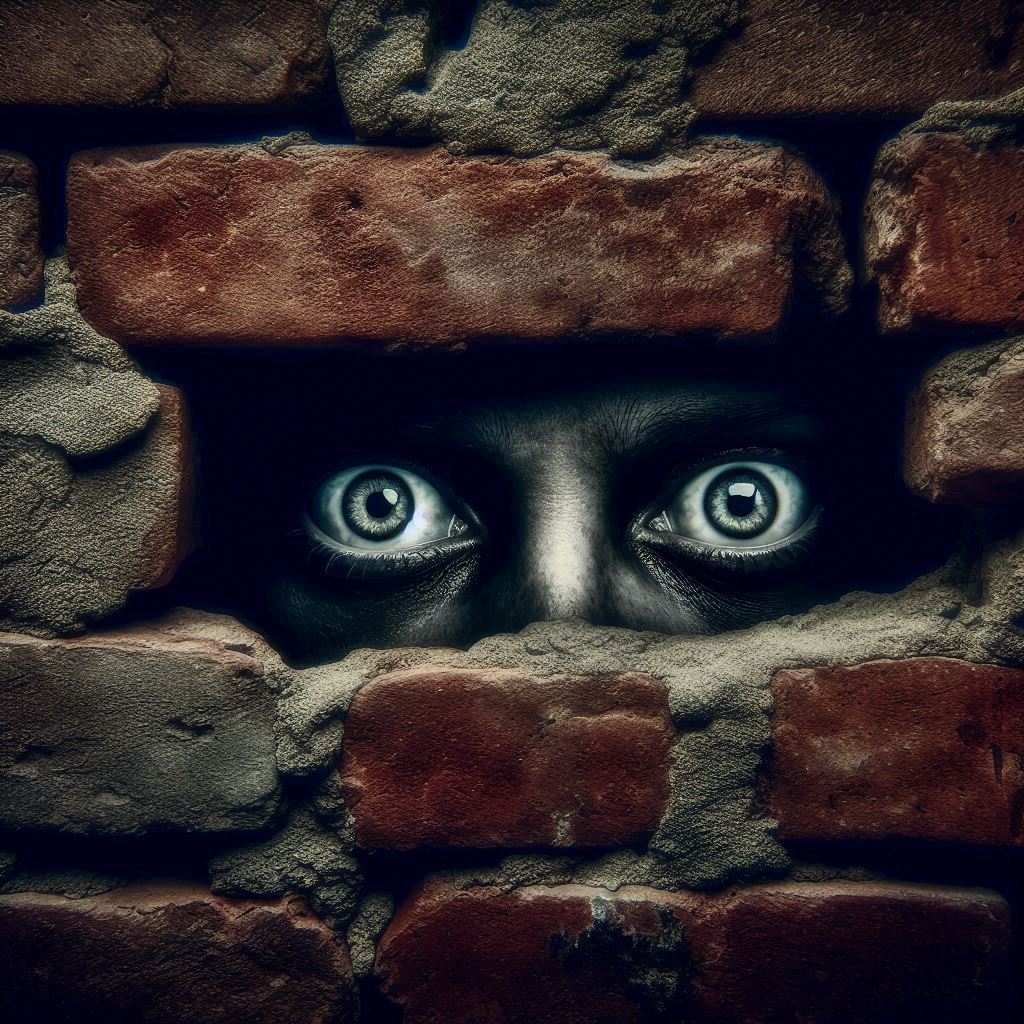
There are also stories of accidental walling up, where individuals were trapped or buried within walls without the intent to punish.
One such example comes from Dover Castle, where a tragic tale tells of a worker who, while helping to construct the castle, was accidentally walled up in one of its thick stone walls. It was only after his absence was noticed days later that his fate was realised, but by then it was too late.
Some versions of the story suggest that his cries for help could be heard echoing through the stone as he slowly died. Today, his spirit is said to haunt the area, and some visitors to the castle claim to hear ghostly knocking and tapping sounds from within the walls.
The haunting, in this case, is seen as a result of the incomplete nature of his death – dying by accident, his spirit is left in a state of unrest, forever seeking release.
The ghost stories that revolve around the idea of people being walled up alive often touch on deeper themes of justice, punishment, and the fear of being forgotten. Many of these tales feature individuals who were wronged in some way, either by being punished unjustly or murdered in secret, and their hauntings can be seen as a form of cosmic justice. Their spirits remain trapped in the same way they were trapped in life, serving as a constant reminder of the horrors inflicted upon them.
In this sense, these ghost stories are more than just spooky tales – they are reflections of societal fears and concerns about how we treat one another, the nature of guilt, and the consequences of our actions.
In some cases, however, the ghostly presence associated with walled-up individuals is not always malevolent. At times, the spirits are described as tragic or even pitiable, wandering endlessly in search of peace. The weight of their fate – buried alive, forgotten within the stone walls of ancient buildings – imbues these stories with a melancholic air.
For example, the tale of the “White Lady” of Blenkinsopp Castle in Northumberland is a haunting but not entirely frightening one.
She is said to be the ghost of a woman who was bricked up in the castle’s walls after her family discovered she had fallen in love with a commoner. Unlike some of the other ghosts associated with walling, the White Lady is often described as sorrowful rather than vengeful, and her appearances are thought to be a reminder of the love and life she was denied.
The prevalence of these ghost stories in the UK speaks to the rich history and the dark corners of its past. In a country where ancient castles, monasteries, and churches still stand, many dating back hundreds or even a thousand years, it’s perhaps not surprising that legends of walled-up individuals persist.
These tales have integrated themselves into the fabric of the country’s cultural memory, reminding us of the harshness of past punishments and the fragility of life.
Whether one believes in ghosts or not, the idea of being walled up, trapped and forgotten, strikes a chord of fear in most people. It’s a fate that seems almost worse than death itself, and perhaps it’s this fear that keeps these ghost stories alive, lingering in the walls of the UK’s ancient buildings.