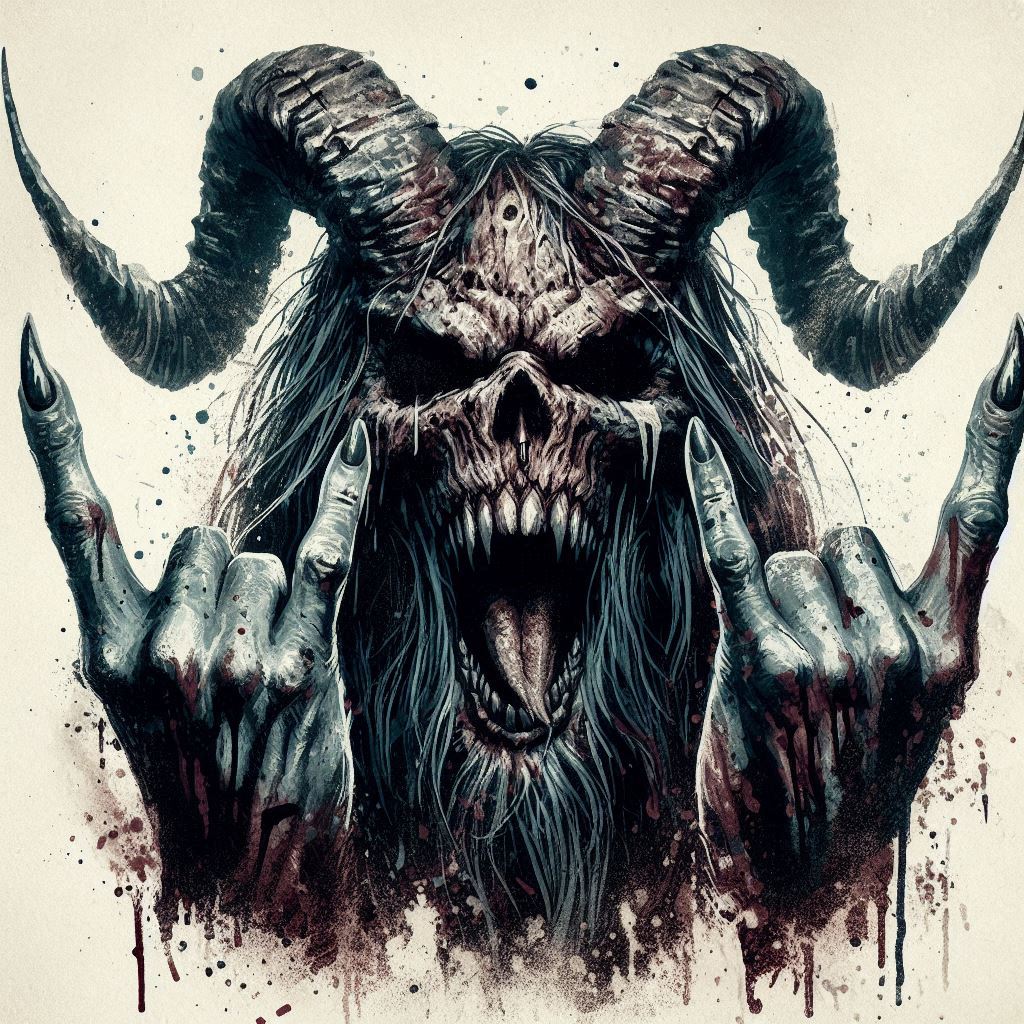
The finger horns symbol, known widely as the “sign of the horns” or “mano cornuta,” is a hand gesture that has traversed cultures, religions, and historical contexts. It’s a deceptively simple gesture, formed by extending the index and little fingers while keeping the other fingers folded into the palm, yet its meaning is as varied as its geographical spread.
The horns gesture’s journey spans millennia, appearing across civilizations as a symbol of power, protection, and even betrayal. Its relationship to the horseshoe symbol, another ancient emblem of luck and defense against evil, offers a fascinating lens through which to explore its significance.
The symbol’s history is difficult to trace to a single origin, but evidence from archaeology and cultural studies suggests that it likely emerged in different forms and times across various ancient cultures.
One of the most frequently noted associations comes from ancient Greece and Rome. In these classical civilizations, horns, whether represented as animal features or metaphorical extensions of divine or magical power, were a frequent symbol. The mano cornuta was often used as an apotropaic symbol, one that could ward off evil or bad fortune.
The extension of the horns from the hand mimicked real horns, which in many ancient contexts were seen as symbols of strength, virility, and even divine power. Deities such as Pan or Dionysus in Greece, often associated with wildness, fertility, and chaos, were depicted with horns, a feature that played into the cultural psyche as something both to revere and fear.
In the ancient Roman world, the symbol was used in a slightly different manner. Archaeological finds, such as amulets and inscriptions, often show the horns gesture being used to avert the evil eye, one of the most persistent superstitions across cultures. The evil eye, the malevolent gaze thought to bring misfortune, sickness, or death, was believed to be particularly potent in the Mediterranean world. The mano cornuta acted as a protective charm, diverting the ill will that came from envy or malevolent spirits.
Interestingly, this belief in the power of the horned symbol for protection was not confined to the Mediterranean but also found resonance in other parts of Europe, and even the Middle East and Asia, albeit with varying local adaptations.
In Italy, for instance, the gesture is still widely recognized and is often accompanied by the verbal phrase “cornuto” to refer to someone being cuckolded. In this context, the gesture takes on a more complex, socially loaded meaning. While the finger horns can still be used apotropaically, it also became a symbol of sexual betrayal. The horns, in this context, are figurative, representing the unfaithfulness of a partner, often used as an insult or a way to ridicule someone.
This dual meaning, protection on one hand and mockery on the other, illustrates the deep entanglement of symbols with human emotion and social life. What was once purely protective could become a symbol of shame, depending on the circumstances of its use.
Moving beyond the Roman and Mediterranean worlds, the sign of the horns finds parallels in other cultures as well. In South Asia, for example, the gesture appears in Hinduism, particularly in representations of deities like Nataraja (a form of Shiva), where the hand gesture is part of sacred dance postures known as mudras. While the exact configuration of the fingers may differ, the underlying idea of the horns symbolizing power or protection is not lost.
Similarly, in Buddhism, hand gestures or mudras that incorporate horn-like elements are also common, emphasizing wisdom or dispelling negative forces.
The gesture also appeared in the Norse and Celtic traditions, particularly in association with protective charms and talismans.
Viking amulets, for instance, often depicted Thor’s hammer, Mjolnir, along with other symbols believed to channel divine power and protect warriors in battle. The horns, or horned helmets that have now become synonymous with Viking imagery (despite historical inaccuracies), likely derive from the same primal association of horns with strength, ferocity, and protection.
The Celts too, with their deep reverence for nature and animals, incorporated symbols of horns in their artwork and artifacts, not only as representations of power but also of the cyclic nature of life and death.
The spread of Christianity across Europe didn’t entirely erase these older traditions but did transform them. In Christian iconography, the devil was often depicted with horns, a deliberate co-opting of older symbols of fertility and wildness into something negative and diabolical. This new religious context further altered the meaning of the hand gesture, particularly in the medieval period, where the sign of the horns came to be associated with demonic forces, witchcraft, and black magic. Witch trials and the demonization of pagan rituals often included accusations of using the “sign of the horns” as part of invoking dark forces.
In the context of global archaeology, it’s fascinating to see how the symbol manifests in different eras and locations.
For example, in the Americas, particularly among Mesoamerican civilizations, the gesture or similar ones appear in art and ritual contexts, often in relation to shamanistic practices. While direct parallels to the European or Mediterranean horns gesture are not always clear, the recurring theme of a hand gesture invoking power or protection persists across these varied societies. This points to a possible universal human inclination to use the body symbolically, particularly the hands, as a means of interacting with unseen forces, whether they be gods, spirits, or more abstract ideas of luck and fate.
Turning to more modern times, the finger horns have undergone yet another transformation, particularly in popular culture. The symbol has been famously co-opted by the rock and heavy metal music scene, thanks in large part to Ronnie James Dio, a frontman for bands like Black Sabbath and Rainbow. Dio, of Italian descent, claimed to have learned the symbol from his grandmother, who used it to ward off the malocchio, or evil eye, in her native Italy.
As the symbol gained traction in the world of rock music, it shed much of its older, culturally specific meanings and became a more general symbol of rebellion, power, and defiance. Yet, even in this context, its origins as a protective gesture persist, as rock music often embraces themes of strength, danger, and confronting darker forces.
The finger horns gesture also shares an interesting relationship with the horseshoe symbol, another powerful apotropaic sign. Like the horns, the horseshoe has long been considered a ward against evil and bad luck.
The shape of the horseshoe, often made of iron, a metal thought to repel malevolent spirits, has been hung over doorways and thresholds to keep homes safe from harm.
Horseshoes, like the horned gesture, have roots in both pagan and Christian traditions. Their curved shape can be seen as representing the horns of a bull or goat, further emphasizing the link between these symbols of protection. Moreover, just as the direction of the horns in the hand gesture can change its meaning (pointing upwards for protection, downwards as an insult), the orientation of the horseshoe also matters: pointing upwards to hold in luck, or downwards to pour it out.
While these symbols operate on different planes, the finger horns as a gesture, the horseshoe as an object, they share a common purpose in human society: the warding off of misfortune. They reflect a deep, almost primal human need to find ways to protect oneself from the capriciousness of fate, whether through physical objects or symbolic actions.
Both the horns and the horseshoe, while seemingly simple in form, carry layers of meaning that have evolved over time and space, morphing to suit the needs of different societies while maintaining a core essence related to power, protection, and sometimes mockery or shame.
In global terms, the symbol of the horns and its relationship to similar gestures or objects illustrates a fascinating example of cultural diffusion. While each culture may put its own spin on the meaning of the gesture, the underlying human concerns of protection, power, and control over unseen forces remain constant.
Whether in the amulets of ancient Rome, the mudras of India, or the rock concerts of modern America, the finger horns remain a potent symbol of humanity’s attempt to navigate the uncertain and often threatening world around us.
As long as those concerns persist, it’s likely that the horns – and their symbolic cousins like the horseshoe – will continue to find new meanings and expressions across the globe.