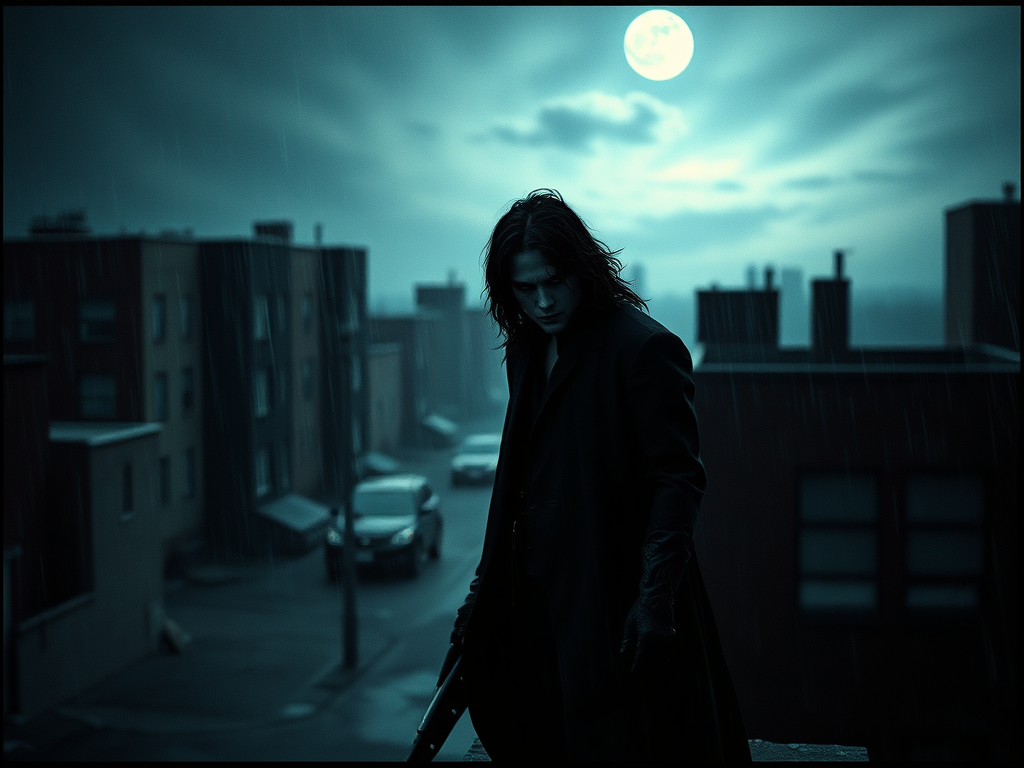
“The Crow,” a 1994 cult film directed by Alex Proyas, is more than just a dark fantasy tale of revenge; it’s an icon of goth culture, a love letter to loss, and a somber reminder of life’s fragility.
The movie, adapted from James O’Barr’s graphic novel, is inextricably linked to the tragic death of its lead actor, Brandon Lee, who lost his life in a filming accident on set.
This fact alone makes it one of the most haunting stories in Hollywood. The film, its atmosphere, and its legacy have captivated audiences and inspired an entire subculture. Here, I’ll explore not just the film’s story and themes but also the numerous anecdotes and eerie folklore that surround it.
Brandon Lee’s portrayal of Eric Draven, a rock musician resurrected by supernatural forces to avenge the brutal murder of his fiancée and himself, is searing, intense, and absolutely unforgettable. Even if Lee hadn’t died during filming, his performance would still be powerful, yet knowing what happened brings a sense of morbid reverence to every line and look.
For many fans, “The Crow” is more than just a movie – it’s a ritual of grief, justice, and vindication. It’s a dark, poetic ballet of revenge, guided by the spectral imagery of Detroit’s decrepit alleys and rain-soaked rooftops. The film’s themes of love transcending death, of rage against senseless cruelty, and of beauty found in the macabre all resonate deeply.
One of the main reasons “The Crow” became such an enduring cult phenomenon is because of Brandon Lee. Lee, who was the son of martial arts legend Bruce Lee, was poised to be a breakout star, his role in “The Crow” catapulting him from the shadow of his famous father into his own.
Tragically, much like his father’s mysterious death, Brandon’s demise left behind a storm of questions, theories, and eerie coincidences that only fueled the legend surrounding both men.
The fatal accident happened during a scene where Eric Draven is shot by gang members. The gun, which was supposed to be loaded with blanks, contained a fragment of a dummy bullet lodged in the barrel, which went undetected. When the blank round was fired, the dummy fragment shot out and struck Lee, resulting in his death. The eerie resemblance to his father’s untimely death at the peak of his career cemented Brandon Lee’s place in Hollywood lore, sparking endless speculation about a supposed “Lee family curse.” – I may cover this supposed curse in another article…
Even beyond the tragic accident, the atmosphere on set had a dark, almost cursed energy to it, according to the cast and crew. Shortly after filming began, a carpenter was severely injured by high-voltage wires, another crew member accidentally stabbed his own hand, and a truck on set caught fire. Then, a storm destroyed part of the set. The string of misfortunes left an ominous feeling hovering over the production, which only heightened after Lee’s death.
Many people began to believe that the movie itself was cursed, an impression reinforced by the gothic themes of the film and the fact that Eric Draven’s character rises from the dead to carry out his revenge and while these eerie incidents could be seen as mere coincidence, there was already an ethereal, somber quality surrounding “The Crow.”
James O’Barr, the creator of the original graphic novel, drew upon his own personal pain and loss to craft the character of Eric Draven. O’Barr wrote “The Crow” as a way to cope with the tragic death of his fiancée, who was killed by a drunk driver. His raw, unfiltered grief bleeds into every panel of his comic and, later, into every frame of the movie. The lines between life and art blur even further when we consider how Lee’s own untimely death paralleled the tragic love story central to the film.
The film’s setting, a desolate, eternally rain-soaked Detroit, is almost a character itself, adding to the sense of desolation and otherworldly beauty. “The Crow” was shot in Wilmington, North Carolina, which stood in for Detroit. With its perpetual twilight and relentless rain, the city feels purgatorial, a place where the living and the dead feel close enough to touch. The sets were dark and grim, the lighting stark and moody, casting long shadows that only added to the film’s haunting tone.
I have the haunting and beautiful soundtrack, featuring tracks from The Cure, Nine Inch Nails, and Rage Against the Machine, playing as I write this and it perfectly captures the film’s gritty, melancholic atmosphere, with each song reinforcing the feelings of loss, rage, and sadness that underpin the story.
For fans, Lee’s tragic death imbues the film with a sense of martyrdom. Watching “The Crow” feels, for me at least, like watching a ghost story brought to life. Lee’s performance is haunting because it is both his best and his last. Every glance, every line, carries an added weight because we know it’s the last time we’ll ever see this talented young man in his prime. This sorrow is compounded by the film’s themes of resurrection and retribution, which add layers of meaning to Lee’s role and make it feel like a final, posthumous gift to his audience. In that way, “The Crow” is almost mythic. It’s a movie about life, death, and revenge that transcends its own story to become a symbol of its actor’s legacy.
Beyond Lee’s on-screen presence, “The Crow” also influenced countless fans in the years that followed. Goth and alternative subcultures embraced the film, not just for its dark aesthetics but for its ethos – a message of resilience. The idea that love is worth fighting for, even beyond death. The film’s dialogue became iconic, with lines like “It can’t rain all the time” and “Victims; aren’t we all?” resonating as mantras for those who have endured pain and loss.
“The Crow” has become a rallying cry for those who have suffered and survived, a symbol of perseverance in the face of unimaginable pain.
There are countless anecdotes of fans feeling a deep, almost mystical connection to the film. Many fans report watching the film as a form of catharsis, a way to process their own grief or channel their own anger. Some fans even visit Lee’s grave, seeing it as a pilgrimage, a way to honour someone who has inspired them to confront their own pain. To this day, “The Crow” continues to inspire tributes, from tattoos to artwork to fan fiction, all created by people who felt touched by the film’s message.
The cult following around “The Crow” continues to thrive, in part because the story remains timeless. It’s a narrative that explores the darkness and beauty of the human soul, a poetic meditation on vengeance and forgiveness. Its exploration of love that transcends death resonates on a primal level, and the visual and musical choices Proyas made ensure that the film remains visually stunning and emotionally impactful, even decades later.
“The Crow” isn’t just a movie; it’s a phenomenon with its own mythology, steeped in tragedy and haunting beauty. Brandon Lee’s death forever altered the way we experience it, transforming it from a gripping revenge thriller to a sombre memorial to a young life cut tragically short. Watching “The Crow” is like watching a moving elegy, a piece of dark poetry captured on film. The film’s legacy is marked by both its raw beauty and the shadow of death that hovers over it – a duality that makes it endlessly compelling, even after so many years.
As fans, we hold on to the beauty and the pain, knowing that “The Crow” is a film that somehow transcends cinema. It speaks to anyone who has ever lost someone, who has ever yearned for justice, who has ever wished for a chance to set things right. It’s a story of love and loss, vengeance and redemption – a tale that will continue to haunt, inspire, and move audiences for generations to come.

Leave a Reply