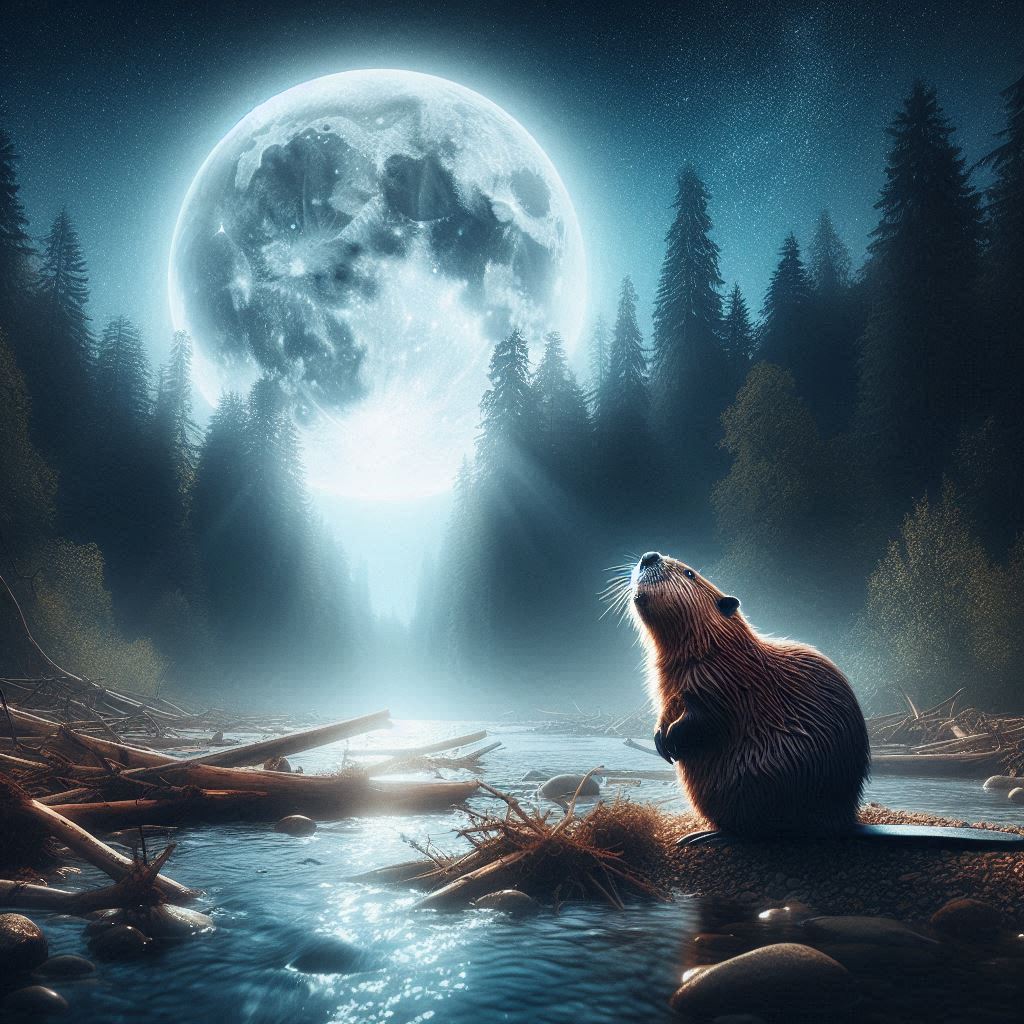
The term “Beaver Supermoon” combines two fascinating concepts – the Beaver Moon, a traditional name for the full moon in November, and the phenomenon of a supermoon, when the moon appears larger and brighter because it is closer to Earth in its orbit.
The Beaver Moon derives its name from Native American and colonial-era traditions. November marked a time when beavers were particularly active, preparing for winter by building dams and storing food.
For early settlers and Indigenous peoples, this period was ideal for setting beaver traps before the water froze, as beaver pelts were crucial for warmth and trade.
The name reflects the practical and seasonal wisdom of those who relied on nature’s rhythms.
A supermoon occurs when a full moon coincides with the moon’s perigee, its closest point to Earth. This alignment makes the moon appear about 14% larger and 30% brighter than when it is at its farthest point, or apogee.
The term “supermoon” is modern, coined by astrologer Richard Nolle in 1979, but the phenomenon itself has been observed and celebrated for centuries
.The Beaver Supermoon blends these two concepts, making it a particularly special celestial event. Many cultures have associated the moon with cycles of life, fertility, and introspection. For example, some Indigenous traditions view the November full moon as a time of preparation and reflection, mirroring the beavers’ industriousness.
In folklore, a brighter, closer moon was often seen as a harbinger of change or an invitation to connect with the natural world.
In modern times, people celebrate supermoons by gathering outdoors to admire the moon’s brilliance, engaging in moonlit walks, photography, or meditation. The Beaver Supermoon, with its seasonal ties and spectacular appearance, invites us to appreciate both the science and the stories that shape our connection to the sky.