The Terrifier films, especially Terrifier (2016) and Terrifier 2 (2022), have been divisive within the horror community, with strong reactions both in favour and against.
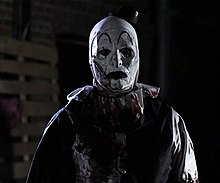
The films centre on Art the Clown, a sadistic and silent clown killer whose gruesome methods have made him a cult icon in horror circles. While some horror fans celebrate the films as refreshingly shocking, others, myself included, argue that Terrifier and its sequel are overrated, and here’s why. Obviously this is my opinion so nobody needs to be offended or cry about it. Scroll on if you don’t like it and get over it 😊
1. The Plot Is Thin, Even by Slasher Standards
One of my biggest issues with Terrifier is its weak plot. Many classic horror films of the past, especially in the slasher genre, have had simple plots. However, these films still invested in creating a coherent storyline or central theme.
Terrifier, on the other hand, lacks depth in terms of story development. The first film follows a group of victims who encounter Art the Clown and fall prey to his violent tendencies, but there’s little to no exploration of the characters’ backstories, motivations, or reasons for the audience to root for them.Terrifier 2 attempts to build on the original film by introducing a more ambitious storyline, with elements of the supernatural and hints at Art’s past.
Unfortunately, this story structure still feels scattered and unrefined. For a two-hour-long movie, there is remarkably little development in terms of plot. The motivations of Art the Clown remain murky at best, and despite some creative set pieces, the movie drags with unnecessary filler scenes. As a result, Terrifier 2 feels overly long and padded out, with a narrative that ultimately collapses under its own ambition.
2. Art the Clown: A Villain Lacking Nuance
Art the Clown is arguably the most memorable part of the Terrifier films. However, that isn’t saying much. He is a unique-looking character, with his black-and-white makeup, exaggerated facial features, and silent, almost mime-like movements. This gives him a distinct visual aesthetic, and on a surface level, he stands out. But when we look deeper into his characterization, he’s a shallow villain who exists solely to enact violence.
Unlike iconic villains such as Michael Myers, Freddy Krueger, or even Leatherface, Art the Clown lacks any backstory, motivation, or even the semblance of a reason for his actions.The best horror villains often have a reason behind their madness, or at the very least, evoke a certain dread that transcends simple brutality. Art the Clown, however, is purely sadistic, deriving joy from the pain he inflicts with no other apparent purpose. In some ways, this makes him less interesting to watch. Without a personal stake or motivation behind his actions, Art’s role as a villain feels flat, leaving him as little more than a vehicle for the film’s grotesque violence.
This kind of villain may work for a short film or a single scene but fails to carry the weight of an entire movie, let alone a franchise.
3. The Violence Feels Gratuitous and Pointless
The Terrifier films are unapologetically graphic, often leaning into violence to a degree rarely seen in mainstream horror. Yet, rather than adding to the horror, this explicit violence just feels gratuitous and overindulgent. Gore and violence can be effective in horror when used purposefully, creating tension, shock, or disgust in a way that serves the story.
Films like Saw or The Texas Chain Saw Massacre use violence as a tool to explore darker psychological themes, building a sense of dread and suspense. In Terrifier, however, the violence often feels like a spectacle for its own sake.
In one of the film’s most infamous scenes, Art saws a victim in half, head to feet, in a sequence that lingers on every bloody detail. Instead of shock, this type of extreme violence quickly turns into an exercise in how much the viewer can tolerate rather than an effective storytelling mechanism. Or if you watch it with me, an lecture on how that rusty saw is a very poor choice of tool.
In the second film, Terrifier 2, the violence is dialed up even further, with seemingly no limits to the torture inflicted on characters. This emphasis on gore at the expense of storytelling undermines any potential for real scares or suspense, replacing genuine horror with shock value that quickly becomes tiresome.
4. Lack of Character Development
One hallmark of effective horror is the development of relatable, compelling characters. In Terrifier, however, the characters are one-dimensional, and the audience has no reason to care about their fates. Victims are simply fodder for Art the Clown’s violent rampages, introduced briefly and then discarded in a brutal death scene. Their personalities are barely fleshed out, leaving them feeling like props rather than real people. Without a sense of attachment to these characters, their deaths lose emotional impact.
Terrifier 2 makes a modest attempt at remedying this issue by introducing a final girl, Sienna, who has a bit more depth and backstory. Still, even Sienna’s character arc feels underdeveloped, and her motivations are muddled.
The lack of meaningful character development makes it difficult for the audience to emotionally invest in the movie’s outcome. Instead of a story with characters worth rooting for, the film gives us a sequence of violent set pieces, ultimately feeling hollow and unsatisfying.
5. Poor Dialogue and Direction
The dialogue in Terrifier is, to put it bluntly, subpar. The conversations are stilted and lacking in any meaningful exchange. This creates a disconnect between the characters and the audience, as it’s difficult to feel any attachment to characters who speak in unnatural or awkward dialogue.
While some horror films benefit from stylized or campy dialogue, Terrifier doesn’t lean into these qualities effectively. It aims for gritty realism but falls short, making the conversations feel more like filler between violent scenes rather than an integral part of the story.
Direction is also a mixed bag. Director Damien Leone clearly has a vision for Art the Clown’s antics and is willing to push boundaries. However, there’s little refinement in how the scenes are executed, with an over-reliance on shaky handheld camerawork and erratic cuts. This disjointed style might work in smaller doses, but when sustained over an entire film, it becomes jarring. Rather than building suspense or atmosphere, this approach leaves the film feeling visually cluttered and lacking focus.
6. Over-Reliance on Nostalgia Without Innovation
The Terrifier films clearly draw inspiration from classic slashers of the 1980s, aiming to capture the gritty, low-budget feel of early slasher movies. However, while these classic films established the genre, Terrifier fails to bring anything new to the table. It is one thing to pay homage to the past; it’s another to rely on nostalgia without offering an original take.
Movies like Scream or It Follows manage to nod to genre conventions while innovating in ways that push horror forward. Terrifier seems content to replicate what’s come before but with more violence and less creativity.
Horror fans might find a sense of novelty in Art the Clown as a throwback character, but without an innovative approach to character or storytelling, this reliance on nostalgia feels more like a shortcut than a fresh perspective.
7. Lacks the Atmosphere and Tension of Truly Great Horror
Great horror films often build an atmosphere of dread, a tension that keeps the audience on edge. Terrifier, however, prioritizes shock value over suspense, which sacrifices any potential for a truly unsettling atmosphere. The best horror creates a lingering sense of fear, even when nothing overtly scary is happening on screen.
Movies like Hereditary or The Witch excel at creating this tension, immersing the audience in an unsettling world that feels genuinely haunting.Terrifier and Terrifier 2 lack this subtlety. Rather than building a sense of dread, the films are a series of escalating, graphic set pieces that hit the same note repeatedly. By the halfway point, the audience has seen every trick the movie has to offer, leaving little room for genuine scares. The over-reliance on visual horror, rather than atmospheric horror, makes Terrifier feel like a missed opportunity.
Conclusion: Shock Value Over Substance
In the end, the Terrifier films feel like a prime example of style over substance, a series that mistakes gore for horror and shock value for genuine scares. The lack of character development, plot coherence, and meaningful storytelling renders the movies a series of violent acts rather than an engaging horror experience.
Though Terrifier might cater to those who enjoy visceral, no-holds-barred slasher films, for many horror fans, it falls short of offering anything substantial.
Ultimately, Terrifier might have gained a cult following due to its audacity and gore, but it is hardly a high point in the horror genre. Without a more refined story, compelling characters, or thoughtful atmosphere, Terrifier feels like a shallow attempt to shock audiences rather than a memorable entry into horror.
For anyone looking for horror with substance, Terrifier is an overrated, underwhelming experience.