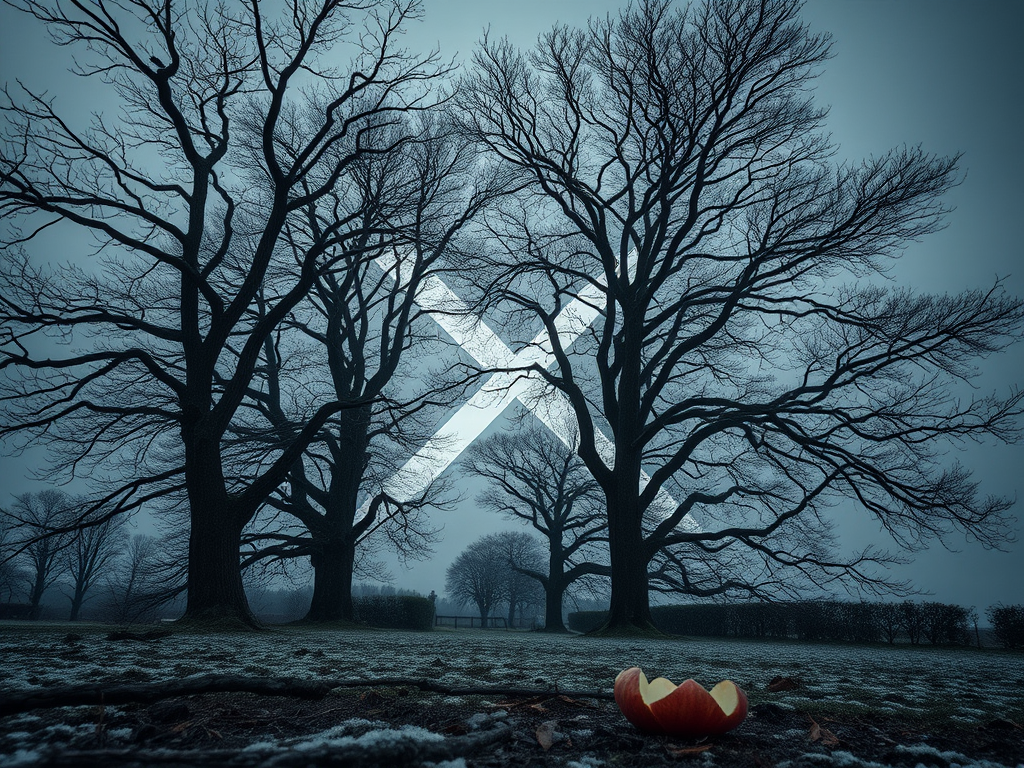
There’s a particular quality to late November light in Scotland. A kind of pewter-grey that looks as though someone has breathed cold air onto a mirror and forgotten to wipe it clean. St Andrew’s Day, sitting neatly on 30th November, always seems to arrive wearing that light like a cloak. The trees are skeletal, the wind tastes faintly of sea-spray even when you’re nowhere near the coast, and everyone’s pretending they’re absolutely not thinking about Christmas yet (while also quietly wondering whether the big tin of shortbread is on sale).
But long before the season became dominated by tinsel and panic-buying, St Andrew’s Day was a hinge point in the winter calendar – a moment of national identity, sacred symbolism, and a touch of good old-fashioned magic.
Let’s take a wander.
The Origins: A Saint, a Saltire, and a Story That Travelled
St Andrew, for all that he is Scotland’s patron saint, never set foot in Scotland. His story travelled much like the earliest saints themselves -carried by monks, merchants, and the unstoppable enthusiasm of those who adored a good relic. According to medieval tradition, bits of St Andrew’s bones were brought to the Pictish settlement of Kilrymont (now St Andrews) by Saint Regulus, who supposedly shipwrecked on the Fife coast with the precious cargo. This convenient disaster did wonders for local tourism.
Andrew himself was known for fairness, humility, and championing the downtrodden – qualities that made him an appealing patron for a country that has long prided itself on stubborn independence and a well-developed sense of justice.
The Saltire, Scotland’s cross-of-the-crossed, is tied to an even older legend: a 9th-century battle in which King Óengus II saw a white X-shaped cross appear in the sky. Taking this as Andrew’s celestial backing, he won the battle and adopted the cross as Scotland’s emblem. Whether this is divine intervention or an early example of morale-boosting PR is up to the reader.
Old Traditions: Fire, Fortune and a Bit of Courtship Magic
St Andrew’s Day historically marked the beginning of a fortnight of winter rituals. If Samhain is all shadows and thresholds, St Andrew’s is quieter, more introspective – but no less full of curious customs.
Here are some of the older traditions that once filled the dark Scottish nights:
1. Fortune-telling for Love
St Andrew’s Eve was seen as a particularly potent night for divination. Young women would peel an apple in a single strip and toss it over their shoulder – the peel’s shape was said to reveal the initial of a future husband. (If yours looked like a squashed cowpat, you simply pretended otherwise.)
Others dropped molten lead into cold water to scry shapes (a European-wide practice called Molybdomancy, which sounds more sinister than it is).
2. Barking Dogs Prophecy
Stand at the door on St Andrew’s Eve and listen for dogs barking. The direction of the noise foretold where your future spouse lived. If no dogs barked at all… well, you were either destined for spinsterhood or lived in a quiet village.
3. Winter Warding
Fire and salt were traditional protections as winter tightened its grip. Hearth fires were banked carefully, iron kept by doors, and charms hung against misfortune. St Andrew’s Day sat on that crucial cusp – the point where darker forces were thought to roam more freely. It’s the sort of night that encourages you to draw your curtains early.
4. Feasting and Hospitality
As with most winter festivals, food took centre stage: cullen skink, oat bannocks, potatoes, neeps, and whatever could be coaxed into a pot before December rationing began. St Andrew was regarded as a patron of generosity, making the day one where sharing mattered – even if all you had to share was a dram and a story.
How We Celebrate Today: Modern Rituals with Old Souls
While Scotland now observes the day with parades, ceilidhs, concerts, and big community events, St Andrew’s Day has never been a loud festival. It’s gentle, a little introspective, and strangely comforting – the perfect blend of cultural pride and winter cosiness.
If you fancy honouring it in your own home (witchy twist entirely optional), here are a few ways:
A Blue-and-White Candle Ritual
Light a blue candle for protection and a white one for clarity. Sit for a moment in the quiet and think about what you want the winter season to bring. This is the slow magic – the kind that feels like snowfall settling.
A Simple Offering to Winter
Place a few crumbs of bannock or shortbread outside as a nod to the spirits of the land. You don’t have to believe they’ll take it – it’s the act of giving that matters.
A Ceilidh-in-the-Kitchen
No band required – just a playlist and enough floor space to avoid catastrophic injury. The Scottish winter can feel long, but a kitchen ceilidh warms far more than the toes.
Cook Something Comforting
Cullen skink if you’ve the patience; stovies if you’ve not. St Andrew’s Day is a celebration of nourishment, the sort that settles deep.
Quiet Reflection
St Andrew is a patron of patience and perseverance – qualities that resonate strongly as the year winds down. Pour a dram or a cup of tea, take the weight off your feet, and let the hush of the season speak.
A Festival of Generosity and Winter Courage
St Andrew’s Day gently marks the turning of the wheel – not with fireworks or frenzy, but with the steady glow of hospitality and heritage. It’s a reminder that winter isn’t just endured; it’s honoured. In the old stories, Andrew protected fishermen, travellers, and the vulnerable. In the modern ones, he offers us an excuse to slow down, to gather, to feast a little, and to welcome the cold with dignity (or bravado, depending on the number of drams consumed).
So light the candles, stir the pot, listen for barking dogs if you’re feeling brave – and step into winter the Scottish way.