Shifted, to be fair, is an understatement.
On 8 August 2026, a new interview with Steve Pierce appeared online under the uncompromising title ‘Travis Walton UFO Abduction Hoax: Steve Pierce Speaks’.
Now, Pierce isn’t some random UFOlogist or sceptic arriving fifty years late to the party to pick holes in some old UFO story.
He was actually there.
https://youtu.be/Bbm9le8oM64?si=u3GVy-fDW4rZMqYw
On 5 November 1975, seventeen year old Pierce was one of seven men working on a forestry crew in Arizona’s Apache-Sitgreaves National Forest. The crew, led by Mike Rogers, included 22 year old Travis Walton. That evening the men were travelling back from work when they say they encountered a brilliant object among the trees. Walton got out of the truck and approached it. According to the witnesses, a powerful beam of light struck Walton, knocking him to the ground. The terrified crew drove away. When some of them returned, Walton was gone.
For the next five days police for him. His workmates were questioned and investigators naturally considered a considerably more earthly possibility – that something had happened to Walton and the extraordinary UFO story was a big, fat li… ahem, cover up.
And then… as if by magic… Walton returned, claiming he had awakened in an unfamiliar environment where he encountered small humanoid beings and, later, humanoid beings.
And the rest is, pretty much history, as they say. And when I say history, I mean books were written, published and sold. Documentaries were made, aired and repeated. Articles reporting, dissecting and re-dissecting the case. Eventually, even Hollywood jumped on the bandwagon with the 1993 film ‘Fire in the Sky’ – although it’s famously horrific scenes aboard the supposed craft bear relatively little resemblance to Walton’s own account of his ‘experience’.
But this case had something that most alleged alien abductions did not. Witnesses. Six of them. And for half a century, that has been one of the strongest arguments made in it’s defence. Walton wasn’t alone when the incident began. Six other men reported seeing the strange object and the events immediately before his disappearance.
Steve Pierce was one of them – and now he says it’s a hoax.
But that statement alone isn’t entirely new. Pierce has expressed doubts before at various points over the decades and had become explicit about believing the incident was staged before this latest interview. What makes this new interview interesting is the detail.
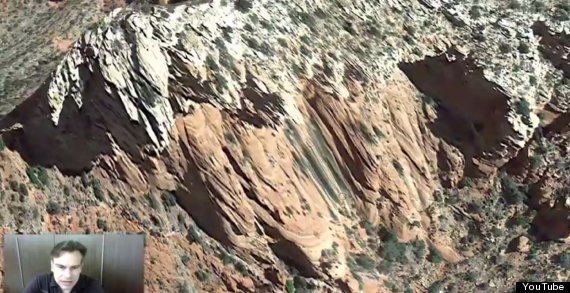
Pierce goes back to the landscape to where he and Walton participated in the material filmed for the pro-Walton documentary ‘Travis: The True Story of Travis Walton’, produced and directed by filmmaker Jennifer W. Stein. That material has subsequently used to support the case. Pierce now repudiates it.
In the new interview, he says the location used in the earlier filming wasn’t even where the incident happened. He points to the geography. There was, he says, no road there corresponding to the route the logging crew travelled on the night Walton disappeared. You cannot see the area used in the filming from the road they took, he adds.
Pierce said he knew it was the wrong location and admits he went along with it anyway. Pierce also alleges that money played a part in his previous participation. I have not independently examined contracts or payments between Pierce and anyone else, so these serious allegations must be treated as Pierce’s account rather than established fact.
Which leads us to another piece of alleged evidence in the Walton case – the trees.
Supporters of the case have pointed to unusual growth rings in trees around the alleged encounter site (the site that Pierce now claims is not the site of the alleged abduction). The argument is that some trees displayed accelerated growth beginning after 1975, particularly on the sides facing the supposed position of the ‘UFO’. Radiation has been suggested as a possible explanation, with comparisons made with abnormal growth seen in areas affected by radiation.
There is an immediate red flag here – a great big historical problem with presenting this as evidence of radiation from this particular UFO. The area was tested shortly after Walton disappeared in November 1975 and investigators reported no significant radiation above background levels. The alleged tree ring ‘evidence’ came much later. Pierce’s account raises an even bigger problem still. He says the researchers were looking in the wrong place. He says the samples presented as evidence were not taken from the true location of the incident and goes on to challenge the orientation of the samples relative to where the object was supposedly situated – not that the orientation matters when the samples were taken from an area he says isn’t where the UFO was anyway.
You don’t need to be a scientist to understand that the argument about asymmetric tree growth depends on taking the samples from where the object supposedly hovered. If you get that detail wrong… well, you’re just cutting slices out of trees for nothing, really. Again, Pierce’s statement doesn’t independently prove where the original incident occurred, but if one of the witnesses used to identify and reconstruct the site is now saying the location itself is wrong, the evidential value of tree samples collected from that location deserves serious reconsideration.
Pierce then revisits Gentry Tower – the exact location where the alleged events took place – and, standing there half a century later, he attempts to reconstruct what he believes actually happened.
Pierce describes the direction Walton travelled after getting out of the logging truck and identifies Gentry tower as the source of what the men saw that night – he isn’t tentative about it either. Pierce says he’s 100 percent certain. This isn’t a random sceptical researcher looking at a map and proposing that a fire tower might explain a mysterious light. This is one of the original witnesses standing in the landscape and saying that, in his present understanding, this is what they saw.
And then Pierce goes considerably further. He alleges that the idea of staging a UFO incident had been discussed in the weeks before Walton had disappeared. If true, this statement would be enormously significant but it remains an allegation. Pierce says those conversations happened. I cannot independently establish from his testimony alone that a plan discussed beforehand was subsequently carried out. But it does provide context for another extraordinary episode in the history of the case.
Mike Rogers.
Rogers was the crew foreman, the driver of the truck and one of the key witnesses supporting Walton’s story. Then, in 2021, things became… complicated.
Rogers publicly announced that he no longer wished to be regarded as a witness to Walton’s ‘Supposed abduction’, although he initially stopped short of denying that the crew had seen something unusual. Then came a secretly recorded telephone call with filmmaker Ryan Gordon on 30 April 2021.
During that conversation Rogers discussed himself and Walton talking about creating a UFO hoax and described Walton’s departure from the truck as deliberate and staged. For sceptics this sounded very much like an admission, except Rogers later challenged the way the recording had been presented and returned to defending the incident. This contradiction matters.
Then, on 6 February 2026, Mike Rogers died.
After his death his daughter, Michelle Detras, reportedly wrote that her father had summoned her while receiving hospice care and confessed that the Walton incident had been a hoax. Researcher Charlie Wiser subsequently discussed the allegation and says she communicated with Detras about it but no independently authenticated recording of that alleged final confession has been made publicly available. The original account was also subsequently removed. So however tantalising it may be, Mike Rogers’ alleged deathbed confession remains exactly that: an allegation.
Steve Pierce, however, is speaking for himself and some of what he says in the new interview potentially damages more than the original 1975 story. It challenges evidence later presented in support of it. Steve Pierce is publicly withdrawing his own previous corroboration. Either what Pierce says today is unreliable or some of what he previously said in support of the Walton case was unreliable. By his own admission, both versions cannot be true.
When asked why he had said the things he is now refuting, Pierce claimed he was offered money and there seems to be quite a bit of history surrounding Pierce and money. In 2012 he told UFO researcher Kevin Randle that Philip Klass had once offered him $10,000 to say the Walton case was a hoax. Pierce said he refused. At that time he maintained that the crew really had witnessed something extraordinary. Fourteen years later, Pierce is publicly calling it a hoax and is alleging that money also influenced at least some of the testimony he previously gave in support of Walton.
None of that tells us automatically which Steve Pierce we should believe. What it does tell us is that we can no longer present him as an unwavering independent witness to the Walton encounter.
Then there are the famous polygraphs.
Several of the logging crew members were judged truthful during examinations conducted while Walton was missing, when investigators were concerned about whether the men had harmed him. The facts are considerably messier than the often-repeated claim that’the witnesses all passed lie detector tests’.
Allen Dalis’s testing produced complications, and Walton himself underwent a privately arranged examination in which examiner Jack McCarthy concluded that he was being deceptive. Later examinations produced results more favourable to Walton and members of the crew. Polygraphs are controversial instruments anyway. They do not scientifically establish whether or not someone is telling the truth, let alone whether an unidentified object came from another world. But perhaps the argument about polygraphs missed something more interesting. A person who genuinely believes what he saw isn’t lying when he describes it.
And that brings us to what may be the most intriguing implication of Pierce’s new account.
What if the six witnesses didn’t need to be lying?
For decades the Walton debate has frequently been presented as a choice between two outlandish propositions. Either a spacecraft appeared in an Arizona forest and abducted Travis Walton… or seven working men somehow agreed upon an elaborate UFO story and successfully maintained it for fifty years. And then there is the third possibility..
What if only one or two people needed to know?
Under that scenario, most of the men in the truck could genuinely have seen a brilliant and inexplicable light. They could have genuinely seen Walton get out of the truck. They could genuinely have watched him approach the light (although according to Pierce’s latest statement, the truck had no windows in the back). They could genuinely believe that something had struck him. They could genuinely have panicked and driven away.
And when they returned to discover Walton missing, they genuinely could have had no idea where he was. Their fear and confusion could have been real. Their testimony could have been sincere. They wouldn’t have been participants in a conspiracy, they would have been it’s first audience.
Oddly, variations of this possibility were considered surprisingly early in the case. UFO investigator Raymond Fowler was among those who contemplated whether some crew members could have been unwitting participants in a hoax.
Which brings everything back to Steve Pierce. He was seventeen years old. Whatever happened in those woods on 5 November 1975, Pierce spent the following days with his colleague missing while police investigated an increasingly bizarre story. Then Walton returned. The case became famous. Documentaries were made, books were written, Hollywood turned it into ‘Fire in the Sky’, and the seventeen-year-old in the logging truck became permanently attached to one of the most famous UFO stories ever told.
Pierce’s own statements over the last fifty years have not always been consistent. A witness admitting that he previously lied does not automatically make his newest version the truth. Memory changes, relationships deteriorate and people reconsider experiences. Money, fame, resentment and five decades of argument can muddy the waters considerably.
Walton still maintains his experience was real. Earlier footage still exists of Pierce himself apparently supporting the encounter, although he now claims Walton told him he had to say exactly what he was told to. Mike Rogers made statements interpreted as suggesting a hoax and then disputed or withdrew them and his alleged deathbed confession has not been independently authenticated and Pierce’s identification of Gentry tower remains testimony, not proof.
The Travis Walton case is therefore not suddenly solved but something important has happened to it. One of the original witnesses is no longer merely saying he doubts an alien explanation, he is challenging all the evidence. The locations the physical evidence collected from that supposed location. He is alleging that a UFO hoax was discussed before Walton disappeared and that Walton subsequently controlled what he was expected to say. He is repudiating evidence he previously gave in support of the case.
He is apologising for having lied.
And that deserves considerably more attention than another argument over whether a light in an Arizona forest fifty years ago came from outer space.
Because the most interesting argument of all surrounding the Travis Walton case may not be whether Steve Pierce lied in 1975, it may be whether somebody lied to him first.
And fifty years later, whether he has finally decided to tell us about that.