Imagine you’ve spent your entire life in the same village. You know every footpath, every stile, every ancient oak and every bend in the lane. You know where the streams flood after heavy rain and which fields are best avoided after dark. The countryside isn’t just something you travel through, it.s something you understand.
Now imagine that woven through those familiar paths a re others that you cannot see. Roads that belong to someone else.
For centuries, people across Britain and Ireland believed that the fair folk travelled along invisible routes linking ancient hills, sacred sites , standing stones, wells and burial mounds. These weren’t roads in the way we think of them today. They left no wheel ruts and appeared on no map, yet countless communities treated them with deadly seriousness.
Block one at your peril.
The belief appears in many forms. In Ireland, tales tell of fairy roads stretching between ringforts and prehistoric monuments. In Scotland, travellers spoke of unseen processions crossing the landscape beneath the moon. In Wales, mysterious tracks were said to link lakes, mountains and hidden valleys where the Tylwyth Teg held there revels. Across England, similar traditions became attached to ancient barrows, crossroads, holloways and lonely thorn trees.
The details changed from county to county but the warning rarely did. If a house, barn or wall happened to be built across one of these invisible routes, strange things were said to follow. Doors would refuse to stay shut, Livestock became restless, illness visited the house or barn, food spoiled unexpectedly and sleep became impossible. Whether these misfortunes had anything to do with the fairies is impossible to say. The remarkable thing is that so many people believed they might.
Even today, stories continue to circulate of roads being diverted to avoid disturbing ancient fairy trees or ringforts. Ireland, in particular, has no shortage of tales involving lone hawthorns spared by developers and engineers, not necessarily because everyone believed the folklore, but because few were eager to test it. One famous story tells of a motorway being subtly altered rather than remove a tree long associated with the Good People. Whether every detail is true matters a lot less than the fact that such stories continue to be told. Old beliefs have a habit of lingering.
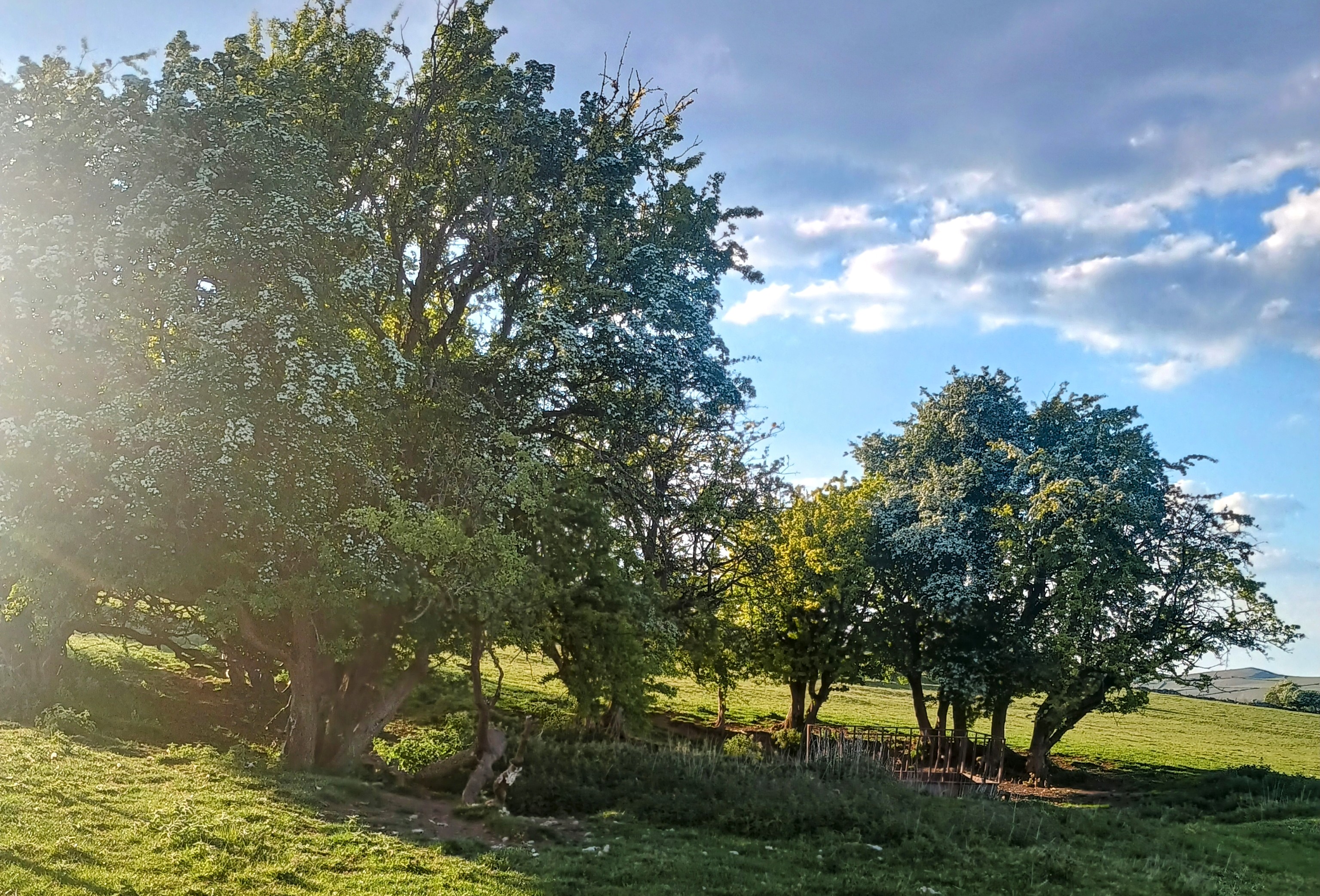
The gnarled, solitary hawthorns are perhaps the most recognisable of these landmarks. They stand alone in the middle of otherwise perfectly manicured fields seeming almost to demand your attention. Farmers have long avoided cutting certain specimens, particularly those linked with local traditions. Some are said to mark fairy meeting paces. Others are believed to mark ancient burials. Many simply carry stories that nobody can remember in full, only that “It’s always been left alone…”. Perhaps that’s reason enough.
Then there are the holloways.
If you’ve ever walked one, you’ll know the feeling. High earth banks rise on either side, bracken tangles with roots and ivy, muffling the sounds from the modern world. Some have been worn down by centuries of feet, hooves and cart wheels until they resemble green tunnels through the landscape. They’re beautiful, if not a little unsettling.
It’s easy to understand why such places become associated with hidden worlds. The mist settles there first. Light fades quickly beneath the trees. Every bend conceals another. You could walk a holloway today and convince yourself that very little has changed since medieval travellers passed the same way.
The same is true of ancient burial grounds. Long before archaeologists recognised them as the resting places of prehistoric communities, people knew only that they were old. Very old. Grass covered hills that didn’t quite belong. Local folklore often transformed them into fairy hills, places where music filtered through the earth on certain nights or where those who wandered inside emerged to find years had passed beyond the mound. The stories vary but the theme remains consistent – Time behaves strangely, food should never be accepted, promises must be kept. And if someone warns you not to look back, it’s almost certainly because someone once did.
Today, we tend to think of land as something that can be measured, owned and developed. Our predecessors often saw it differently. Certain places carried memories. Others carried warnings. A lone tree might matter not because of it’s timber, but because generations believed something lived beneath it’s branches. A mound might remain untouched not because anyone knew who lay inside it, but because nobody wanted to disturb what lay inside it.
Folklore became a form of conservation long before anyone used the word. Ancient monuments survived because they were respected. Old trees endured because they were feared. Sacred springs continued to flow because people approached them with care. Even hedgerows, so often dismissed today as little more than field boundaries, became living thresholds between the ordinary world and somewhere else altogether.
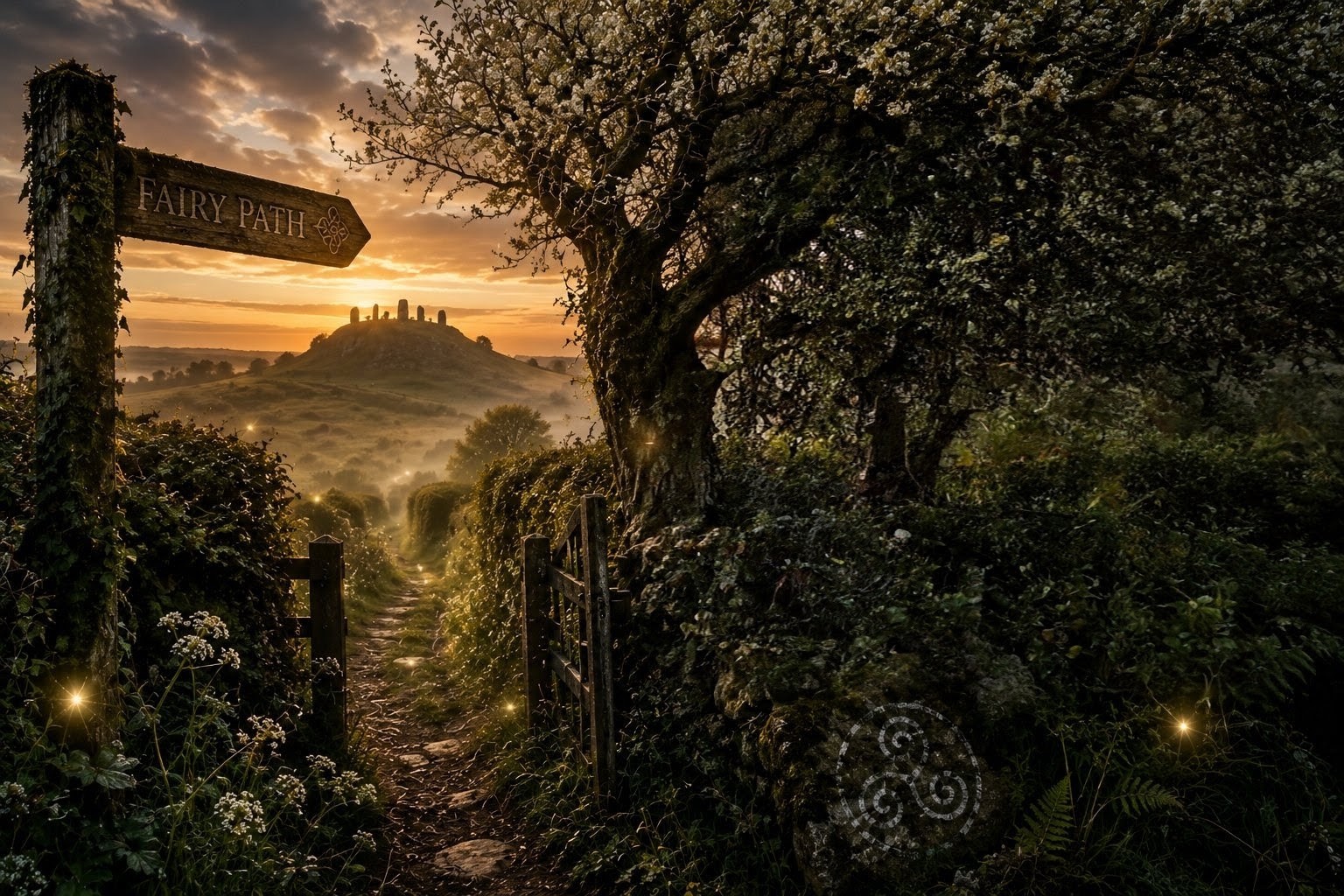
Walk along almost any ancient footpath at dusk and the imagination begins to stir. A weathered gate stands open invitingly. A hawthorn twists against the fading sky. The path disappears between high hedges where birds suddenly fall silent. Nothing supernatural happens. It doesn’t need to. The landscape has already done the work.
Whether fairy roads ever existed is, in many ways, the least interesting question. The better one is:
Why did so many people in so many different places believe they did?
Maybe it’s because the countryside has always felt larger than ourselves. Maybe because some places invite silence rather than certainty. Or maybe because, every now and then, we all get that curious urge to step off the path…
before thinking better of it.