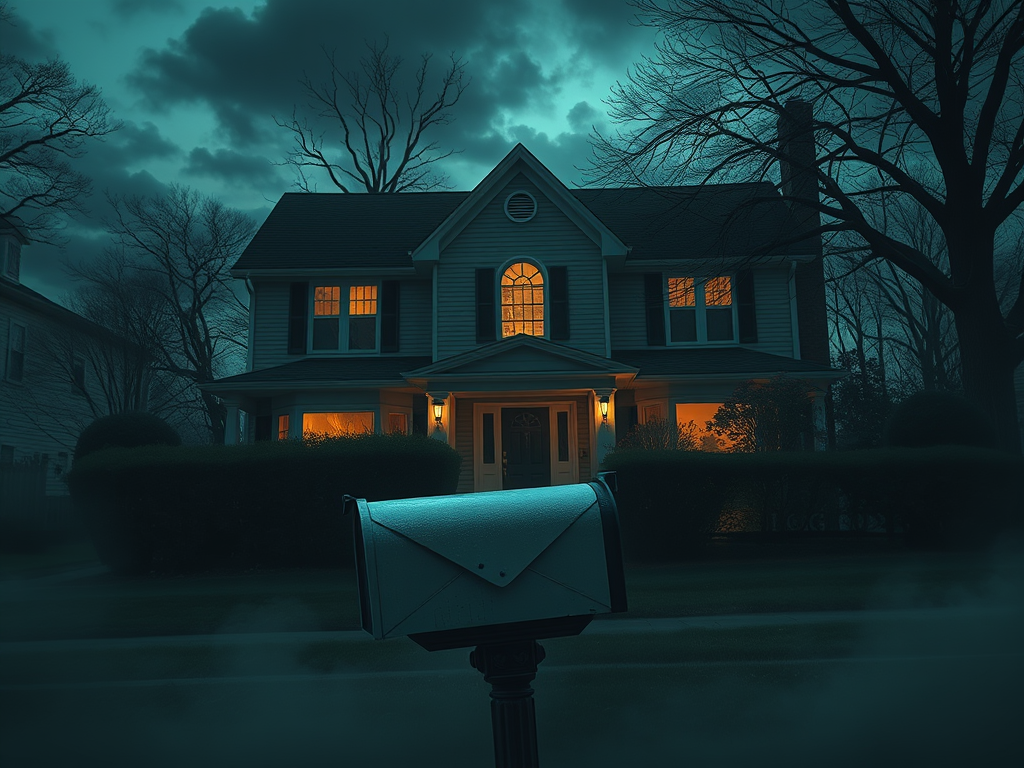
There is a human skull in a manor house in Dorset. It has been there for a very long time and nobody knows whose head it once belonged to. Nobody knows precisely when it arrived and according to more than a century of folklore, it absolutely does not want to leave.
This is the Screaming Skull of Bettiscombe Manor, one of Britain’s better-known examples of a peculiar tradition sometimes called a ‘guardian skull’ – human remains supposedly bound to a particular house, where everything remains perfectly peaceful provided nobody does anything foolish like trying to remove them.
Take the skull away and the consequences vary according to the telling. The house shakes. Doors slam. Windows rattle. Terrible noises are heard. Crops fail. People become ill. And, in one particularly unfriendly version, whoever removes it will be dead within a year.
There is also an explanation for whose skull it is – or at least, there used to be, because in 1962 somebody finally did the sensible thing and asked an anatomist.
The skull, it turned out, had a problem. She was the wrong person.
Bettiscombe Manor stands in the Marshwood Vale in Dorset, an old house with longstanding connections to the Pinney family. The Pinneys also have a very real and deeply uncomfortable connection with the Caribbean. Azariah Pinney was implicated in the Monmouth Rebellion of 1685 and subsequently transported to Nevis. His descendants accumulated substantial wealth through sugar plantations worked by enslaved people, and the surviving Pinney family papers contain extensive records concerning plantation management and slavery. ([University of Bristol][2])
That history eventually became inseparable from the legend of the skull. The familiar story goes something like this. A member of the Pinney family returned to Dorset from the West Indies accompanied by an enslaved Black man or servant. The man’s identity varies according to the version, as does the Pinney responsible for bringing him to England. The man died at Bettiscombe. Before his death, however, he supposedly asked that his body be returned to his homeland.
His request was ignored.
He was buried in England and he objected, loudly. Screams and strange noises were supposedly heard around the grave. Disturbances afflicted the manor. Eventually the body was dug up and brought back to Bettiscombe.
Somehow, over the years, everything except the skull disappeared. The skull remained and Bettiscombe was quiet – provided nobody moved it.
It’s an excellent ghost story but it also has some serious problems. One of the useful things about the Bettiscombe skull is that people began writing about it during the nineteenth century and the further backwards we go, the simpler the story becomes. Folklorist John Symonds Udal was collecting Dorset traditions in the 1870s. The early account he recorded concerned a human skull which had supposedly been kept at Bettiscombe for many years. The central belief was straightforward. If the skull were removed, the house would shake and the person responsible would die within a year. That’s essentially it. We don’t yet have the full Gothic production. There is no elaborate deathbed request. No betrayed promise of repatriation. No entire skeleton. No screaming from the grave. Even the thing for which Bettiscombe would eventually become famous – the screaming – isn’t central to the earliest form of the legend. And then the story starts growing.
Enter the mysterious servant.
As enquiries continued, the skull became associated with a Black servant connected with the Pinney family and the West Indies. That association wasn’t completely plucked from nowhere. The Pinneys genuinely did have profound connections with Nevis and slavery. In fact, the family’s surviving plantation records contain a particularly unsettling detail. On 1 January 1769, John Pretor Pinney compiled a list of enslaved people he had purchased since arriving in Nevis. Among those bought on 11 January 1765 were several children whose names included Warrington, Bridport, Pillmarsh – and Bettiscombe. The boy called Bettiscombe was estimated to be 13 years old when Pinney purchased him. ([Bristol Archives][1])
These were not necessarily their original names. Enslavers routinely renamed people, and Pinney appears to have assigned several names drawn from places associated with his English world. Bridport Museum notes the same disturbing practice in its work on the area’s connections with slavery. ([Bridport Museum][3])
So there really was an enslaved person called Bettiscombe on a Pinney plantation. That is extraordinary but we need to be very careful about what it means. It does not establish that this boy later came to Dorset. It does not establish that he died at Bettiscombe Manor. And it most certainly does not establish that the skull in the house belongs to him. What it does demonstrate is how easily genuine family history could provide material from which the later legend developed. There were Pinneys in Nevis. They owned enslaved people. There really was an enslaved boy called Bettiscombe. And there was a mysterious human skull sitting in the family’s old Dorset house. Folklore had plenty to work with.
By 1883, things had become considerably more dramatic. When investigators visited Bettiscombe in 1883, they encountered a much fuller story. Now there was a servant. There was an association with a Roman Catholic priest. There were suggestions of foul play. There was a dying wish concerning burial overseas. There were supernatural disturbances. And there was apparently an entire skeleton before only the skull remained.
The investigators were allowed to examine the skull. One visitor with some medical knowledge believed its physical characteristics might support the idea that it belonged to a Black man. They then proposed an experiment. They wanted to bury the skull and remain at Bettiscombe overnight to see what happened. Permission was declined. Sensibly. There is scientific curiosity, and then there is deliberately provoking the haunted human head belonging to the people whose house you’re visiting. Even Victorian hospitality had limits. What makes this episode especially useful is that Udal later returned to the subject. And essentially said: Hang on.
He pointed out that several of these dramatic elements had not been part of the tradition he originally knew. The screaming. The priest. The foul play. The entire skeleton. These were additions. We are watching folklore evolve within little more than a generation. The skull hadn’t changed. The story had.
Then science got involved.
On 8 June 1962, the Bettiscombe skull was examined professionally and this is where the traditional identification falls apart. The examination was undertaken by Sir William Collins, Professor of Human and Comparative Anatomy at the Royal College of Surgeons of England, and the findings were subsequently recorded by the Dorset Natural History and Archaeological Society. The skull is complete apart from the lower jaw and damage to the left zygomatic arch. It is lightly built. The muscle markings are not pronounced. The anatomical assessment concluded that it was probably the skull of a woman aged approximately 25 to 30, probably towards the upper end of that range and the measurements indicated a European skull, not that of the Black male servant described in the legend. ([Dorset Heritage Explorer][4])
Suddenly our ghost story has lost its protagonist. Whoever this person was, the physical evidence suggests she was not the man whose biography generations of storytellers had constructed around her remains. And then another legend appears.
“She was Bronze Age” You will frequently encounter this confident statement about Bettiscombe. Once scientists discovered the skull belonged to a woman, we’re told, they dated it to the Bronze Age. Sometimes she’s described as 3,000 years old. Sometimes 4,000. Sometimes the scientific examination of 1962 or its publication in 1963 is specifically credited with establishing this prehistoric date. There is a problem – The examination did no such thing. Dorset Council’s Historic Environment Record preserves the findings and explicitly records the skull as being of unknown date and origin. When asked how old it was, the examiner’s answer was effectively that he couldn’t determine it. He did observe what looked like impregnation in the bone suggesting that it might once have been buried. From that he offered a possibility – perhaps one of the Pinney ancestors had dug up a skull from one of the hilltop burials in the area and brought it home. That was a suggestion. Not a date. Not a radiocarbon test. Not an identification as Bronze Age. Yet somewhere in subsequent retellings: possibly excavated from an old hilltop burial became probably prehistoric which became Bronze Age which eventually became scientists proved she was a Bronze Age woman.
They didn’t.
Dorset’s archaeological record still lists her date as unknown. ([Dorset Heritage Explorer][4]) And I absolutely love this, because we’re seeing precisely the same process that created the supernatural legend happening to the supposed scientific explanation. Even the debunking acquired folklore.
There is another reason to handle the traditional servant story carefully. The Pinneys’ involvement with slavery isn’t folklore. It is documented history. The University of Bristol holds an enormous collection of Pinney papers, including correspondence, legal material, plantation accounts, lists of enslaved people and records concerning the family’s West Indian interests. ([University of Bristol][2]) The plantation records don’t describe colourful Gothic retainers haunting English country houses. They record real people being bought, sold, renamed, put to work and accounted for. The 1769 list naming the teenage boy “Bettiscombe” is particularly striking precisely because he was real. ([Bristol Archives][1]) Turning him – or another unidentified enslaved person – into the supernatural owner of a skull which anatomical evidence suggests belonged to a European woman risks confusing two completely different things. One is folklore. The other is the history of people who actually lived under slavery. Both deserve telling but they don’t need to be made into the same story.
So who was she?
And this is where Bettiscombe becomes considerably more interesting. Because science didn’t solve the mystery. It removed the explanation. We have a human skull, probably female, approximately 25 to 30 years old at death. Probably European. Possibly buried at some point before being recovered. And that’s about it. ([Dorset Heritage Explorer][4])
We don’t know when she lived. We don’t know where she was born. We don’t know where she died. We don’t know where she was originally buried. We don’t know how her skull came to be separated from the rest of her remains. We don’t know who brought it into Bettiscombe. We don’t know how long it had already been there when people began recording stories about it. And we don’t know her name.
She might genuinely be prehistoric. She might be medieval. She might be considerably later. Without reliable dating or provenance, assigning her to any particular period is speculation.
There are plenty of perfectly earthly ways in which old human remains ended up in private collections. She may have been accidentally uncovered. She could have been kept as an antiquarian curiosity. She might have been passed between generations. Her history may have been forgotten long before somebody decided to explain her presence with a story.
And perhaps that is all the screaming skull ever needed. A skull without a story is uncomfortable. A skull belonging to a named person, kept in a house for a supernatural reason, makes sense. So people gave her one.
There is something wonderfully revealing about Bettiscombe. At first, the important thing wasn’t who the skull was. The important thing was the taboo: Do not remove it. Then people naturally asked why and the stories answered – It belonged to a servant. He came from the Caribbean. He wanted to go home. His wish was denied. He screamed. His body was dug up. The house was disturbed. Only the skull survived.
Every addition made the object easier to understand.
Then anatomy took the supposed identity away. So another story stepped forward. Bronze Age woman. Except that wasn’t established either.
And there she still sits. Not the person folklore said she was. Not securely the person the modern debunking says she was. Just an unidentified young woman whose skull somehow found its way into a Dorset manor house and stayed there long enough for generations of people to invent explanations for why.
Perhaps that’s the strangest part of the Screaming Skull of Bettiscombe.
For more than 150 years, people have worried about what might happen if somebody takes her out of the house.
Maybe we’ve been asking the wrong question.
The house doesn’t need to shake. The windows don’t need to rattle. And the skull doesn’t need to scream.
A human being once lived behind that face. She had a name. She had a life. Somebody buried her – if the traces observed on the bone really do result from burial. Somebody later recovered her skull. And eventually everybody forgot who she was.
The supernatural legend tried to give her an identity. Science showed us that identity was probably wrong. But science hasn’t yet given her another.
So the real mystery of Bettiscombe Manor isn’t whether its famous skull screams when somebody carries it through the front door. It’s much quieter than that.
Who was she?
And after all these years, nobody knows.
Sources:
[1]: https://archives.bristol.ac.uk/Record.aspx?id=DM58%2F4%2F3%2F327&src=CalmView.Catalog “Search Results”
[2]: https://www.bristol.ac.uk/library/special-collections/strengths/pinney/ “Pinney Papers and the West Indies | Library | University of Bristol”
[3]: https://www.bridportmuseum.co.uk/bridport-slavery-2/ “Test – Bridport Museum”
[4]: https://heritage.dorsetcouncil.gov.uk/Monument/MDO24642 “MDO24642 – Skull found at Bettiscombe Manor, Bettiscombe – Dorset Heritage Explorer”