There are some sentences you never expect to write. “On 3 March 1876, it rained meat in Kentucky” is definitely one of them.
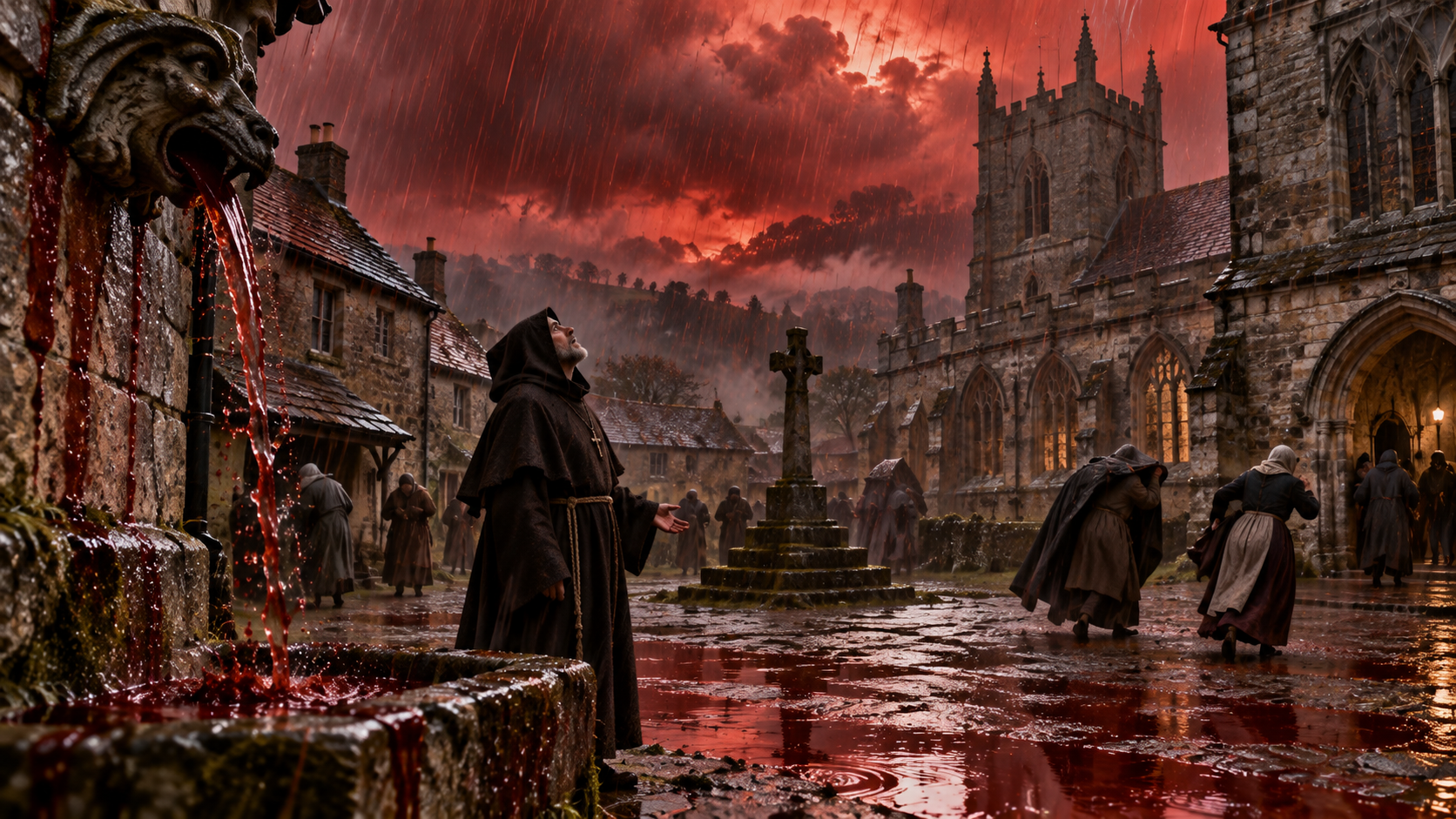
Not metaphorical meat. Not red rain that somebody mistook for blood. Not a particularly unfortunate hailstorm involving a nearby slaughterhouse. According to contemporary reports, actual pieces of flesh fell from a perfectly clear sky and scattered themselves across a farm near Olympia Springs in Bath County. And, because apparently the universe felt the basic premise wasn’t quite peculiar enough, people tasted it.
I’m not going to ask ‘Why wouldn’t you?’ because it’s just too gross even for my warped brain to understand just why anyone thought that would be a good idea. Anyway, pull up a sick bag. Let me tell you all about it.
The unfortunate woman standing underneath all this was Mrs Rebecca Crouch, wife of farmer Allen Crouch. She was outside near the family home, reportedly making soap, when pieces of something began dropping around her. There was no storm or even much in the way of cloud. The sky was described as perfectly clear. Nevertheless, pieces resembling flesh came fluttering down like large snowflakes and landed on the ground, fences and surrounding property. The affected area was later reported as approximately 100 yards long and 50 yards wide. Most pieces were fairly small, around a couple of inches across, although larger pieces were also reported.
This sounds precisely like the sort of story that ought to have originated fifty years afterwards in a pub. It didn’t. Reports appeared almost immediately. Newspapers picked up the story and, within weeks, the Kentucky shower of flesh had attracted the attention of scientists. By July, Scientific American was publishing material devoted specifically to the mystery, which leaves us with the obvious question:
What the hell was it?
There was, initially, a wonderfully Victorian attempt to make the entire thing considerably less horrible – perhaps it wasn’t meat at all.
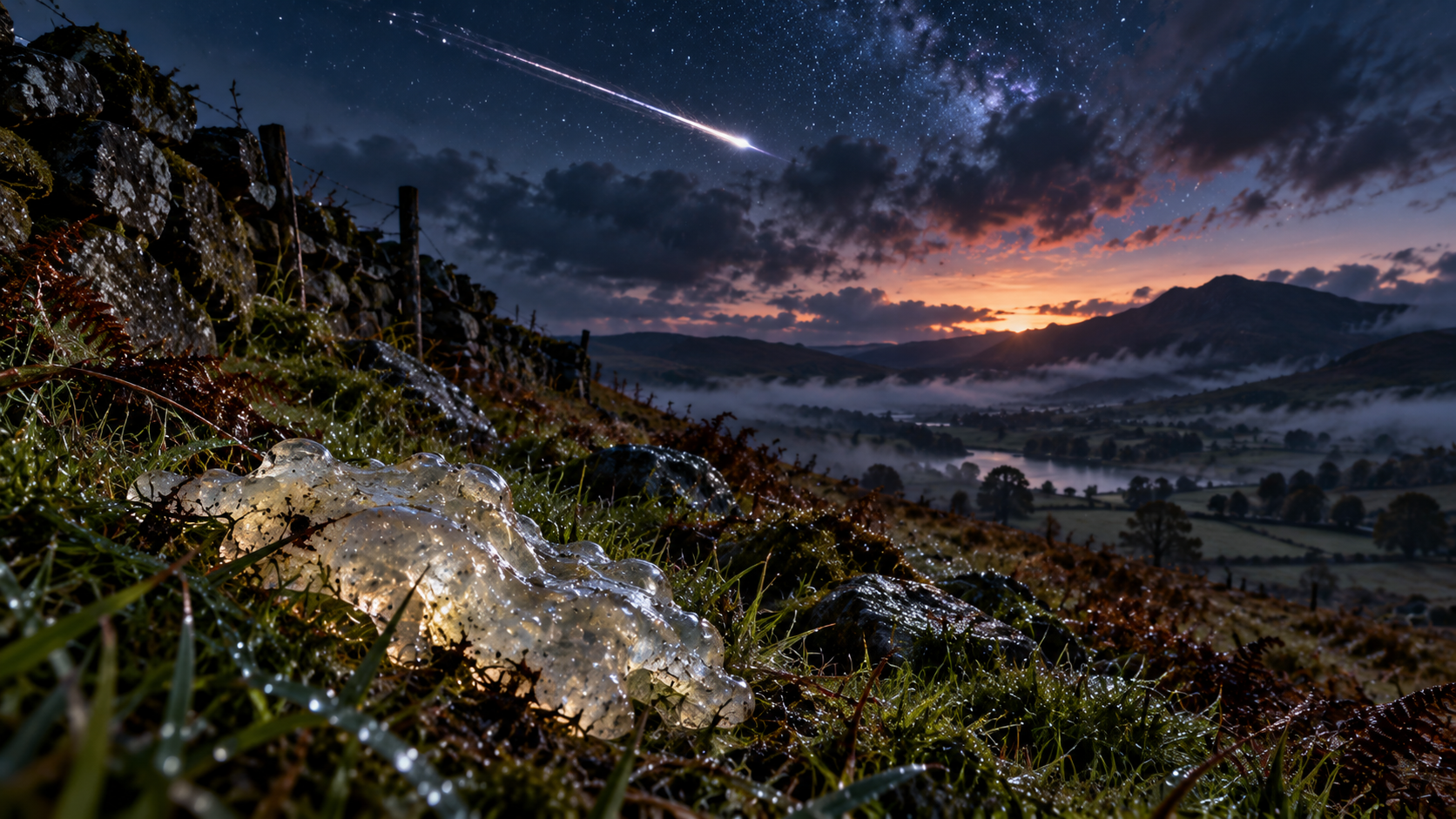
One proposed identification was Nostoc, a genus of cyanobacteria which can form dark, gelatinous masses. When dry, Nostoc can be almost invisible on the ground before swelling dramatically when wet. It has consequently been dragged into explanations for various mysterious substances over the centuries, including the stuff known in folklore as star jelly. For a brief and presumably comforting moment, therefore, the Kentucky Meat Shower might simply have been an unusual natural growth mistaken for falling flesh… but then somebody put it under a microscope.
Dr Arthur Mead Edwards initially thought Nostoc was a reasonable explanation himself. Once he actually obtained specimens connected with the Kentucky fall, however, he changed his mind. It was tissue. Other examinations reached similar conclusions. Samples were variously identified as muscular tissue, connective tissue, cartilage and lung. Whatever else had happened over Olympia Springs that morning, scientists examining material attributed to the fall believed that at least some of it really was animal flesh.
Unfortunately, nobody could agree on what animal. There were suggestions ranging from sheep and deer to horse. One local hunter reportedly decided it was bear. And then there were the two gentlemen who apparently decided that microscopes and anatomical expertise were all very well, but there was only one reliable way of identifying mystery sky meat. They ate some. They reportedly thought it tasted like mutton or venison.
Now, there are times when I think Victorian scientific curiosity deserves enormous admiration. There are other times when I think somebody really ought to have taken the fork away.
None of this, however, explained how bits of animal had managed to fall from a cloudless Kentucky sky. The obvious modern suggestion might be some violent weather event. Waterspouts and powerful winds are regularly invoked to explain reports of fish, frogs and other small animals falling from the sky. Something gets picked up in one place and deposited somewhere else. But there was no convenient tornado tearing through Olympia Springs. No violent storm was reported at the time.
Then Dr L. D. Kastenbine offered an explanation which managed the remarkable feat of making raining meat sound comparatively pleasant.
Vultures.
More specifically, vomiting vultures.
Vultures are capable of regurgitating the contents of their stomachs. They may do it defensively, and a heavily fed bird can also disgorge food to become light enough to take flight quickly. Kastenbine suggested that a flock of vultures had been flying high above the Crouch property and had collectively disgorged recently eaten carrion. Wind then scattered the falling pieces over the area below.
It sounds ridiculous, but annoyingly, it also makes rather a lot of sense. It would explain why different sorts of tissue appeared among the samples. A partly eaten carcass is not composed neatly of one type of flesh. Muscle, connective tissue, cartilage, fat and organs could all be present. It would explain why no storm was required. And it would explain how pieces of genuine animal tissue could apparently fall across a relatively concentrated area without anybody first having to invent an airborne cow. Both turkey vultures and black vultures occur in Kentucky, and regurgitation is well documented behaviour in vultures.
So case closed?
Not quite.
There is an important gap between having a very plausible explanation and knowing exactly what happened. Nobody standing on the Crouch farm reported looking upwards and watching a flock of vultures simultaneously lose its breakfast. The species represented by the tissue was never established beyond reasonable doubt, and the nineteenth-century samples passed through various hands before reaching the people who examined them. What we have, therefore, is a remarkably well documented strange event followed by a remarkably sensible hypothesis.
Something described as flesh fell near Olympia Springs on 3 March 1876. Contemporary newspapers reported it. Samples were collected. Scientists examined material associated with the event and reported animal tissue. And the explanation that has survived best is that a flock of vultures vomited carrion from high overhead. Which is perhaps the greatest thing about the Kentucky Meat Shower. Strip away the exaggerations accumulated during 150 years of retelling and the story doesn’t disappear, it gets better.
We don’t need aliens dropping mutilated cattle out of a spaceship. We don’t need a portal opening above Kentucky. We don’t even need to pretend that nobody has ever suggested an explanation. We have a woman quietly making soap on a clear March morning when pieces of flesh suddenly began landing around her. We have Victorian scientists peering at mystery meat through microscopes. We have two men who apparently looked at something that had just fallen from an unknown location in the sky and thought,
“I wonder what that tastes like?”
And we have a perfectly natural explanation involving a flock of airborne vultures simultaneously throwing up.
Sometimes nature is considerably stranger than the supernatural.
And considerably more disgusting.