….And we’ve made it through all the cold, dreary November evenings. Although a little bit of foul weather of an evening is arguably better than the evenings Romania is said to have had to put up with in the past. While the rest of Europe is beginning to contemplate Christmas decorations, winter shopping and the increasingly alarming cost of heating, traditional Romanian belief has something rather more pressing to worry about. The dead, apparently, have decided to go for a walk. Worse still, some of the living may be joining them, the wolves are behaving suspiciously, and the only thing standing between an unsuspecting household and a thoroughly unpleasant supernatural encounter might be a generous quantity of garlic. Welcome to Noaptea Strigoilor, the Night of the Strigoi, when the boundaries between the living and the dead become dangerously uncertain and the ordinary business of rural life takes a decidedly sinister turn.
The occasion falls on the eve of Saint Andrew’s Day, celebrated on 30 November, and occupies an important place in the traditional Romanian folk calendar. Saint Andrew is regarded as the protector of Romania, reflecting the longstanding Christian tradition that the apostle preached in the region around the Black Sea. His feast day is an important religious and national occasion, but the surrounding folklore reveals a world considerably older and stranger than the familiar stories of the apostles. In traditional rural belief, the end of November marked the arrival of winter and a period of particular vulnerability, when darkness seemed to gain the upper hand and the normal boundaries separating different kinds of existence became less reliable. The precise origins of these beliefs are difficult to establish, and it would be misleading to claim that every custom can be traced directly to some ancient pagan ceremony. What we find instead is an extraordinary mixture of Christian observance, seasonal anxiety, agricultural magic and supernatural tradition, all gathered around a single night when the ordinary rules of the world were thought to be temporarily suspended.
At the centre of the festivities, if that is quite the right word, were the strigoi. These are frequently described in English as vampires, although that translation does them something of a disservice. The strigoi of Romanian tradition are far more complicated than the elegant, aristocratic blood-drinkers who have spent the past century and a half lurking around the more expensive properties of Transylvania. Some were believed to be restless dead, returning from their graves to trouble the living, while others were living people whose souls possessed the alarming ability to abandon their bodies while they slept. These living strigoi might wander abroad in spirit form, sometimes taking the shapes of animals, while their unsuspecting human bodies remained peacefully tucked up in bed. The distinction between living and dead strigoi varied considerably between regions and storytellers, but both were potentially dangerous, particularly to the health and prosperity of the household. They were blamed for sickness, failing crops, disturbances among livestock and the mysterious disappearance of milk from otherwise productive cows. One suspects that a farmer discovering an empty churn on a November morning might have found it marginally reassuring to blame a supernatural intruder rather than accept that his cattle were simply having an unproductive week.
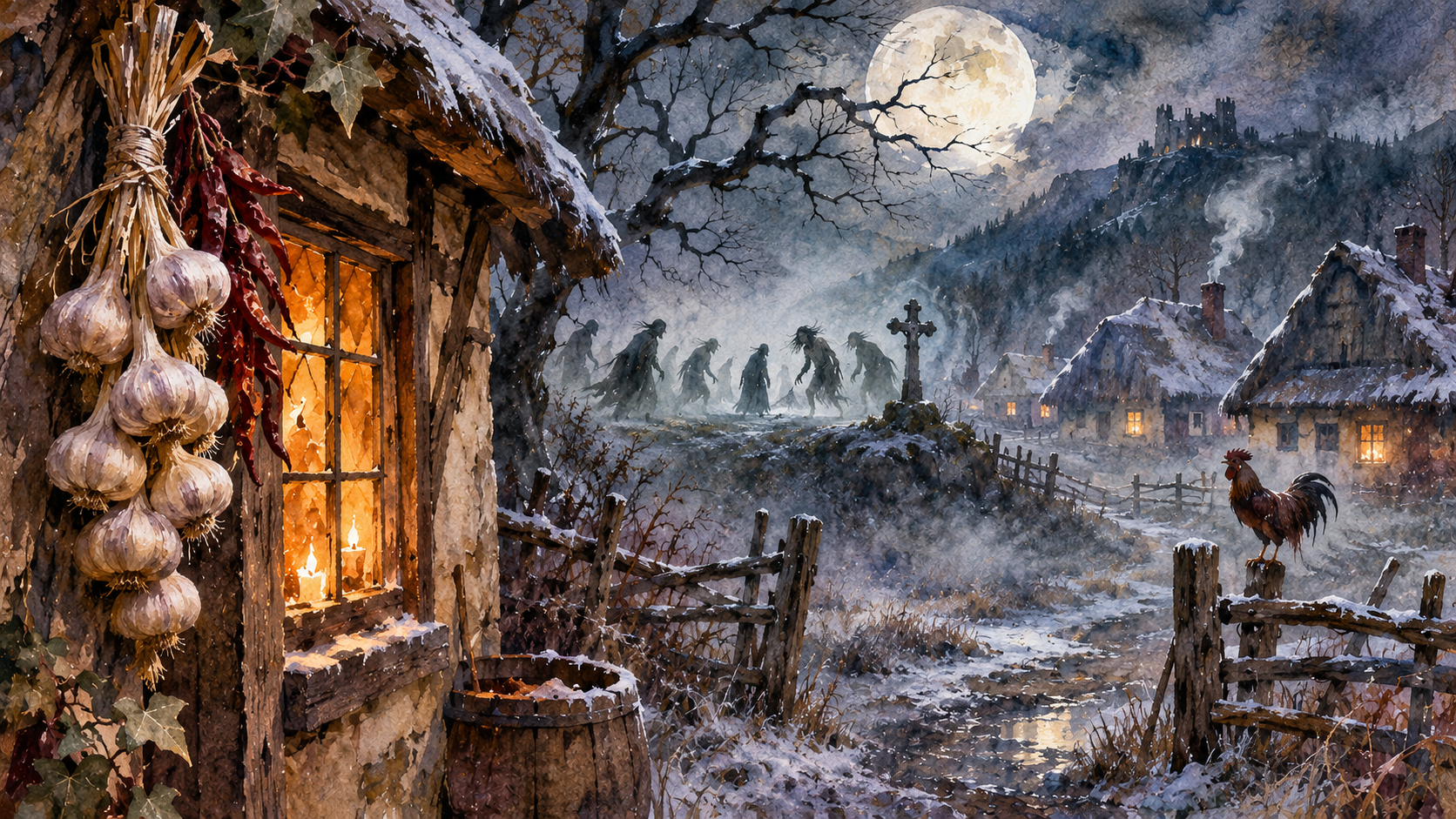
On Saint Andrew’s Eve, however, the strigoi were believed to become particularly active. According to traditions recorded by Romanian ethnographers, spirits of the dead emerged from their graves while the souls of living strigoi slipped away from their sleeping bodies. Their activities were not limited to quietly haunting abandoned houses or drifting ominously through churchyards. They were said to gather at crossroads, village boundaries and other places regarded as spiritually dangerous, where they engaged in furious battles with one another. Their weapons included scythes and the wooden components of agricultural tools, particularly the implements used for processing hemp. Quite why supernatural beings with apparently unlimited opportunities for terrifying the population should choose to spend their annual night of freedom fighting one another with stolen farm equipment is difficult to explain, but the tradition is wonderfully specific. These nocturnal confrontations supposedly continued until the first crowing of the cockerels, at which point the spirits returned to their graves or sleeping bodies and the world resumed something approaching its normal condition. Apparently, even the restless dead have to observe a curfew.
Naturally, the inhabitants of the affected villages were not expected to accept this annual outbreak of supernatural disorder without taking precautions, and the most important protective substance was garlic. Not a discreet clove tucked into a pocket, either. According to accounts collected by folklorists, garlic was rubbed onto doorframes, window surrounds, thresholds and even chimneys, sealing the vulnerable entrances through which malevolent spirits might attempt to enter. People also ate garlic and applied it to their bodies, particularly the forehead, chest, back and joints, while cattle received their own protective treatment. In some areas, crosses of wax were attached to the horns of oxen, while poppy seeds were scattered around livestock to prevent supernatural interference with their milk or general wellbeing. A household preparing for Saint Andrew’s Eve must have presented an extraordinary combination of religious devotion, agricultural practicality and overwhelming culinary aroma. The strigoi, should they actually have been abroad, would presumably have detected the defences from some considerable distance.
Yet perhaps the most delightful tradition associated with the night was Păzitul Usturoiului, or the Guarding of the Garlic, a custom recorded particularly in parts of Moldavia. Here, groups of young people gathered together for what amounted to an all-night vigil, although the proceedings seem to have involved considerably more eating, drinking, conversation and amusement than the word ‘vigil’ might suggest. Garlic bulbs were placed in a vessel at the centre of the gathering, sometimes surrounded by incense and the remains of candles used at Easter, while the company remained awake to protect them. In some descriptions, an older woman watched over the garlic while the younger participants danced and enjoyed themselves. At daybreak, the precious bulbs were brought into the courtyard, celebrated with dancing and divided among those present. The garlic could subsequently be taken to church for a blessing, then preserved throughout the year for healing, protective magic or matters of the heart. It is a fascinating combination of solemn ritual and what sounds suspiciously like a rather good party. Faced with a choice between sitting alone in a darkened cottage worrying about vampires and spending the night drinking with friends while somebody’s grandmother guarded a bowl of garlic, I think most of us would have chosen the latter.
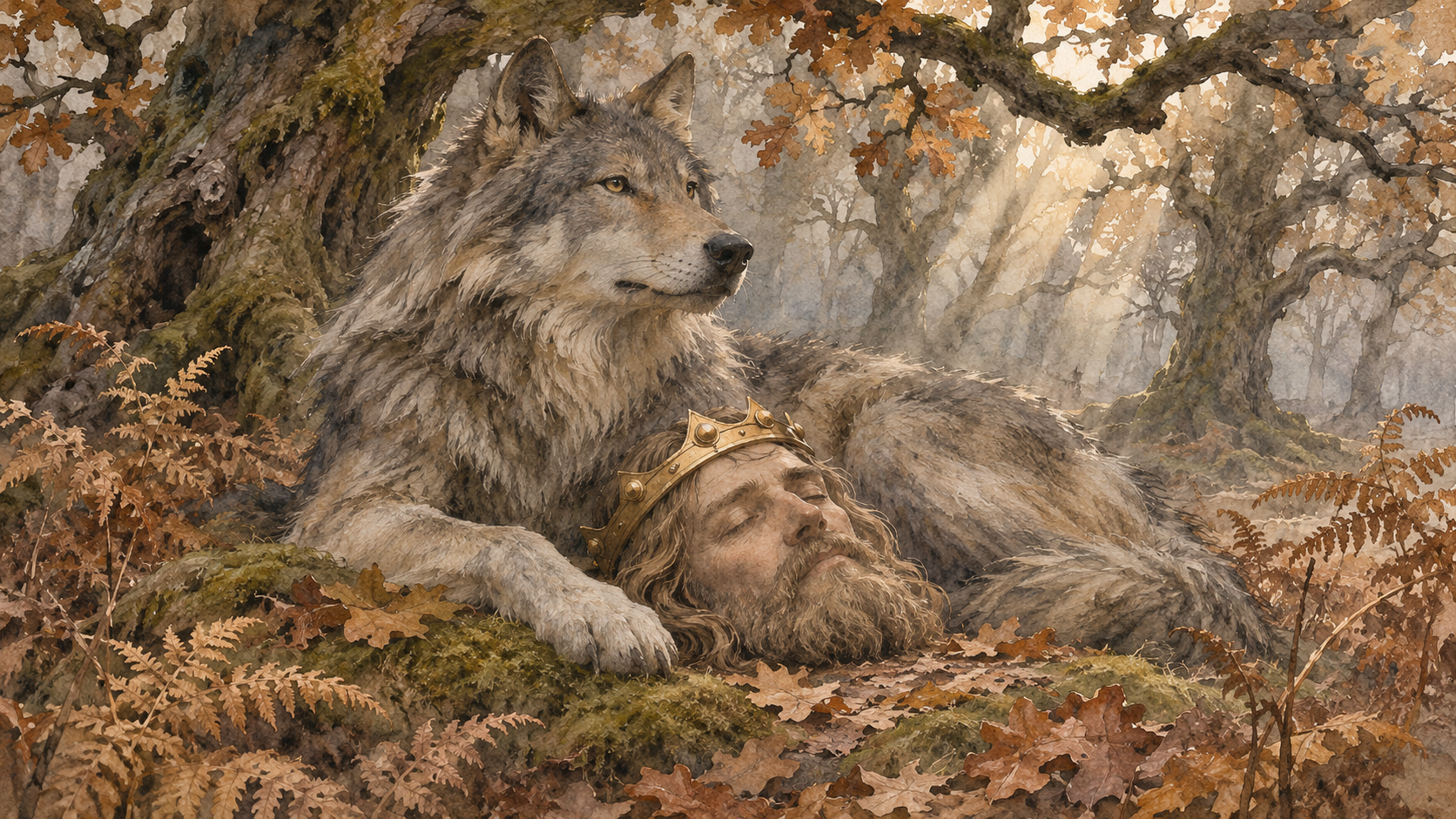
The strigoi were not the only things requiring attention, however, because Saint Andrew’s Eve was also associated with wolves. In Romanian folk tradition, the saint has a complicated relationship with these animals, sometimes appearing as their master or protector and sometimes as a figure whose authority could restrain their more destructive activities. The occasion was consequently linked with beliefs about wolves leaving the forests, forming packs and becoming particularly dangerous to domestic animals. In some traditions, wolves were even said to gain the power of speech during the night, although hearing one speak was not necessarily an experience to be welcomed. Observing the proper restrictions was thought to help protect the household and its animals from attack. Certain kinds of work were avoided, particularly those involving sharp implements or activities associated with opening and closing, and there were regional prohibitions against sweeping, lending objects or performing particular household tasks. Like so many traditional prohibitions, these customs reveal the extent to which the welfare of animals, the preservation of food and the ordinary routines of domestic life were bound up with beliefs about unseen dangers. Whether the threat came from a wandering wolf, an invisible spirit or a neighbour with questionable supernatural abilities, the best policy was apparently to avoid attracting unnecessary attention.
And then, because folklore has never been particularly concerned about maintaining a consistent atmosphere, the night took an unexpectedly romantic turn. Saint Andrew’s Eve was regarded as an especially powerful occasion for divination, particularly among unmarried young women hoping to discover the identity of their future husbands. One custom involved preparing a small cake or flatbread from flour, water and salt, sometimes measured in equal quantities using a walnut shell. The young woman ate the extremely salty offering before going to bed, in the expectation that her future husband would appear in a dream and offer her water. Another involved peering into a well by candlelight, hoping to glimpse the face of the man she was destined to marry. Elsewhere, girls counted fence posts, examined their appearance or used other household objects to predict the character and fortune of a future spouse. One particularly optimistic method involved placing garlic inside a ring of dough and leaving it somewhere warm. If the garlic sprouted, the young woman could anticipate good fortune. It is difficult to imagine a more extraordinary mixture of expectations for a single night. Outside, the dead were fighting at crossroads, wolves were gathering in the darkness and vampires were attempting to steal the milk, while indoors somebody was eating an unpleasantly salty cake in the hope of dreaming about a handsome young man.
Other customs looked beyond romance towards the coming year. Wheat grains might be placed in a dish and encouraged to sprout, their growth interpreted as an indication of future prosperity. Water was measured into vessels and examined the following morning for changes that might reveal good or bad fortune. In certain areas, a fermented preparation known as covașa, made using grain or flour, was consumed or shared as part of the observances, sometimes with the intention of protecting people or ensuring the productivity of livestock. These customs are especially revealing because they remind us that supernatural belief was not simply about fear of ghosts and vampires. The same night offered opportunities to seek knowledge, influence fortune and protect the fragile prosperity upon which rural households depended. Winter was a dangerous season in an agricultural society, when the harvest had already been gathered and survival depended upon stores of food, healthy animals and the hope that the land would become productive again. Rituals that promised protection or foresight provided a sense of order in a world where disease, crop failure and severe weather could have devastating consequences.
Much of what we know about these beliefs survives because Romanian scholars and collectors took the trouble to record them during the nineteenth and early twentieth centuries. Among the most important English-language studies is Agnes Murgoci’s The Vampire in Roumania, published in the journal Folklore in 1926. Murgoci examined accounts of strigoi and other supernatural beings, drawing attention to the ways in which vampire traditions varied between communities. Her work is especially valuable because it demonstrates that the strigoi were not simply an exotic version of the fictional vampire popularised by Bram Stoker. They belonged to a much broader system of beliefs involving death, illness, kinship, agriculture and the relationship between body and soul. The folkloric vampire might trouble its own relatives, deprive cattle of milk or bring misfortune upon an entire household. The dangerous dead were frequently understood through local anxieties about improper burial, unexplained sickness and the failure of the deceased to remain peacefully separated from the living. These beliefs could have serious consequences, including the disturbing treatment of corpses suspected of returning from the grave. Such practices deserve to be understood within their historical context rather than reduced to entertaining Gothic curiosities.
The association with Dracula has nevertheless proved almost irresistible to modern audiences, and Saint Andrew’s Eve is sometimes described as the Romanian equivalent of Halloween. There are obvious similarities, particularly the belief that supernatural beings become more active at a particular point in the calendar and that special precautions are necessary to protect the living. But the comparison should not obscure the distinctive character of the Romanian traditions. Their timing is different, their regional variations are considerable, and their combination of Christian sainthood, wolves, agricultural magic and the restless dead belongs to a cultural landscape with its own long and complex history. Nor should we imagine that every Romanian household still spends the evening smearing garlic across its windows and preparing for supernatural combat. Many of these customs survive as remembered folklore, family traditions or elements of cultural celebration, while others belong chiefly to the historical accounts preserved by ethnographers and local museums.
What makes the Night of the Strigoi so fascinating is the way it gathers almost every human concern into a single evening. There is fear of death and the possibility that those we have buried might return, anxiety over animals and the food supply, concern about what the winter will bring and a powerful desire to know something of the future. Yet alongside all these uncertainties, there is companionship, laughter, dancing and the simple pleasure of gathering together while the darkness remains safely outside. The people who watched over their garlic were not merely waiting for monsters to appear. They were creating a small, warmly lit world of their own, surrounded by friends, protected by tradition and reassured by the knowledge that dawn would eventually arrive.
And that, perhaps, is the most appealing part of the whole extraordinary business. However alarming the creatures supposedly wandering through the countryside, however fierce the wolves or determined the strigoi, their freedom lasted only until the cockerels began to crow. Darkness might have its moment, but it could not keep the world forever. The spirits would retreat, the doors would open, and everybody would emerge to discover that another winter morning had arrived.
Personally, I rather like the idea of celebrating the beginning of winter with a gathering of friends, some good food and a few drinks, although I might give the prophetic salt cake a miss. As for the garlic, I am quite happy to believe that it keeps vampires away. I’ve been using it in my cooking for years, and I haven’t encountered a single strigoi yet.
Admittedly, it’s possible they’re simply being polite.
Sources and further reading
- cIMeC, Institutul Național al Patrimoniului, Ajunul Sf. Andrei, Noaptea strigoilor. Romanian cultural heritage resource documenting beliefs, protective rituals, garlic vigils, divination and agricultural customs.
- Muzeul Etnografic Anton Badea, Reghin, Ajunul Sfântului Andrei, Sântandreiul sau Noaptea strigoilor, 29 November 2021.
- Agnes Murgoci, ‘The Vampire in Roumania’, Folklore, Vol. 37, No. 4 (1926), pp. 320–349. Journal record.
- M. Ryzhova, ‘Saint Andrew’s Day in Romania: Ecclesiastical, Folk and Civil Calendars’, Kunstkamera, 2023, No. 1 (19). Academic study.
- Romulus Antonescu, Dicționar de simboluri și credințe tradiționale românești (2009), published through cIMeC.
- Ion Ghinoiu, Sărbători și obiceiuri românești (2002), on the traditional Romanian ritual calendar.