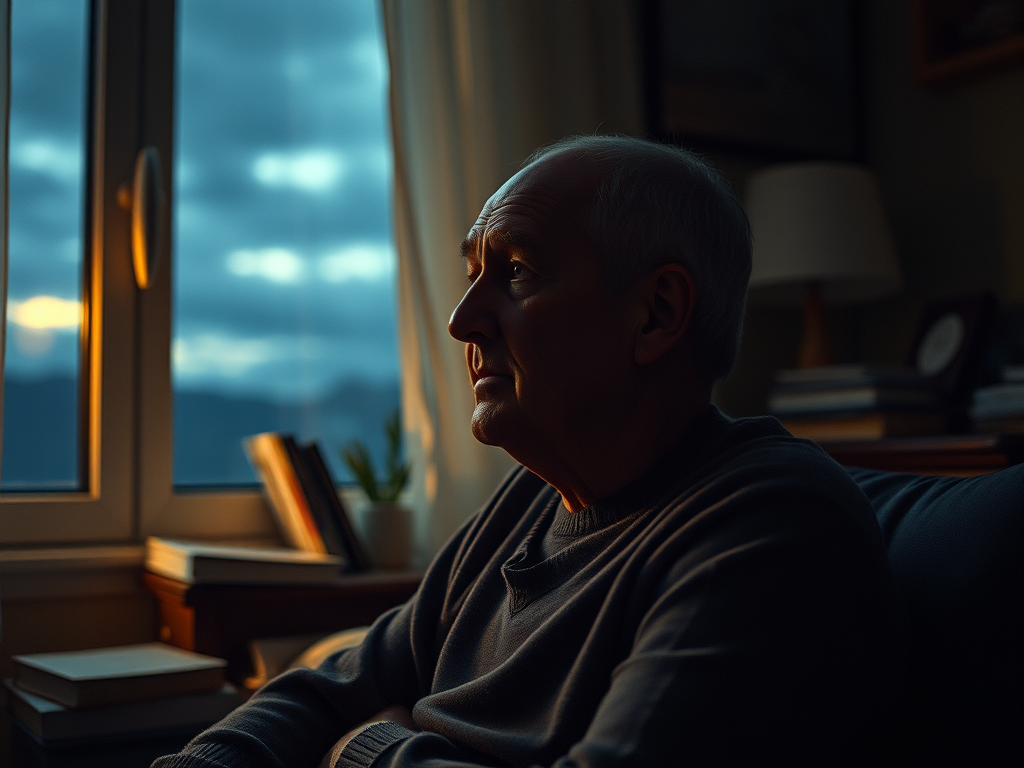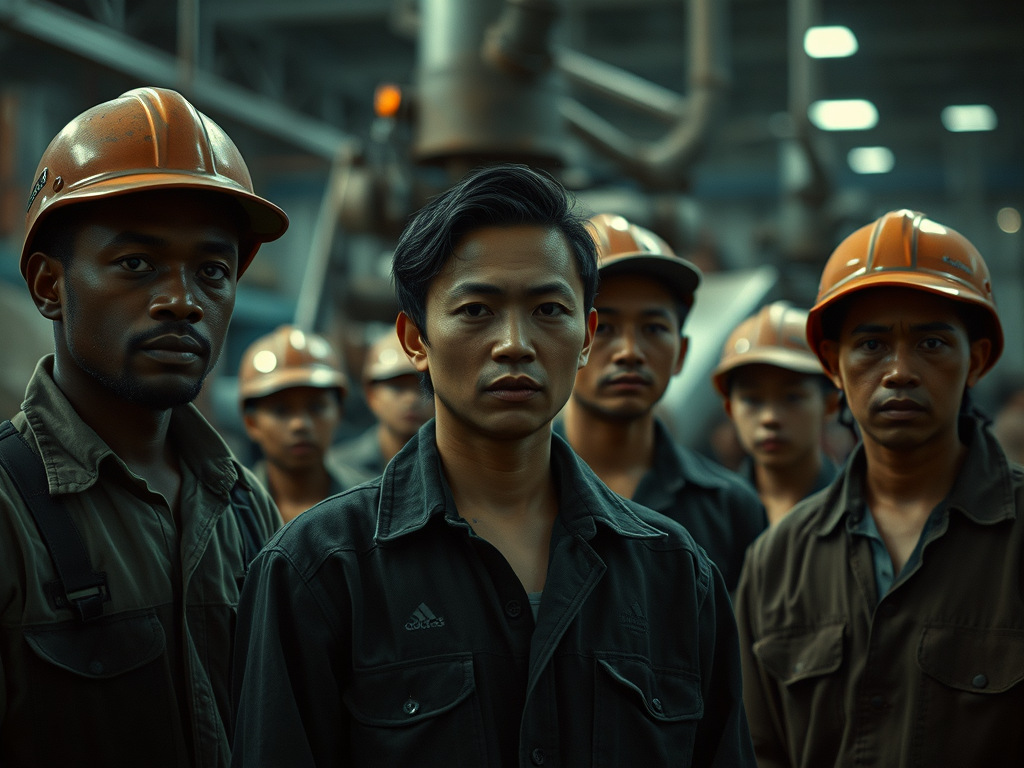
The fear of dehumanisation is a deep, unsettling fear that resonates with many people, even if they have never put a name to it. It is the fear of being reduced to something less than human – a number, a tool, a cog in a machine. This fear manifests particularly strongly in systems of control or labour, where the individuality, dignity, and autonomy of the person are stripped away, and they are treated not as unique beings with thoughts, feelings, and dreams, but as objects to be used and discarded.
At its core, dehumanisation strips away the essence of what it means to be human. It is not just a loss of rights or freedoms but a loss of identity. We are not just afraid of losing control over our lives, we are afraid of losing our very selves. This fear, while often subtle, permeates many aspects of modern life. In large, bureaucratic systems – whether they be governments, corporations, or institutions – individuals can easily feel like they are invisible, their worth reduced to how efficiently they can be processed, categorised, or exploited. The fear of becoming just a number in a system, devoid of personal meaning or value, is one of the most insidious fears because it erodes the very foundation of what it means to be a person.
In the context of work and labour, this fear becomes particularly pronounced. The industrial revolution marked a turning point in how human beings were treated in the context of work. Prior to this, people often had a direct relationship with their labour, whether they were farmers, artisans, or merchants. Their work was a reflection of themselves, a way of expressing their skills, creativity, and ingenuity. But as factories rose, and machines became the heart of production, workers began to be seen as little more than extensions of the machinery. Their value was measured not in terms of their humanity but in terms of their productivity. How many hours could they work? How quickly could they produce? How efficiently could they contribute to the endless drive for profit?This shift in perception – the reduction of people to mere workers, whose lives were valued only in terms of output – gave birth to the fear of dehumanisation in modern society. Suddenly, people were no longer seen as individuals with personal stories, dreams, and dignity. They became commodities, subject to the whims of the marketplace, the demands of production, and the impersonal forces of capitalism. This is not to say that hard work and labour are dehumanising in themselves—after all, there is great dignity in honest work. But when that work is stripped of meaning, when it becomes solely about profit and efficiency, the people doing the work begin to lose their sense of self. They become tools, their humanity secondary to their function.
The fear of being reduced to an object is not just a modern phenomenon. Throughout history, systems of control – whether they were empires, dictatorships, or oppressive regimes – have relied on dehumanisation to maintain power. To control a population, you must first strip them of their individuality. You must reduce them to categories, numbers, or objects that can be easily manipulated, controlled, and oppressed. It is much easier to subjugate a person if they are seen as less than human, if they are viewed not as a unique individual with rights and dignity, but as a statistic or a tool to be used for the benefit of those in power.
Consider the horrors of slavery, where human beings were literally reduced to property, bought and sold like cattle. Their humanity was denied, and they were treated as objects, their worth measured in terms of labour, obedience, and profitability. This is dehumanisation in its most brutal and explicit form – a complete denial of a person’s humanity, reducing them to a commodity to be exploited. But while slavery represents the most extreme example, the underlying fear remains relevant in many contexts today. Even in systems that do not involve physical chains, there are other ways to strip people of their humanity.
In modern workplaces, particularly in large corporations, people can feel this sense of dehumanisation when they are treated as little more than interchangeable parts. Employees are often reduced to numbers on a spreadsheet, evaluated solely on metrics of productivity and efficiency. Their individuality – their thoughts, opinions, and personal experiences – becomes irrelevant in the face of bottom-line profits. This creates a profound sense of alienation, where people feel disconnected from their work, from each other, and even from themselves. The work becomes mechanised, and so too do the people doing the work. They are expected to perform like machines, without emotion, without rest, without consideration for their well-being.
This sense of being objectified, of being seen as a tool rather than a person, creates a deep psychological and emotional toll. It can lead to feelings of worthlessness, anxiety, and depression. People begin to internalise the message that they are only as valuable as the work they produce, and that their personal worth is tied entirely to their productivity. This fear of dehumanisation is not just about losing one’s job or livelihood, it is about losing one’s identity. When we are treated as objects, we begin to see ourselves as objects. We lose touch with our humanity, with our ability to feel, to create, to connect with others in meaningful ways.
The fear of dehumanisation is also closely linked to the fear of being forgotten. When we are reduced to a number or a tool, we become anonymous. We lose our individuality, our uniqueness, and we risk fading into the background, becoming invisible. This is a terrifying prospect for many people—the idea that their lives, their experiences, and their struggles could be reduced to nothing, swallowed up by a system that does not care about them. This fear of anonymity, of being lost in the crowd, is a fear that we see play out in many aspects of society. In overcrowded cities, in large organisations, in government systems where people are reduced to case numbers or file references, there is a profound sense of dehumanisation that makes people feel insignificant.
In systems of control, this dehumanisation becomes even more dangerous. When people are reduced to objects, it becomes easier to justify their mistreatment. If someone is not seen as fully human, then their suffering becomes less important. This is a tactic that has been used by regimes and oppressors throughout history. By dehumanising the enemy, the oppressed, or the marginalised, it becomes easier to justify violence, exploitation, and cruelty. When people are no longer seen as human, their rights, their dignity, and their very lives are deemed expendable.
This fear extends beyond the workplace and into other areas of life. In healthcare, for example, patients can sometimes feel dehumanised when they are treated as symptoms or diagnoses rather than as individuals with unique needs and experiences. The fear of being reduced to a medical chart or a case number, where your pain and suffering are not truly understood or cared for, is a very real and very common fear for many people navigating complex healthcare systems. This reduction of the person to their illness or condition strips them of their individuality and makes them feel powerless in the face of the system that is supposed to help them.
The rise of technology and automation has also contributed to the fear of dehumanisation. As machines become more capable of performing tasks that were once the sole domain of humans, there is a growing fear that people will be rendered obsolete, that their value will be reduced to something a machine could replicate or replace. In many industries, workers are already feeling this fear as jobs become more automated, and human labour is increasingly viewed as an expendable resource. This technological dehumanisation compounds the fear of being reduced to nothing more than a cog in a machine, where human effort and ingenuity are no longer valued.
So, how do we confront this fear? How do we resist the dehumanising forces that exist in the systems we navigate every day? The first step is recognising our intrinsic value as human beings, independent of the roles we play in society or the work we produce. Our worth is not determined by how efficiently we can be used or how productive we are. We are valuable simply because we are human – because we have thoughts, feelings, and the capacity to connect with others in meaningful ways. Reclaiming our humanity means rejecting the notion that we are only as good as the work we do or the number we represent in a system.
As a society, we must push back against systems that prioritise profit, control, or efficiency over human dignity. This means advocating for workplaces that value the well-being of their employees, healthcare systems that treat patients as individuals, and governments that see people as citizens, not just statistics. It means fostering communities where people are seen and heard, where their individuality is respected, and where they are not reduced to a number or an object.
The fear of dehumanisation was not an easy one to confront because it taps into so many aspects of modern life. But by acknowledging it, by naming it, and by actively working to preserve our humanity in the face of dehumanising forces, we can begin to reclaim our sense of self. In a world that often seeks to reduce us to numbers, tools, or objects, our humanity is our greatest strength. It is what makes us who we are, and it is worth fighting for.