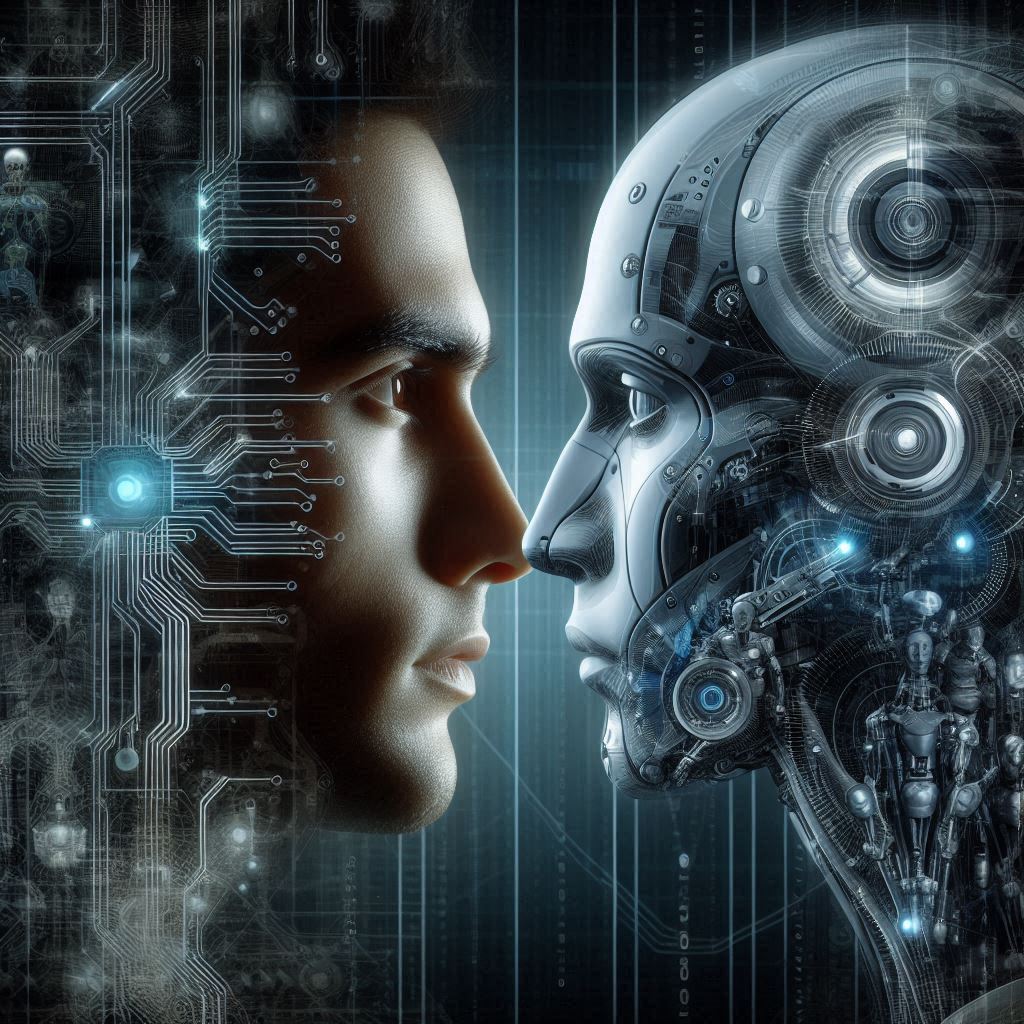
The fear of technology, particularly in the realm of artificial intelligence (AI), is a deep and growing concern in the modern world.
As we witness technological advancements at a pace that often feels overwhelming, this fear takes on a unique form – one that touches not only on the practical but also the existential. It is no longer simply about machines replacing human labour, but about losing control over the very systems we’ve built.
The idea that machines could become more intelligent, more autonomous, and, in the most extreme visions, more powerful than us, strikes at the heart of what it means to be human.
At its core, this fear is rooted in a fundamental unease with change and the unknown. Technology has always been a double-edged sword. It has the power to solve problems and improve lives, but it also has the potential to cause harm, especially when it evolves beyond our ability to fully comprehend or control it.
In the past, technological advancements were often met with a mix of excitement and trepidation, but AI introduces a new level of complexity. It is not just a tool we use; it is a tool that can learn, adapt, and make decisions – sometimes in ways that even its creators don’t fully understand.
The fear of AI is not just science fiction anymore. It’s grounded in real concerns about how much control we truly have over the systems we create. AI operates in areas where the outcomes can have profound and far-reaching consequences. From healthcare and finance to policing and warfare, AI’s role in decision-making is growing, and with that comes a fear that these systems could become uncontrollable.
When machines are making decisions that affect human lives, the potential for error, or worse, intentional harm, becomes an unsettling prospect.
One of the key elements of this fear is the loss of human agency. In the past, humans were always at the centre of technological progress. We built the machines, programmed the algorithms, and maintained control over their functions. But with AI, there is the growing realisation that we might be creating systems that, once they reach a certain level of complexity, operate beyond our direct influence. AI has the capacity to learn from data, to improve its own performance, and, in some cases, to make decisions without human input. This raises the uncomfortable question: what happens when we are no longer in control?
The fear of losing control to AI is tied to the broader anxiety about automation and the future of work. For centuries, humans have defined themselves, in part, by their labour – by the ability to produce, to create, and to contribute. Automation threatens to disrupt that foundation.
While machines have been replacing human labour for years, AI takes it to another level by replacing not just physical labour, but intellectual labour as well. Jobs that once seemed safe – those requiring creativity, problem-solving, and decision-making – are now at risk of being taken over by algorithms and AI-driven systems.
The existential fear here is twofold. On one hand, there is the practical concern about the loss of livelihoods. What happens to people when they are no longer needed in the workforce?
How do we sustain ourselves, both economically and emotionally, in a world where machines do everything?
On the other hand, there is a deeper fear about identity. If machines can do what we do, and do it better, what is left that makes us uniquely human?
When AI can write, compose music, diagnose illnesses, or even engage in conversations, it forces us to confront the unsettling question:
are we being outpaced by our own creations?
Beyond the fear of losing our jobs or our sense of purpose, there is the darker fear of AI surpassing human intelligence in ways that we cannot predict or control. This is the domain of what some call “artificial general intelligence” (AGI) – a level of AI that not only excels in specific tasks but can perform any intellectual task a human can, and potentially far beyond.
The fear of AGI is not that it will simply replace us in certain functions, but that it will outthink us entirely. In this scenario, AI would not just be a tool we use – it could become an entity in its own right, with its own goals, agendas, and the capacity to alter the world in ways we might not intend or even understand.
This brings up the frightening concept of a “singularity,” the point at which AI evolves beyond human control and starts improving itself at an exponential rate. While this idea might sound like the stuff of dystopian science fiction, it is a real concern for many in the field of AI research.
The fear is that once AI reaches a certain threshold of intelligence, it could start making decisions that are no longer aligned with human values or interests. And since AI operates on data and logic rather than emotion and empathy, those decisions could be coldly calculated, prioritising efficiency over human well-being.
Take, for example, the growing use of AI in warfare. AI-driven drones, autonomous weapons systems, and surveillance technologies are already changing the landscape of conflict.
The fear here is not just about machines taking on more responsibilities in combat but about the moral implications of machines making life-and-death decisions.
Can an AI truly understand the ethical complexities of war? Can it differentiate between combatants and civilians, or weigh the value of a human life in the same way a person can?
The fear is that as AI takes on more responsibility in these areas, we may lose control over when, how, and why force is used, with devastating consequences.
Similarly, the use of AI in policing and surveillance raises concerns about the erosion of privacy and civil liberties.
As AI becomes more integrated into systems of law enforcement, there is a growing fear that we are building a future where humans are constantly monitored, where our behaviour is predicted and controlled by algorithms.
AI-driven facial recognition, predictive policing, and social scoring systems can dehumanise individuals, reducing them to data points to be tracked and managed. The fear here is that technology will not only control our behaviour but will also strip away our rights and freedoms, turning us into mere subjects of a vast, automated surveillance state.
The fear of AI also taps into deeper, more philosophical concerns about the nature of intelligence and consciousness. If we create machines that can think, reason, and even feel, what does that mean for our understanding of what it means to be human?
The fear is not just about losing control but about creating something that could potentially surpass us in every way.
This brings up ethical questions about the rights of intelligent machines. If an AI can think and feel, does it deserve the same rights as humans? And if it does, how do we reconcile that with the fact that we created it?
The fear here is that in creating AI, we might inadvertently create new forms of life, blurring the lines between human and machine in ways that are deeply unsettling.
The rapid development of AI also raises concerns about inequality. As technology advances, those who control the most powerful AI systems may gain unprecedented levels of power and influence. This could widen the gap between the haves and the have-nots, creating a world where a few elite individuals or corporations wield immense control over society, while the rest of us are left behind.
The fear here is not just about the machines themselves but about the human systems that will use them. Will AI be used to improve the lives of everyone, or will it be exploited to entrench the power of the few?
At its core, the fear of AI is about the fear of losing control – of losing control over our jobs, our lives, and ultimately, our future. It’s about the fear that we are building systems that are too complex, too powerful, and too autonomous for us to manage. It’s about the fear that, in our quest to improve the world with technology, we might inadvertently create a future that we cannot survive.
AI forces us to confront some of the most fundamental questions about humanity:
What does it mean to be intelligent?
What does it mean to be in control?
And what does it mean to be human in a world where machines can think?
But while the fear of AI is real and justified, it’s important to remember that technology itself is not inherently evil or good. It is a tool – a tool that we can use to build a better future, or a tool that, if misused, could lead to our downfall.
The fear of AI is a reminder that we must approach these new technologies with caution, humility, and a deep respect for the power they hold. It’s a reminder that, as we build these systems, we must not lose sight of the values that make us human – our empathy, our creativity, our capacity for love and understanding.
In the end, the fear of technology and AI is a reflection of our broader fears about the future. It’s about the fear of losing control in a world that seems to be changing faster than we can keep up with. But it’s also about the hope that, if we approach these changes with wisdom and care, we can create a future where technology serves humanity, rather than the other way around.
The challenge we face is not to reject AI out of fear, but to shape its development in a way that aligns with our deepest values and aspirations.
The fear of AI, like all fears, invites us to look inward – to examine not only the technology itself but the society we are building around it. It asks us to consider what kind of world we want to live in, and what it means to be human in an age of machines.
While the fear of AI may never fully go away, it can also be a catalyst for deeper reflection, innovation, and progress. As we navigate this brave new world of technology, it’s up to us to ensure that the future we create is one where humanity, in all its complexity and beauty, remains at the centre of the story.