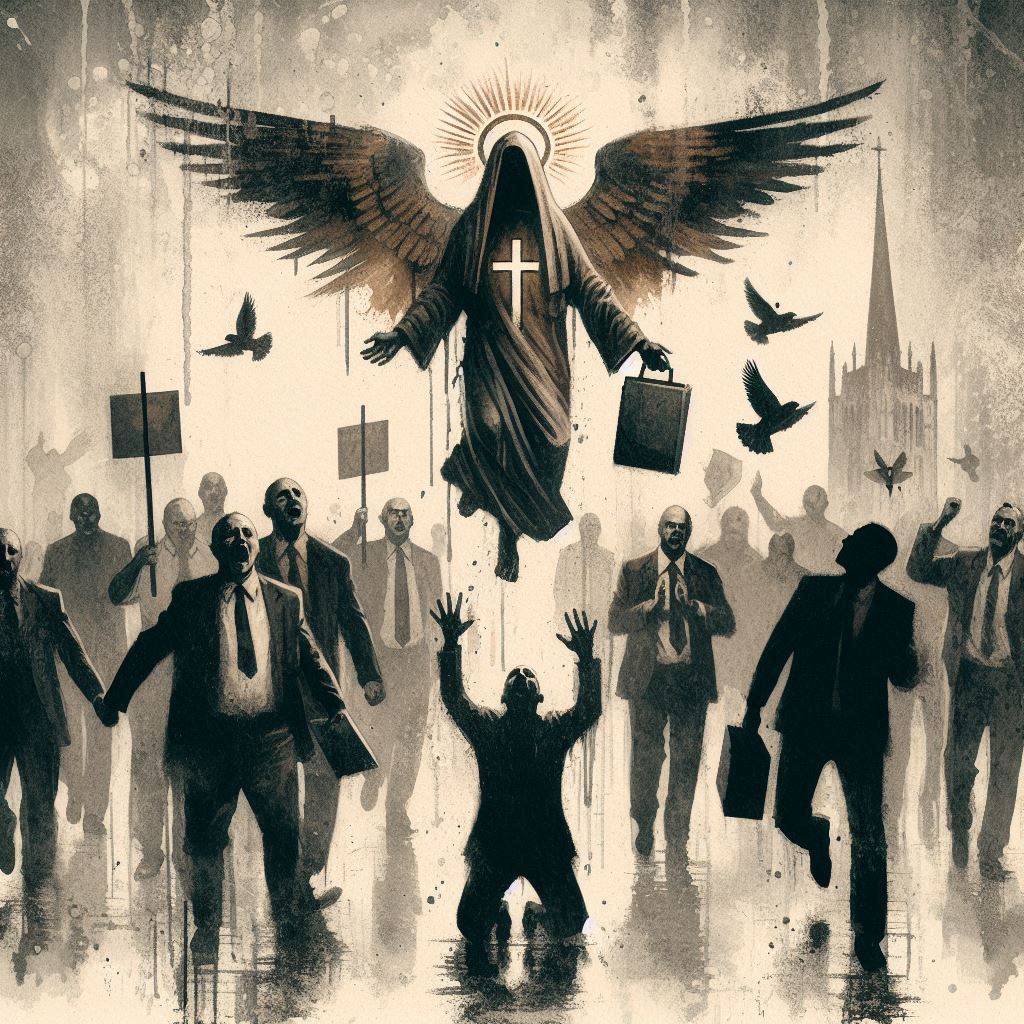
The psychology of the fear of religion is an interesting but complicated subject. It’s a fear that can be deeply personal or cultural and manifests in many different ways for different people.
For some, it’s an overwhelming anxiety tied to religious symbols or ideas, while for others, it’s more about the fear of authority or moral judgments associated with religious institutions. There are many layers to this fear, and to fully explore it, we need to examine how it takes root in individual psychology, how it’s influenced by upbringing and societal forces, and how it interacts with our sense of identity, mortality, and the unknown.
The fear of religion, often called theophobia, is not just one thing. It can stem from a variety of sources, and for some, it may even be linked to broader existential concerns. Many people experience discomfort when faced with the profound and often mysterious claims of religion, especially those that involve the afterlife, divine punishment, or the concept of an all-knowing deity.
For others, the fear might be tied to personal experiences with religion, particularly if they were raised in a strict or authoritarian religious environment. The nature of this fear is multifaceted and personal, and understanding it requires us to look at how our minds process beliefs and fears.
One of the core reasons people develop a fear of religion has to do with childhood conditioning. When we’re young, our beliefs and worldviews are shaped by our environment, and if religion plays a significant role in that environment, it can profoundly influence how we understand the world and ourselves.
In many religious traditions, there is a heavy focus on moral conduct, sin, and the consequences of not following religious rules. For children, these teachings can feel absolute and unyielding. A child who is repeatedly told that certain behaviors or thoughts will result in divine punishment may internalize a deep fear of doing the wrong thing, of thinking the wrong thoughts, or of simply being inadequate in the eyes of their deity.
This fear can stick with a person into adulthood. For many, the intense focus on morality, guilt, and judgment in their early years creates a kind of moral anxiety that never fully goes away. Even if they no longer identify with the religious tradition they were raised in, they may still carry a lingering sense of dread about divine punishment or eternal consequences. This kind of moral anxiety is one of the key drivers behind theophobia, as people become preoccupied with the idea that they might not be “good enough” or that they are constantly being judged by an unseen force.
In addition to early childhood experiences, the fear of religion can also be driven by more general fears about the unknown. Religion, by its very nature, often deals with questions that we, as human beings, struggle to answer – what happens after we die, why we are here, and how we should live.
For many people, these are unsettling questions, and religious answers can sometimes make them feel more anxious rather than less. The idea of heaven and hell, for instance, can provoke a deep fear of the unknown. If someone isn’t sure where they stand in terms of their eternal fate, this can lead to a profound sense of unease.
This is particularly true for people who have been exposed to religious teachings about judgment or eternal damnation. The stakes in these scenarios are extremely high – eternal bliss or eternal suffering – and for some, the fear of making the wrong choice or living incorrectly can become overwhelming.
This fear of the unknown ties into what psychologists often call existential anxiety. Religion, in many ways, tries to provide answers to life’s biggest existential questions, but for some, these answers provoke more fear than comfort. The idea of an afterlife, while comforting to many, can be terrifying for others, particularly if they were raised in a tradition that emphasized punishment or judgment. Similarly, the notion of an all-powerful deity who knows your every thought and action can be both awe-inspiring and anxiety-inducing. This existential anxiety is a key component of the fear of religion, as it touches on our deepest concerns about life, death, and meaning.
Cognitive dissonance also plays a role in the fear of religion. This psychological term refers to the discomfort we feel when we hold two conflicting beliefs or values. Many people, particularly those who have grown up in religious environments, may find themselves struggling to reconcile their personal beliefs with the teachings of their faith. For instance, a person who believes strongly in individual freedom might have difficulty accepting religious doctrines that emphasize obedience or submission to divine will.
This inner conflict can create significant anxiety and lead to a fear of religion as a whole. If someone feels that they cannot fully align themselves with the teachings of their religion but also cannot entirely let go of those teachings, they may experience a kind of psychological tension that manifests as fear or avoidance of religious ideas and practices.
Personal identity is another key factor in the psychology of theophobia. Religion is often deeply tied to our sense of self, particularly if we’ve been raised in a religious tradition that shapes our worldview and moral framework. For many people, their religious identity is a core part of who they are, and questioning or abandoning that identity can be deeply unsettling.
For those who have gone through a process of deconversion, or leaving their religion, the fear of religion may be linked to the fear of losing their sense of self or community. Religion often provides a structure for meaning and belonging, and when someone leaves that structure, they may feel lost or unsure of how to navigate the world. This can create a kind of fear or anxiety around religious ideas, as they remind the person of what they’ve left behind and the uncertainty that now lies ahead.
In some cases, the fear of religion may also be connected to specific mental health conditions. For instance, people with obsessive-compulsive disorder (OCD) may develop a form of OCD called scrupulosity, where they become obsessed with religious or moral purity. These individuals may fear that they are constantly sinning or that they are not living up to the expectations of their faith.
This can lead to compulsive behaviors, such as excessive prayer or ritualistic acts, as well as a heightened fear of religious teachings and symbols. For people with scrupulosity, the fear of religion is not irrational but rather a symptom of their broader anxiety disorder. Religion, in this case, becomes a source of obsession and fear because it is tied to their compulsive need for moral or spiritual reassurance.
Cultural and societal factors also play a significant role in shaping the fear of religion. In many modern, secular societies, there is a growing tension between religious beliefs and secular values. For some people, particularly those who identify strongly with secular or progressive ideals, religion can be seen as an oppressive force that restricts personal freedoms or promotes outdated moral views.
This can create a kind of cultural fear of religion, where individuals feel that religious institutions or movements are threatening their way of life. This fear is often compounded by media portrayals of religious extremism or fundamentalism, which can create a skewed view of religion as something inherently dangerous or harmful.
The rise of religious pluralism in many parts of the world has also contributed to a kind of generalized fear or confusion about religion. In societies where multiple religious traditions coexist, individuals may feel overwhelmed by the sheer diversity of belief systems. This can lead to a sense of uncertainty about which religion, if any, is “correct” or “true.”
For some, this uncertainty leads to a fear of religion as a whole, as they struggle to make sense of conflicting religious claims and practices. This kind of fear is often tied to a broader anxiety about making the wrong choices in life or failing to find a sense of meaning or purpose.
The fear of religion is not just an abstract or intellectual concern; it can have real emotional and psychological consequences for those who experience it. People who are afraid of religion may avoid religious discussions, places of worship, or even people who are openly religious. They may feel isolated or misunderstood, particularly if they live in a community where religion plays a central role.
This isolation can exacerbate feelings of anxiety and fear, creating a cycle where the individual feels increasingly disconnected from both religious and secular communities.
Ultimately, the psychology of the fear of religion is about much more than just a fear of religious beliefs or institutions. It’s about how we, as human beings, grapple with the big questions of life, death, morality, and identity. It’s about how our early experiences shape our understanding of the world and how our personal and cultural contexts influence our beliefs and fears.
Whether it’s rooted in childhood conditioning, existential anxiety, cognitive dissonance, or societal pressures, the fear of religion is a deeply personal and often complex psychological phenomenon. It touches on some of our most profound hopes and fears, and for those who experience it, it can be a source of significant emotional and psychological struggle.