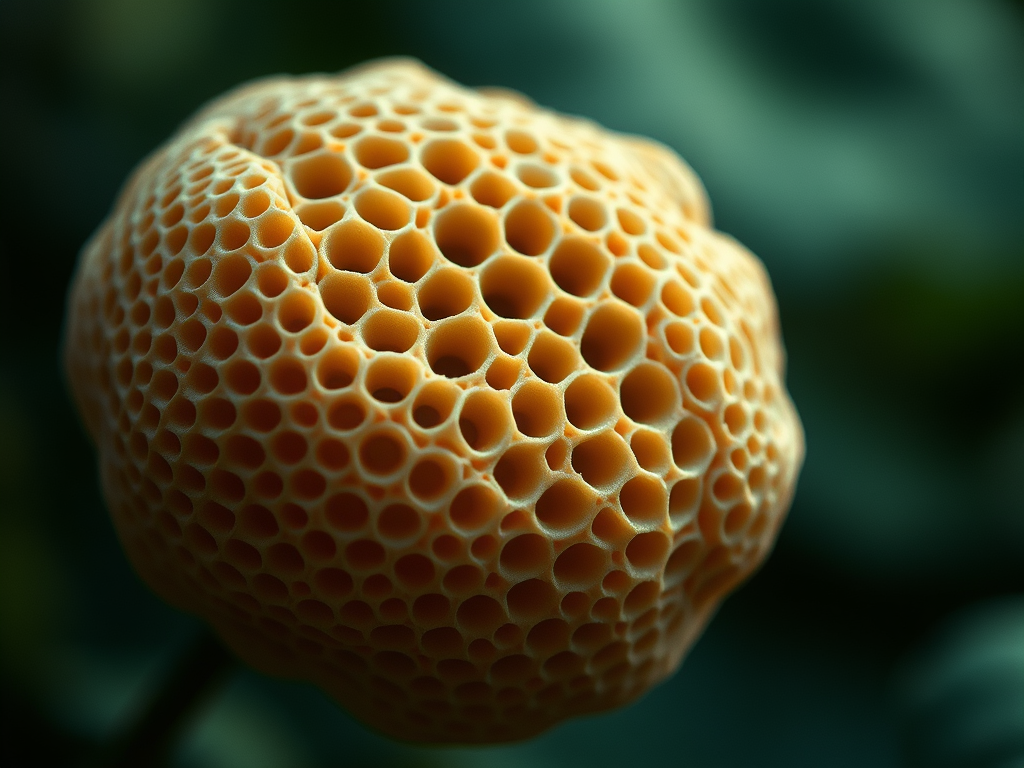
The fear of holes, often referred to as trypophobia, is a surprisingly common yet largely misunderstood condition. Despite its prevalence, many people are unfamiliar with the term, or only learn about it when they encounter something that triggers an unsettling reaction. Trypophobia is not an official diagnosis in the realm of mental health disorders, but it can cause intense discomfort or anxiety in those affected, leading to physical reactions and a deep sense of unease.
At its core, trypophobia is the aversion to clusters of small holes or bumps. These can appear in natural formations, like honeycombs or lotus seed pods, or in man-made objects like sponges or aerated chocolate. While this might sound harmless to someone who doesn’t experience it, for those with trypophobia, even a brief glimpse of these patterns can evoke feelings of dread, disgust, or panic. Some people report physical symptoms such as nausea, itching, or sweating, while others experience a more emotional response, with their discomfort manifesting as a need to look away, or even a desire to destroy the object causing the reaction.
Scientists have been intrigued by trypophobia for some time, particularly because it seems to be such a visceral and immediate reaction. Unlike other phobias, which often stem from personal experience or trauma, trypophobia appears to be almost instinctive. One theory suggests that this reaction is a remnant of our evolutionary past. Some researchers believe that the clusters of holes or bumps associated with trypophobia may resemble patterns found in poisonous animals or diseases. For instance, certain snakes, insects, and plants display similar patterns to warn predators, or to camouflage themselves in their environment. In ancient times, these visual cues could have helped humans avoid danger. Today, although these threats are not as prevalent, the response remains hard-wired in some individuals.
Despite this, not everyone reacts to such stimuli in the same way. There are many people who can look at a beehive or the texture of coral without experiencing any negative response. This variability has led researchers to explore whether trypophobia could be linked to broader factors like personal sensitivity, anxiety levels, or even cultural conditioning. Some studies have suggested that people with higher general anxiety are more likely to develop specific phobias like trypophobia. Others have pointed out that the rise of digital imagery and social media may play a role, as people are now more likely to encounter high-definition images that highlight such textures in unnaturally vivid ways. What might not have bothered someone in real life could trigger a reaction when seen in exaggerated detail on a screen.
For those who suffer from trypophobia, the experience can be deeply isolating. It’s a condition that isn’t widely understood or recognized, and many people dismiss it as simply being “weird” or “irrational.” However, like any phobia, the emotional and physical distress it causes is real. This lack of awareness often means that individuals who have trypophobia struggle to explain their feelings, or even feel embarrassed about their reactions. Friends and family might unknowingly make the situation worse by showing them pictures that trigger their fear, believing it to be a joke or an overreaction. This can create a sense of shame or frustration for the person experiencing the phobia.
The psychological mechanisms behind trypophobia are complex, and there is still much to learn about how and why it develops in some people and not others. Some researchers argue that it may not strictly be a phobia at all, but rather a form of visual discomfort or disgust that lies on a spectrum.
While traditional phobias are characterized by fear, trypophobia often seems to provoke more of a sense of revulsion. This distinction is important because it suggests that different brain processes might be at play. Whereas fear is typically associated with a fight-or-flight response, disgust is more about avoidance and rejection, which could explain why people with trypophobia often feel the need to turn away or eliminate the source of their discomfort.
One of the more puzzling aspects of trypophobia is that it doesn’t always make sense within the context of someone’s everyday life. Many individuals report that they can experience severe discomfort from seeing something as innocuous as the texture of a strawberry or the bubbles in a cup of coffee, even though they intellectually understand that these things pose no threat. This disconnection between the emotional and rational parts of the brain is what makes phobias so challenging to address. Even when someone knows that their fear is irrational, they may still be unable to control the overwhelming response their body produces.
There isn’t a one-size-fits-all solution for coping with trypophobia, but there are strategies that can help reduce the severity of the reactions. Cognitive behavioral therapy (CBT) is a common approach used for various types of phobias. It involves gradually exposing the person to the source of their fear in a controlled and safe environment, helping them to build tolerance and reduce their anxiety over time. Another approach might involve mindfulness techniques, where individuals learn to focus on their physical sensations and emotional responses without letting them spiral into panic. Desensitization is also a potential method, where repeated, controlled exposure to the feared stimuli helps lessen the reaction over time.
However, the need for treatment varies greatly among individuals. For some, trypophobia is only a mild discomfort that doesn’t interfere with their daily lives. They can avoid triggering images or situations without too much effort, and the condition remains an occasional nuisance. For others, though, it can become more debilitating, particularly if their reactions are severe or if they frequently encounter objects that trigger the phobia. In these cases, seeking professional help might be necessary to prevent the condition from escalating into a more pervasive form of anxiety.
What’s clear is that trypophobia is more than just an internet trend or a quirky dislike of certain patterns. It’s a genuine condition that affects many people in significant ways. As awareness of trypophobia grows, hopefully, so too will understanding and empathy, allowing those who experience it to feel less alone and more supported in managing their reactions. By acknowledging the legitimacy of their discomfort and providing avenues for treatment, society can take a step towards making life just a little easier for those who suffer from this deeply unsettling fear.