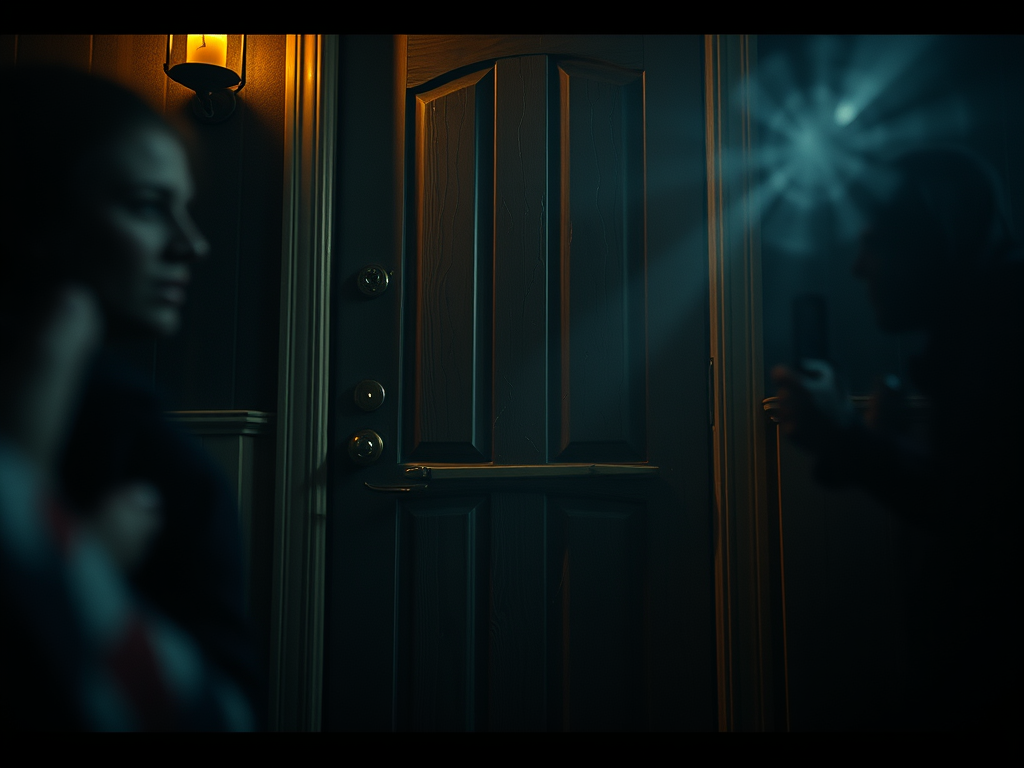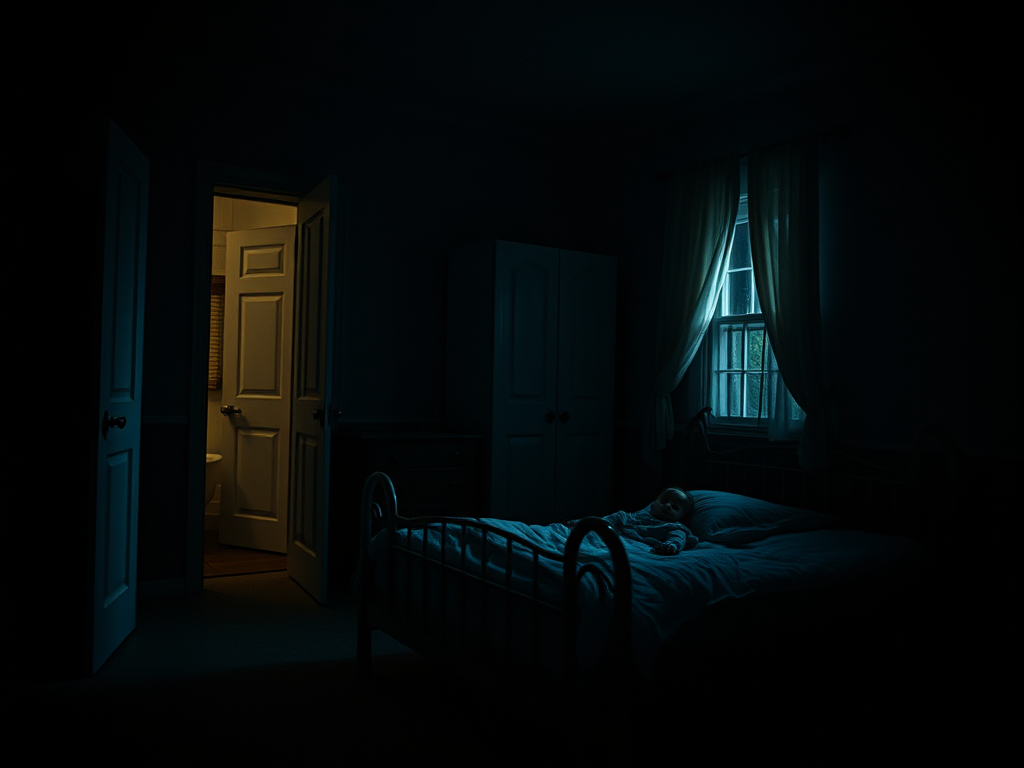
Fear of darkness is one of humanity’s oldest and most universal fears. It’s something many of us experience at least once in our lives, often as children, though for some, it lingers well into adulthood.
We’ve all been there, lying in bed, staring into the darkness with our imaginations running wild. Every creak, every shadow seems to come alive – and suddenly, the familiar becomes unsettling.
But why is it that something as simple as the absence of light can evoke such deep-rooted fear?
At first glance, it might seem like a childish or irrational fear. After all, it’s just the dark. The room around you hasn’t changed – it’s the same as it was during the day. But psychologically speaking, the fear of the dark taps into some of the most primal parts of the human mind.
To understand why we fear the dark, we need to delve into the psychology behind it, looking at everything from evolutionary roots to the way our brains process fear.
For our ancestors, the world was a dangerous place, especially after the sun went down. Humans, compared to many other animals, have relatively poor night vision. While predators such as lions, wolves, and snakes prowled through the night with ease, humans were at a distinct disadvantage. Without fire or artificial light, they were vulnerable, unable to see threats lurking in the shadows. The darkness concealed dangers, making it a breeding ground for fear.
In this context, the fear of the dark made perfect sense – it was a survival mechanism. Those who were cautious of the night, who feared what could be hiding in the blackness, were more likely to survive than those who casually wandered into danger.
This primal fear has carried over into modern times, even though most of us no longer live in a world where wild animals pose a nightly threat. Our brains are still wired for survival, and darkness represents the unknown.
And as it turns out, humans are naturally predisposed to fear the unknown. Uncertainty is unsettling because our brains crave information and patterns. In the dark, we lose the ability to visually interpret our surroundings. Our sense of sight, which we rely on so heavily, is diminished, leaving us vulnerable to surprises.
When we can’t see what’s around us, our minds start filling in the blanks. Often, this leads to imagining worst-case scenarios. The shadow in the corner could be just that, a shadow.. or it could be something more sinister. That faint sound might be the house settling, or it could be someone creeping down the hallway. Our brains err on the side of caution, jumping to conclusions that help keep us alert and ready to respond to danger.
Interestingly, this kind of fear is often more intense in children. There are several reasons for this.
First, children are still learning how the world works. Their brains are constantly trying to make sense of new information, and they don’t yet have the experience to accurately judge what is a real threat and what is not.
Second, children have incredibly active imaginations. Their brains can easily conjure up monsters, ghosts, and all sorts of frightening creatures that might be lurking in the dark. These imagined threats can feel just as real as any actual danger.
As we grow older, we typically gain more control over these fears, though some of us never completely outgrow them. The imagination may not run quite as wild as it did in childhood, but the unknown can still be unsettling.
Even adults might find themselves uncomfortable in the dark from time to time, especially in unfamiliar places. A walk through a dimly lit forest or an empty parking lot late at night can trigger that ancient, instinctive fear. We might not be worried about wolves or lions anymore, but the potential for danger – whether it’s a mugger, a wild animal, or simply tripping and falling – is enough to keep our anxiety levels high.
But why do some people fear the dark more than others?
As with most fears, the answer is complex and involves a mix of genetics, experiences, and personality traits. Some people are naturally more prone to anxiety and fear.
These individuals may be more sensitive to environmental factors like darkness because their brains are already hyper-alert to potential threats.
For others, the fear of the dark might stem from past experiences. Perhaps they had a frightening experience in the dark as a child, or maybe they watched a particularly scary movie that left a lasting impression.
Another factor that plays into the fear of the dark is how we interpret the sensation of being alone or isolated.
For many, darkness feels isolating because it cuts us off from the world around us. We can’t see our surroundings, and this lack of visual input can make us feel disconnected and vulnerable. Humans are inherently social creatures, and being cut off from our environment can trigger feelings of loneliness and helplessness, which in turn can fuel our fear.
The darkness also has a unique relationship with our sense of time. In the absence of light, time can seem to stretch on forever. This distortion of time can increase feelings of dread, as it feels like we are trapped in the moment, unable to escape. This is why nights can seem longer when we’re afraid or anxious – our perception of time slows down, intensifying the experience.
In modern times, the fear of the dark can also be exacerbated by cultural influences. Horror movies, ghost stories, and urban legends often revolve around the idea that something terrifying hides in the dark. From shadowy figures to haunted houses, darkness is frequently used as a tool to create suspense and fear. These stories play on our natural fear of the unknown, reinforcing the idea that darkness is dangerous.
Moreover, the rise of artificial light has created a world where darkness is less familiar to us. In cities and towns, streetlights, car headlights, and neon signs often banish the dark, even at night. This constant presence of light has made darkness more of an exception rather than the norm. As a result, when we do encounter true darkness – whether we’re camping in the wilderness or simply experiencing a power outage – it can feel even more unsettling because it’s no longer part of our everyday experience.
There’s also a deeper, more philosophical aspect to the fear of the dark. Darkness has long been associated with the unknown not just in a physical sense, but also in an existential one.
Culturally, darkness is often linked to death, the afterlife, or the supernatural. Many people fear what they don’t understand, and darkness, with its lack of clarity, can serve as a metaphor for these larger, more abstract fears. The unknown represents uncertainty and lack of control, and darkness embodies both of these concepts.
Psychologically, control is a major factor in fear. When we feel in control of our environment, we feel safe. When we lose that sense of control, whether through physical means, like being in the dark, or emotional means, like uncertainty, we are more likely to experience fear. This is why fear of the dark can be so powerful: it takes away our ability to control what we see and how we react to potential threats.
But not all responses to darkness are negative. For some, darkness provides a sense of calm and comfort. It can be a time to retreat from the chaos of the day, a moment of peace where we’re free from the visual distractions of the world.
In the quiet of the night, some people find solace in the stillness and absence of stimulation. The key difference here lies in the way people interpret the experience. For some, darkness is a sanctuary; for others, it’s a source of anxiety.
So, where does that leave us? The fear of the dark, though ancient and deeply ingrained, is also deeply personal. While it may have served an important purpose in the past, helping our ancestors avoid danger, today it’s more of a psychological phenomenon than a practical one. For many, the fear of the dark remains a reminder of the vulnerability we feel when we’re cut off from our senses and left to confront the unknown.
In the end, fear of the dark is as much about what we project onto the darkness as it is about the darkness itself. The absence of light becomes a canvas for our imaginations, fears, and anxieties. Whether it’s monsters, ghosts, or simply the fear of not knowing what’s there, the dark allows our minds to run wild in ways that daylight does not. But perhaps that’s also what makes the fear of the dark so universally human – it forces us to confront not just what’s out there, but what’s inside us. In the dark, we come face to face with our most primal fears, our uncertainties, and our vulnerabilities, and in doing so, we learn a little more about ourselves.